
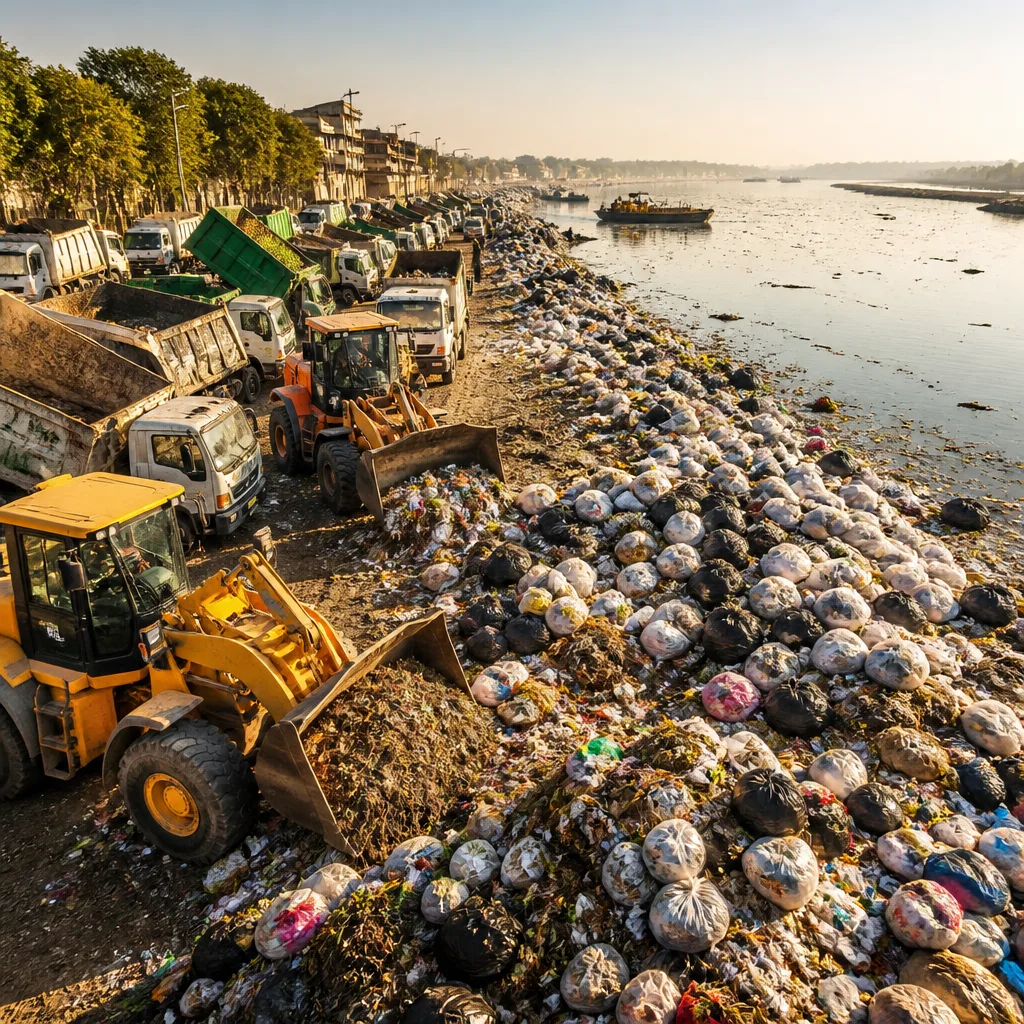
HARIDWAR, Uttarakhand — Municipal workers in Haridwar collected an estimated 7,000 to 8,000 metric tonnes of waste after the 2026 Kanwar Yatra, officials and reports said, underlining the heavy burden that major pilgrimages place on urban sanitation systems and on the Ganga's riverfronts.
Scale of the clean-up and strain on services
Haridwar Municipal Corporation teams carried out large-scale clearing operations after the pilgrimage concluded, gathering roughly 7,000 tonnes of refuse in a 24-hour drive; a subsequent municipal estimate put the total closer to 8,000 tonnes from the city's ghats and fair sites. The final two days of the Yatra alone produced nearly 2,000 tonnes of waste when about 10 million devotees converged on the city, contributing to a reported cumulative attendance of almost 48 million pilgrims over the course of the event.
By comparison, Haridwar's normal daily municipal solid-waste generation is around 200–300 tonnes, meaning the Yatra produced a volume equal to several weeks of typical urban refuse in a matter of days. The surge overwhelmed routine collection, storage and disposal systems and led to widespread littering across ghats and public spaces.
Types of waste and sanitation concerns
Collected material included discarded clothes, plastic bottles, temporary Kanwar structures, plastic sheets and other debris from fair sites and bathing areas. Sanitary issues reported from Har Ki Pauri and other ghats included bottles containing urine found in changing rooms and dumped waste in rooms rented to pilgrims, with some properties damaged during the event.
- Estimated waste collected: 7,000–8,000 tonnes
- Peak two-day waste: ~2,000 tonnes
- Normal daily generation: 200–300 tonnes per day
- Reported pilgrim numbers: ~48 million total; ~10 million on final two days
| Measure | Figure |
|---|---|
| Total waste collected (municipal estimate) | 7,000–8,000 tonnes |
| Final two days' waste | ~2,000 tonnes |
| Normal daily waste | 200–300 tonnes |
Environmental and public-health implications
The concentration of biodegradable and non-biodegradable waste on ghats poses immediate risks to river water quality and to public health. Plastic and other persistent materials can enter the Ganga and nearby drains, complicating treatment and increasing pressure on downstream sewage and solid-waste infrastructure. The presence of human excreta and improvised sanitation disposal reported at bathing sites heightens the risk of waterborne disease transmission among local communities and visitors.
The aftermath also highlighted logistical gaps: storage capacity for temporary structures, segregated collection at source, rapid transport to treatment or disposal facilities, and sufficient sanitary facilities for large congregations. Local businesses and residents faced secondary impacts, including property damage and cleaning costs.
Policy and operational questions
The recurring surge in waste during large religious events in Haridwar raises questions about preparedness and long-term solutions. Authorities will need to consider a combination of measures that are operationally practical and sensitive to the event's cultural context, including:
- Advance planning for scalable waste collection, transport and processing;
- Provision of adequate temporary sanitation infrastructure and segregated waste bins at ghats and fair sites;
- Public-awareness and behaviour-change campaigns aimed at pilgrims to reduce littering and encourage reuse or proper disposal;
- Coordination with state and central agencies for spill-over loads on treatment plants and landfill capacity.
Municipal estimates and media reports provided the figures for waste and pilgrim numbers. The episode underscores the environmental challenge of hosting mass pilgrimages in riverfront towns and the need for integrated planning that protects urban sanitation services and riverine ecosystems.












