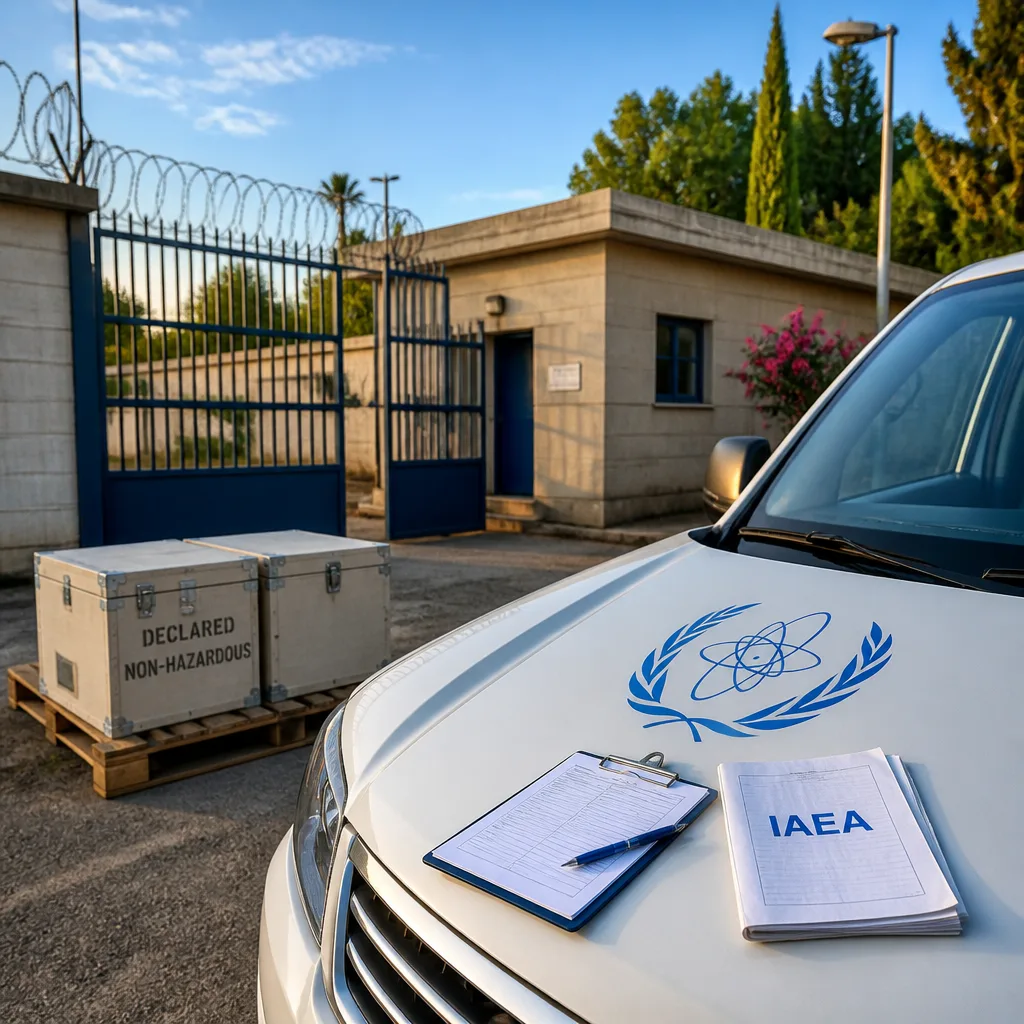
Damascus: Nuclear material located at an undisclosed site in Syria is not hazardous and will remain in Syrian custody, subject to guarantees from the International Atomic Energy Agency (IAEA), Syria's foreign minister said on Tuesday after meeting with IAEA chief Rafael Grossi in the Syrian capital.
IAEA access after formal notification
The IAEA director general travelled to Damascus following a notification by the Syrian government, and the agency was subsequently able to access the site, Grossi said. Syrian authorities have asserted their sovereign right to retain the material for civil and peaceful purposes.
"Syria had the right to use the material for civil and peaceful purposes," Syria's foreign minister said.
The statement follows political change in Syria: since the removal of President Bashar al-Assad in late 2024, the new authorities have indicated a willingness to cooperate with the UN nuclear watchdog to address the legacies of nuclear activity that accumulated during decades of Assad-family rule, the officials said.
Context and regional implications
Syria is not known to possess operational stockpiles of fissile material intended for a weapons programme. However, the country’s nuclear history includes an Israeli air strike on a suspected reactor site in Deir al-Zor in 2007, which remains a prominent reference point in international assessments of Syria’s past nuclear activities.
The IAEA’s access and the Syrian pledge to work with the agency are likely to be closely watched by regional capitals and global non-proliferation authorities. Observers said verification by the IAEA will be critical to establishing the nature, quantity and intended use of the material, and to building confidence among states concerned about possible proliferation risks.
- IAEA access: Reported after formal notification by Damascus.
- Syria’s position: Material declared non-dangerous and intended for civil, peaceful uses.
- Historical reference: Israel struck a suspected Syrian reactor in 2007 at Deir al-Zor.
While the IAEA's guarantees were mentioned as a condition for the material remaining in Syrian custody, the agency has not published a public dossier detailing the findings from the site visit as of this report. The extent of future monitoring, sampling or safeguards activities will depend on further technical consultations between the IAEA and Syrian authorities.
What this means for non-proliferation efforts
IAEA engagement in Syria represents a step toward clarifying remnants of past nuclear programmes and strengthening verification in a country that has been the focus of proliferation concerns. If verified as non-weapons related and subject to ongoing safeguards, the development could help reduce immediate regional anxiety over undisclosed fissile material.
At the same time, transparency and continued cooperation with the IAEA will be key to sustaining international confidence. Independent technical confirmation of the material’s character, origin and intended purpose will determine whether further remedial or monitoring measures are required.
India, which has consistently supported global non-proliferation mechanisms and the centrality of the IAEA in verification, will likely follow subsequent IAEA reports closely. Any confirmation that material is being held under international guarantees may have implications for diplomatic engagement and regional stability initiatives involving West Asian states.
Further updates are expected after the IAEA completes its technical assessments and issues a formal statement or report on the inspections conducted in Syria.