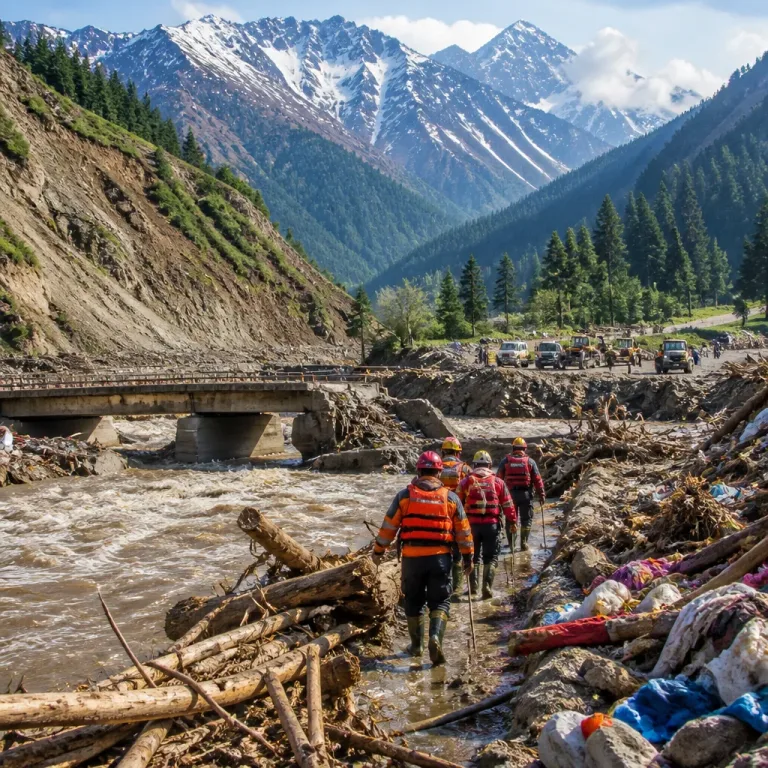
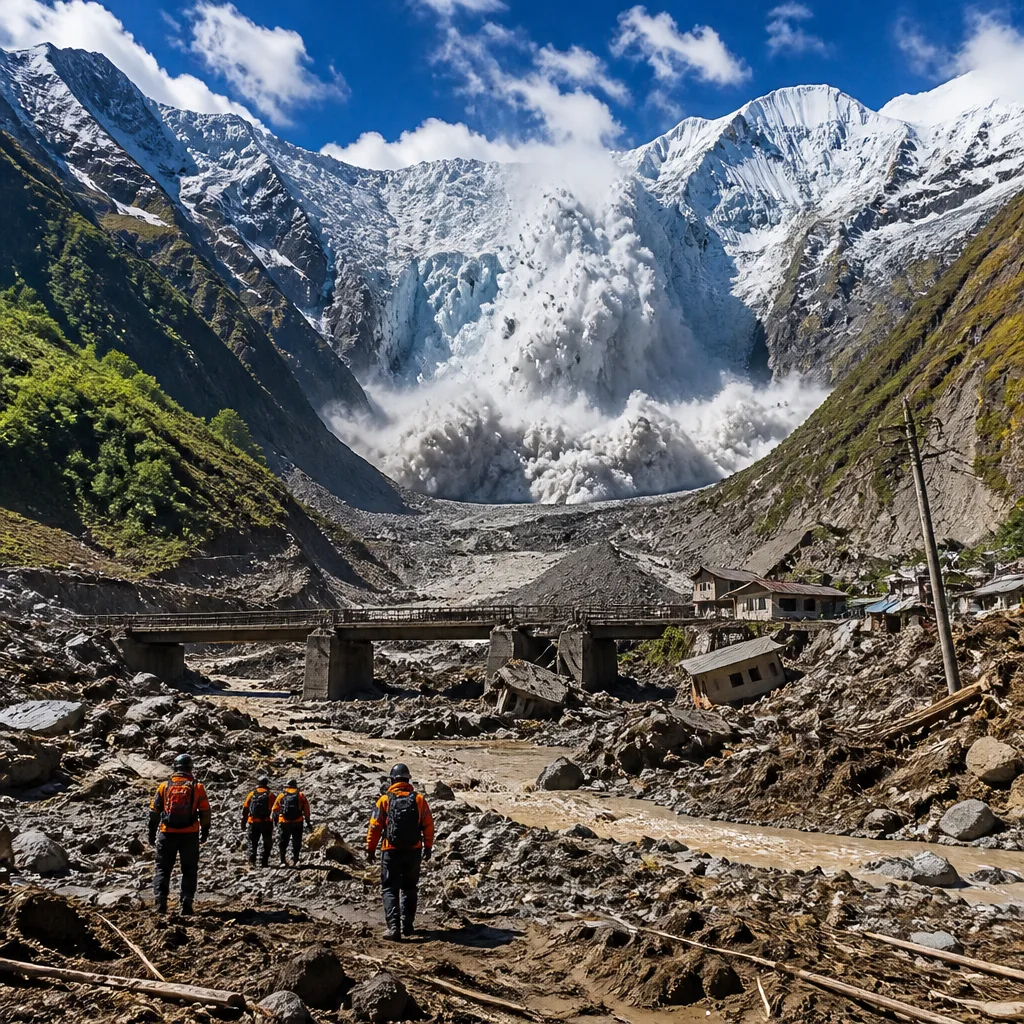
Floods and mudslides triggered by a sudden collapse of ice and rock along the Nepal-China border have left at least 289 people dead and 826 missing, according to the latest reports, of whom 517 were foreign nationals. The incident has destroyed homes, roads, bridges and power infrastructure and prompted urgent rescue operations in the affected valleys.
"It is too early to establish exactly what caused the glacier collapse."
Scientists emphasise that while the precise trigger for the collapse remains under investigation, the broader context is clear: the Himalaya are warming rapidly and the region's glaciers are retreating at an accelerating pace. Research cited in reporting indicates that ice loss across the Hindu Kush Himalaya is occurring at about twice the rate observed since 2000. Rapid change in the cryosphere increases the likelihood of several hazards that threaten communities and downstream infrastructure.
Immediate impacts and human toll
Local authorities report extensive damage to essential services. Access routes have been cut in many places by debris flows and landslides, complicating relief and recovery. With hundreds unaccounted for, international coordination is likely to be required for search, rescue and identification of foreign victims.
| Category | Number |
|---|---|
| Confirmed dead | 289 |
| Missing | 826 |
| Missing who were foreign nationals | 517 |
Scientific context — why the Himalaya are at rising risk
Cryosphere specialists caution that warming in the high Himalaya alters glacial stability and hydrology. When ice and talus detach en masse they can entrain rock and soil to produce fast-moving flows that transform into catastrophic floods downstream. Key hazards associated with rapid glacier change include:
- Glacial lake outburst floods (GLOFs), where lakes dammed by ice or moraines fail suddenly.
- Avalanches and icefalls from destabilised glacier snouts or hanging ice.
- Debris flows—high-density mixtures of water, sediment and boulders that scour valleys.
- Landslides on slopes weakened by thawing permafrost or heavy precipitation.
These processes are interlinked: a collapse in one sector of a glacier or a sudden rainfall event can cascade into multiple hazards. The reported increase in ice loss in the Hindu Kush Himalaya is therefore a major concern for disaster risk planners across the region.
Regional consequences and preparedness
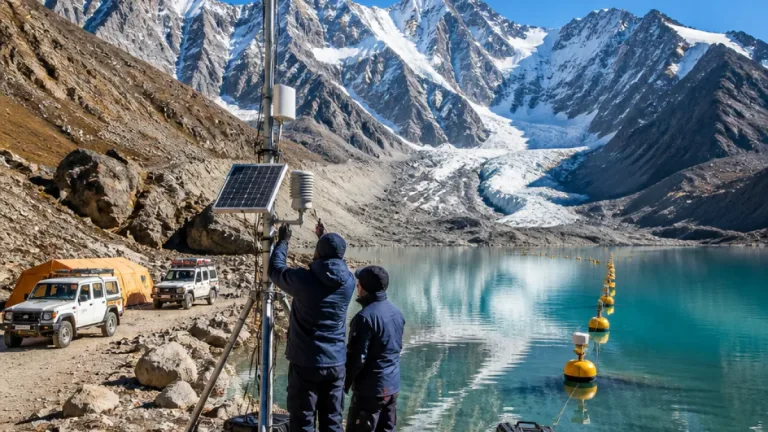
River systems originating in the Himalaya supply billions of people downstream and are central to irrigation, hydropower and drinking-water supplies. Sudden high-magnitude flows and sediment surges damage infrastructure, reduce reservoir capacity and create longer-term risks for water management. The current event underlines the need for strengthened early-warning systems, river monitoring and transboundary information sharing between Nepal, China and downstream countries including India.
Experts emphasise improved mapping of glacial lakes and vulnerable slopes, deployment of rapid remote-sensing surveillance, and investment in community-level preparedness measures as practical steps to reduce future losses. Engineering responses — such as controlled lowering of high-risk lakes or protective works — must be guided by robust scientific assessments to avoid unintended consequences.
As investigations continue into the immediate causes of the collapse, the disaster also highlights the broader policy challenge of adapting to a changing Himalayan cryosphere. With glaciers across the region shedding ice at an accelerating clip compared with the early 21st century, planners and communities will increasingly face complex, fast-moving hazards that demand coordinated science, infrastructure resilience and cross-border collaboration.
The human toll and damage to lifelines in this incident are a stark reminder that climate-driven changes in the high mountains are not a future problem but an unfolding reality with urgent humanitarian and environmental implications.