New Delhi, Aug 12: The Union Ministry of Environment, Forest and Climate Change on Wednesday outlined an expanded set of measures under Project Elephant aimed at reducing human–elephant conflict and protecting elephant corridors across the country.
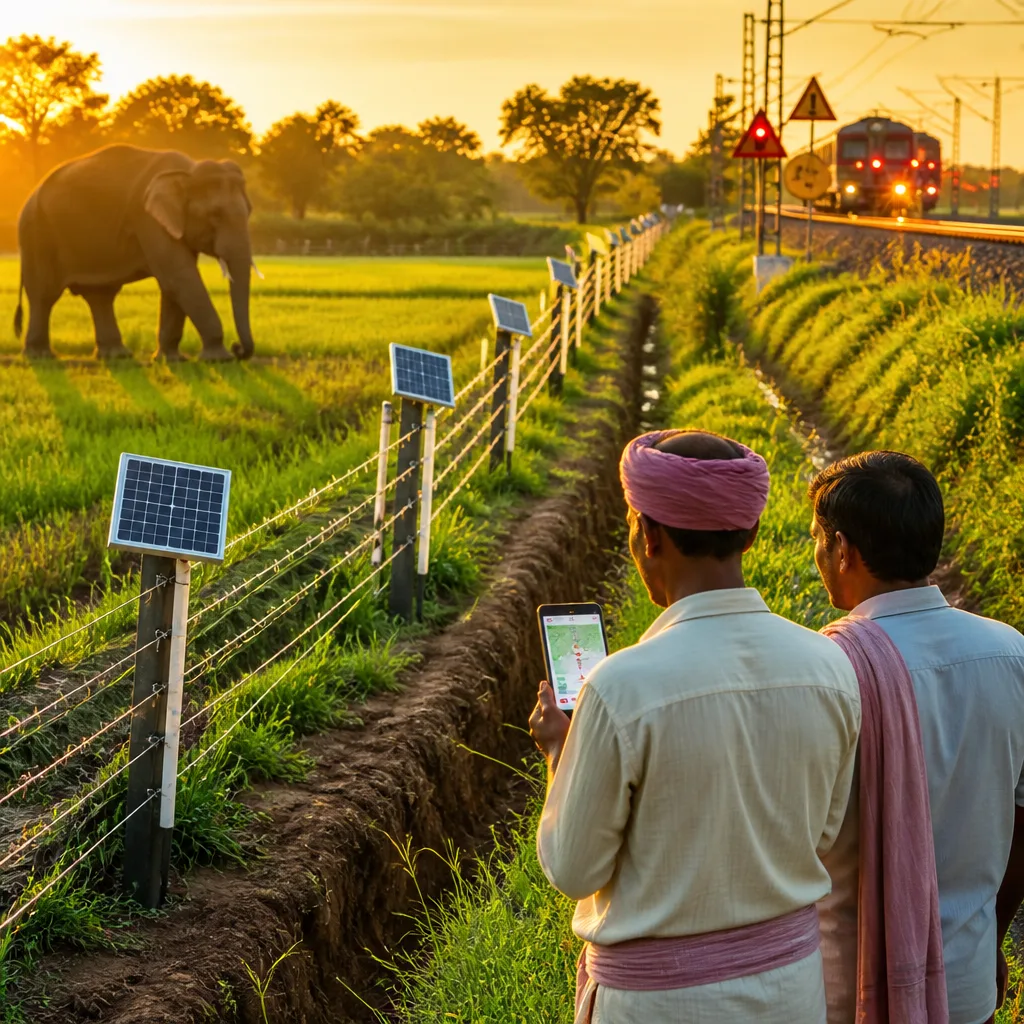
In a social media post marking World Elephant Day, Environment Minister Bhupender Yadav said the programme now includes early warning systems and artificial intelligence (AI)-based alerts to inform communities of elephant movements, installation of solar-powered fencing and trenches to deter crop incursions, and a mechanism for timely compensation to farmers who suffer crop losses.
"Project Elephant reflects India’s commitment to protecting elephants, conserving their habitats and promoting harmonious coexistence between elephants and communities."
Technology and rail safety
The minister also highlighted steps being taken with railways to reduce elephant fatalities on tracks. These include adopting warning signals, deploying AI tools to predict risky crossings, and imposing speed restrictions in critical corridors where elephant movements are frequent. The combination of technological interventions and operational changes aims to tackle one of the major causes of elephant mortality in recent years.
Officials said the push to integrate AI-driven alerts into field operations is intended to give communities and forest staff timely, localised information so that preventive action can be taken before animals enter agricultural areas or approach habitations. Solar-powered fencing and trenches are being promoted as physical deterrents where ecologically appropriate and not harmful to the animals.
Compensation, awareness and coexistence
Alongside physical and technological measures, Project Elephant emphasises compensation schemes to offset losses borne by farmers. The minister noted that faster, predictable payments are a key part of reducing antagonism towards elephants and encouraging tolerance among rural communities that live in or near elephant range.
Education and awareness campaigns are being advanced to strengthen community-level acceptance of conservation measures and to promote simple, low-cost practices that can reduce conflict. These include advising on safe behaviours during crop raids and steps to secure the perimeters of fields.
- Early warning & AI alerts: Aim to inform communities and forest staff of elephant movements in time to take preventive action.
- Solar fences & trenches: Physical measures to protect fields where suitable without endangering wildlife.
- Railway interventions: Warning systems, AI tools and speed restrictions in high-risk corridors.
- Timely compensation: Faster payments for crop damage to reduce economic burden on farmers.
- Education & awareness: Community outreach to foster coexistence.
Context and consequences
Human–elephant conflict remains a persistent challenge in several parts of India where expanding agriculture and settlements overlap with elephant habitats and migratory routes. Loss of crops and occasional casualties can fuel local resentment, sometimes leading to retaliatory actions against elephants. Strengthening early warning and compensation is intended to lower both the frequency and intensity of such confrontations.
Railway-related elephant deaths have attracted attention in recent years, prompting calls for coordinated action between the Ministry of Railways, state forest departments and conservation bodies. Operational measures such as speed restrictions in identified hotspots, combined with predictive tools, are increasingly seen as practical steps to reduce collisions without disrupting essential rail services unduly.
Project Elephant, launched in 1992, has historically combined habitat protection, rescue and rehabilitation, translocation where necessary and community engagement. The recent emphasis on AI and solar-powered infrastructure represents a shift towards integrating modern technology with traditional mitigation methods. The ministry’s statement frames these measures as complementary: physical barriers and technological alerts together with compensation and outreach.
Implementation and monitoring will be crucial. The effectiveness of AI alerts depends on data quality, network coverage and timely dissemination, while solar fencing and trenches require careful ecological assessment to ensure they do not unintentionally harm elephants or block natural movement corridors. Compensation schemes need administrative speed and transparent criteria to build local trust.
As states adopt the expanded measures, coordination between central and state agencies, the railways and local communities will determine how far Project Elephant can reduce conflict while conserving elephant populations and their habitats.
| Measure | Intended benefit |
|---|---|
| AI-based early warnings | Advance notice of elephant movements to communities and forest staff |
| Solar fences & trenches | Physical deterrence to protect fields |
| Railway speed restrictions & signals | Reduce train-elephant collisions in corridors |
| Timely compensation | Reduce economic losses and local antagonism |
— Environment Desk