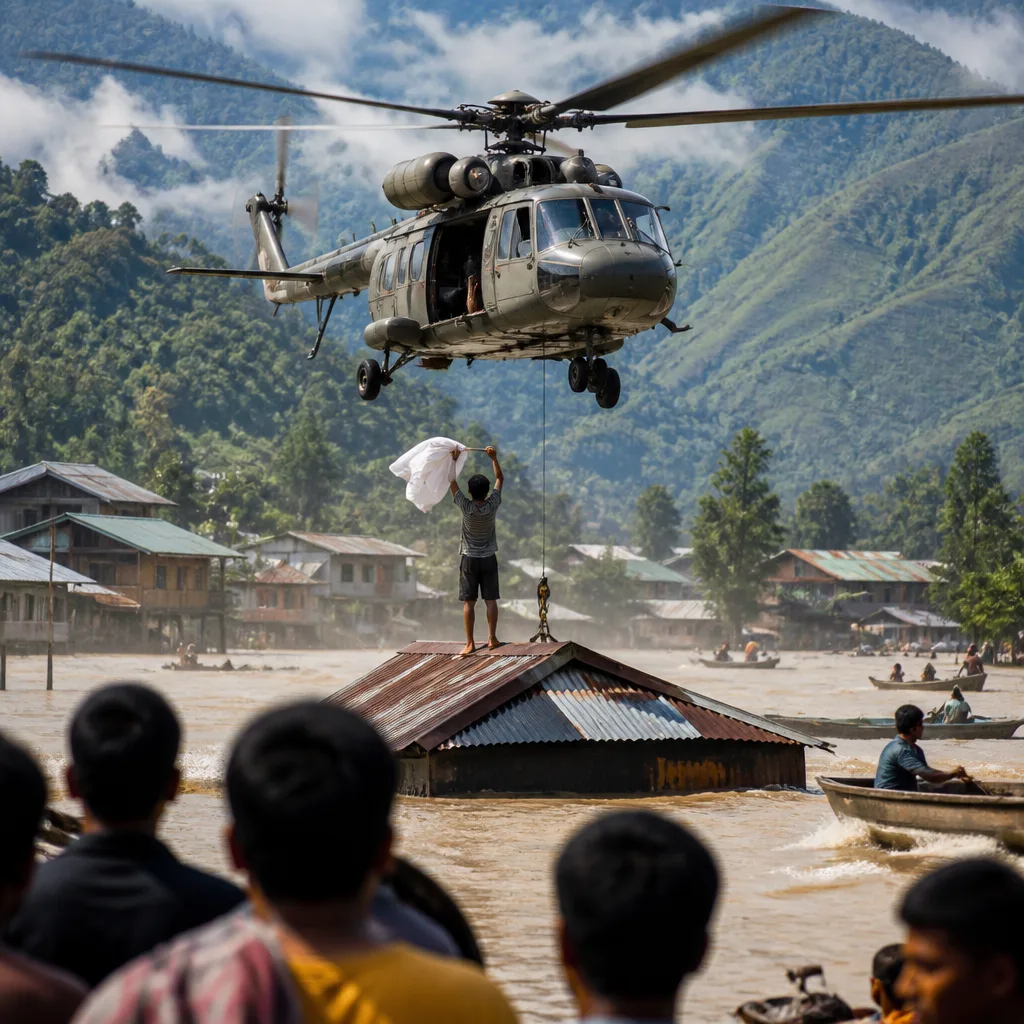
Kathmandu: A dramatic rescue by a Nepal Army helicopter was captured on video on Saturday as a boy stranded on a flooded rooftop waved his T‑shirt to signal crew aboard a hovering chopper and was subsequently hoisted to safety, footage circulating on social media showed.
Rescue amid a mounting humanitarian toll
The short clip, widely shared on social platforms and aired on television, shows the boy repeatedly waving a T‑shirt to attract the helicopter's attention. The aircraft moved close to the building, descended sufficiently for a soldier to reach out, and the child was pulled on board. People on the ground can be heard cheering as the helicopter carried the boy away from the rising waters.
The rescue comes as Nepal intensifies search, rescue and relief operations after floods that have swept through parts of the country. Media reporting on the crisis has cited official tallies that put the death toll at 359 bodies recovered and more than 1,000 people missing, figures that rescue agencies and authorities say underline the scale of the disaster and the urgent need for relief.
What the video shows and its wider significance
The footage illustrates two aspects of the emergency response: the use of rotary‑wing aircraft to reach isolated communities and the improvisation by those trapped to attract attention. In many affected areas, swift currents and inundated roads have made ground access impossible, leaving air operations by the Nepal Army and other agencies as the primary means of immediate evacuation.
- Air rescues: Helicopters have been used to lift stranded people from rooftops and high ground where floodwater has cut off routes.
- Community signalling: Residents have reportedly used clothing and other visible items to draw pilots' attention towards isolated houses.
- Casualty and missing counts: Official reports cited in media place recovered bodies at 359 and those missing at over 1,000, underscoring continuing search operations.
Authorities and responders are continuing operations despite challenging weather and terrain. The Nepal Army, which conducted the rooftop extraction seen in the video, has been central to the evacuation effort alongside civilian agencies. The footage has prompted expressions of relief and praise on social media for the rescuers who carried out the operation under risky conditions.
Regional response and immediate needs
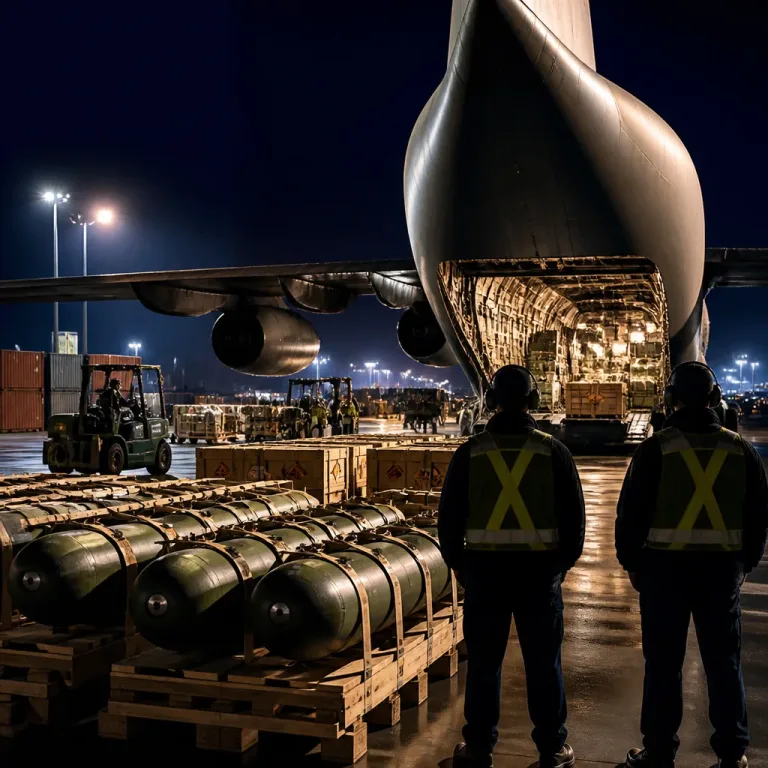
News reports have noted international and regional support activities, including shipments of relief materials. India has been reported to have dispatched relief supplies to Nepal, reflecting the established pattern of bilateral assistance during natural disasters in the subcontinent. Humanitarian organisations are focussing on food, shelter, medical care and restoring access to affected communities.
Officials have warned of ongoing risks as floodwaters remain high in several river basins and secondary hazards such as landslides threaten hill and mountain communities. Communications and transport disruptions complicate efforts to compile a comprehensive picture of damage and needs, and officials have appealed for manpower and logistics support to widen search operations.
| Metric | Reported figure |
|---|---|
| Bodies recovered | 359 |
| People reported missing | Over 1,000 |
While dramatic videos such as the rooftop rescue lend a human face to the crisis, authorities say the broader challenge remains locating and evacuating those still isolated, restoring lifelines and delivering relief at scale. The Nepal Army and other agencies have signalled that aerial rescues will continue as long as weather permits and targets are identified from the ground and by aerial reconnaissance.
As recovery and search work proceeds, questions about early warning, river management and preparedness are likely to shape the next phase of the response and public debate. In the immediate term, humanitarian agencies are focussed on meeting urgent needs and preventing further loss of life.
"People watching the rescue could be heard cheering and clapping," media reporting on the video said.
(Reporting draws on media coverage and official figures made public during the ongoing response.)