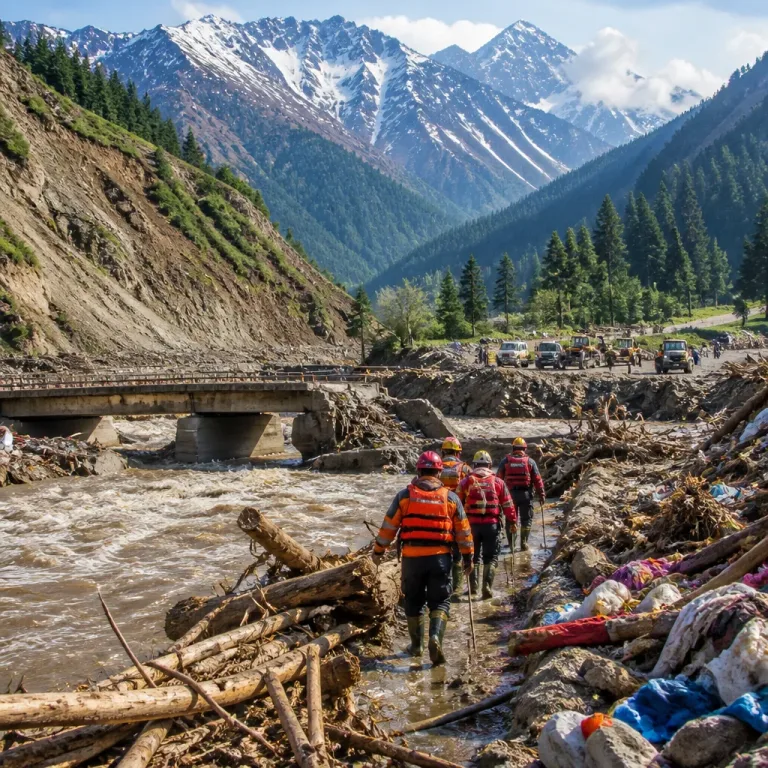
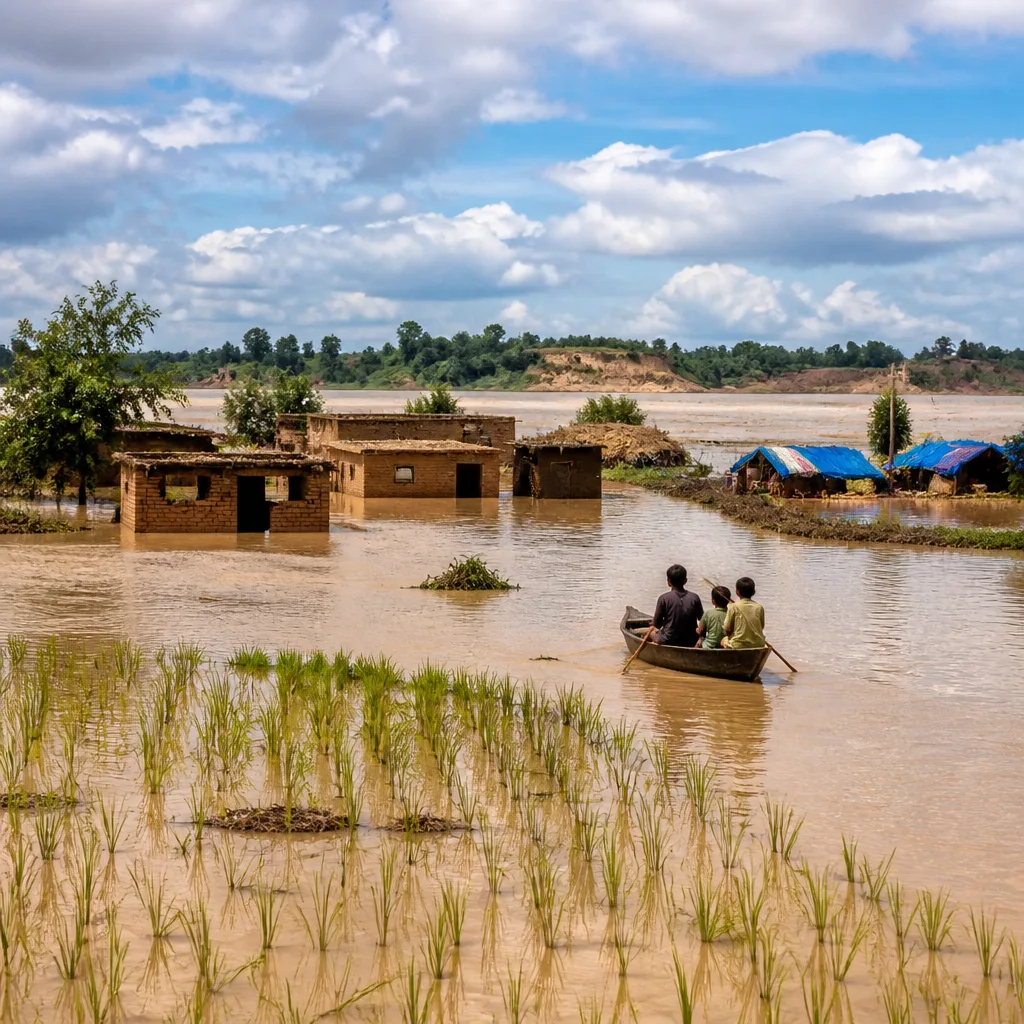
At least 97 people have died and nearly 1.7 lakh people have been affected by severe flooding in Assam, officials said on Friday, as swollen rivers inundated villages, homes and large tracts of farmland in one of the state's worst deluges in recent years.
Scale of the impact
Relief officials reported thousands of people have been moved to temporary shelters after rivers overflowed across several districts. Floodwaters have submerged more than 14,000 hectares of cropland — an area roughly one-and-a-half times the size of Paris — threatening the kharif season and livelihoods dependent on agriculture.
| Indicator | Reported figure |
|---|---|
| Fatalities | 97 |
| People affected | ~1,70,000 |
| Cropland submerged | 14,000+ hectares |
Ground situation and official response
AFP journalists in the worst-hit Sivasagar district observed half-submerged houses, uprooted trees and vehicles buried under mud. Assam Chief Minister Himanta Biswa Sarma posted a video of his visit to affected families, consoling bereaved parents. Union Health Minister J.P. Nadda, who visited the region, warned that recovery would take time given the "scale of the devastation".
"The scale of the devastation was so huge that it will take time,"
State and central authorities have mobilised relief teams and temporary shelters, while monitoring of rivers and flood-prone areas continues. The floods coincided with the June–September monsoon, when the Brahmaputra and its tributaries regularly breach banks across Assam; however, officials and experts say the recent episodes have been more destructive in parts.
Drivers: rivers, development and climate
Observers and advocacy groups point to a combination of factors behind the increased severity and extent of flooding. Changing river dynamics on the Brahmaputra system, local land-use changes and broader climate warming are being cited as contributors to the worsening trend.
Residents and some officials have specifically blamed illegal coal mining in neighbouring Nagaland for altering drainage and worsening inundation in areas that historically did not flood. Assam's Chief Minister said he would raise the matter with the Union government in New Delhi, signalling a potential inter-state environmental and regulatory issue.
Climate advocacy group Climate Trends said the rise in flood severity in Assam is driven by the "interaction of global warming, changing river dynamics and growing human exposure, making them more frequent, more complex and more costly". The group noted that human activities that increase exposure — settlement expansion, infrastructure close to riverbanks, and unplanned development — amplify the losses when extreme rainfall or river surges occur.
Implications for agriculture and recovery
Submersion of cropland at this scale threatens the kharif crop cycle, with potential knock-on effects for local food security and rural incomes. Loss of standing crops, damage to irrigation and farm assets, and soil erosion can lengthen recovery times for farmers, especially marginal cultivators who lack formal crop insurance or savings.
- Immediate needs include safe shelter, food, medical care and clean water for displaced families.
- Medium-term support will be required for agricultural rehabilitation, seed supply and repair of rural infrastructure.
- Longer-term measures involve improved land-use planning, regulation of mining and development near river corridors, and strengthened flood forecasting and early warning systems.
Experts have repeatedly urged better integrated river basin management for the Brahmaputra and its tributaries, enhanced community-level preparedness, and incorporation of climate projections into state planning. Such measures can reduce exposure and help prevent smaller floods from turning into humanitarian crises.
As rescue and relief operations continue, the unfolding situation in Assam will test the capacity of state and central agencies to coordinate emergency assistance, and will put renewed focus on policy responses for climate resilience and river management in the northeast.