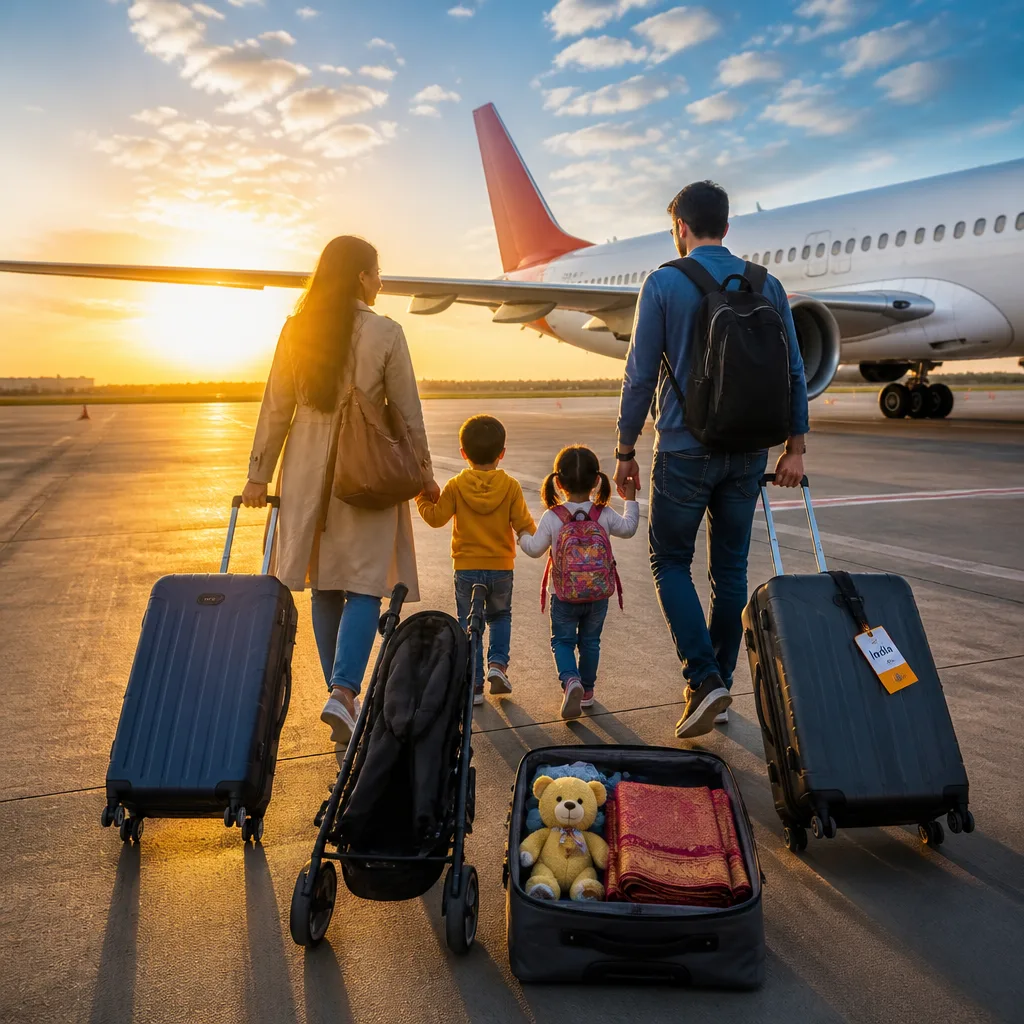
An Indian man who spent 20 years building his life and career in Australia has decided to return to India with his wife and children, saying their primary motivations are family care and cultural continuity. The couple, identified in a video shared on Instagram as Loveleen and Courtney Vats, set out their reasons for the move as they responded to mounting questions from their online followers.
Ageing parents and emotional urgency
The couple said the distance of roughly 10,000 kilometres from their parents made staying abroad increasingly difficult. “We want to live with our parents,” the Indian man explained, naming the pull of proximity as a key factor in the decision to return.
Analysts of reverse migration note that a combination of economic, social and emotional pressures often underpins such moves. For many middle‑aged migrants, the anxiety of missing vital stages in elderly parents’ lives — from routine companionship to end‑of‑life care — becomes decisive. The Vats’ announcement has resonated within global Indian communities, challenging the long‑standing assumption that migration is a one‑way journey.
Raising children with lived cultural exposure
Beyond caregiving, the couple said they want their children to experience India first‑hand rather than only through stories or occasional visits. They explained that while many parents emigrate seeking better opportunities for their offspring, returning home can reflect a reappraisal of what constitutes opportunity.
“Our children should get the experience of India's life, learn positive things from our Indian culture,” the couple said in the video.
The couple emphasised that embedding their children in everyday Indian life — the sights, sounds, festivals, family rhythms and neighbourhood interactions — was a conscious choice aimed at preserving cultural identity.
Practicalities and emotional cost
In the video, the Vats acknowledged that the decision was far from easy. They will leave behind a well‑paid job and a comfortable home in Australia — a pattern familiar to many in the diaspora who weigh material stability against familial bonds and cultural roots. While the couple did not disclose specific employment plans or the exact timing of their move, their public sharing has sparked conversations among Indians at home and abroad about the merits and challenges of reverse migration.
- Primary motivation: To live with and care for ageing parents.
- Secondary motivation: To give their children sustained exposure to Indian culture.
- Trade‑offs acknowledged: Leaving established careers and a comfortable life in Australia.
| Factor | Implication |
|---|---|
| Family proximity | Direct caregiving, emotional support for elderly parents |
| Cultural upbringing | Children to experience India's daily life and traditions |
| Economic considerations | Possible career adjustments after returning |
The Vats’ story adds to a growing body of examples where migrants reassess the balance between economic attainment and social or familial obligations. For many Indian families abroad, particularly those who left decades ago, evolving family structures and changing expectations for elder care are prompting renewed consideration of returning to India.
The announcement has drawn attention on social media and among diaspora networks because it reframes common migration narratives. Rather than presenting return as failure or retreat, the couple’s rationale places care, cultural transmission and emotional fulfilment at the centre of life planning — priorities that may matter as much as professional success.
As more migrant families consider similar moves, practical questions about housing, school choices for children, healthcare arrangements for elderly parents and employment remain central. The Vats’ public conversation underlines that reverse migration is often a complex, deeply personal negotiation of values, responsibilities and identity.
For those watching from afar, the couple’s decision prompts a broader discussion: what does ‘better’ mean when building a life for the next generation — material comfort overseas or the lived presence of extended family and cultural roots at home?