
The Victorian Space Science Education Centre (VSSEC) is marking its 20th year as Australia prepares for National Science Week, running from 15–23 August, which this year carries the theme “Seeds of Science: Nurturing knowledge for all”. Located on the campus of Strathmore Secondary College about 10 kilometres northwest of Melbourne’s central business district, the centre uses space-focused programming to attract students into science, technology, engineering and mathematics (STEM).
Two decades of hands-on STEM
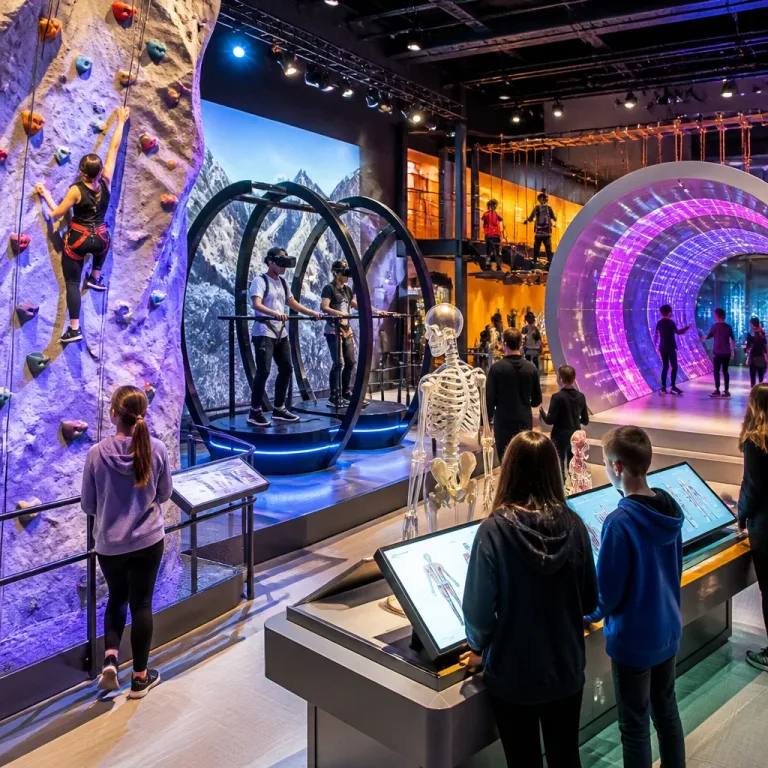
VSSEC’s director, Michael Pakakis — who is also an assistant principal at Strathmore — says the centre’s mission is to cultivate curiosity and a practical understanding of science. The facility delivers hands-on and immersive learning for children from Year 3 through Year 12, and has attracted substantial participation over its lifespan.
“For the last 20 years, every week has been Science Week here at VSSEC,”
According to figures provided by the centre, since opening in 2006 more than 250,000 students and teachers have taken part in its programs. Close to 20,000 students attend each year. VSSEC is one of six specialist maths and science centres that receive funding from the Victorian Department of Education, reflecting a sustained public investment in experiential STEM education.
From classroom concern to purpose-built centre
The centre’s origin traces back to Pakakis’s efforts in the late 1990s to reconnect young people with science. Troubled by falling enrolments in mathematics and science, he organised a two-week study trip for Year 9–11 students to the United States, visiting the Kennedy Space Centre in Florida and the US Space Camp in Alabama. Inspired by that exposure, Pakakis and colleagues pursued a local, Australian model rather than a simple replica of the US programmes.
They successfully lobbied for support from local members and secured a $6.4 million grant from the Victorian government to build a purpose-designed facility tailored to Australia’s classroom needs. The centre now operates as a specialist STEM hub that aims to provide an alternative to traditional lecture-based teaching by offering practical activities and simulations related to space science.
- Programs aimed at Years 3–12 include laboratory work, mission simulations and teacher professional development.
- The centre reports nearly 20,000 student visits annually and more than 250,000 participants since 2006.
- VSSEC is one of six Victorian specialist maths/science centres supported by the state education department.
Why it matters
National Science Week’s 2026 theme — nurturing curiosity and applying scientific knowledge to real-world problems — aligns with VSSEC’s approach. The centre’s combination of immersive activities and curricular alignment is presented as a response to declining classroom engagement in the late 20th century, and as a model for how place-based, experiential learning can complement school science.
That alignment is significant for policymakers and educators seeking to boost STEM participation. Centres that link tangible experiences with classroom learning may help to reverse trends in subject enrolment and to broaden the pipeline into tertiary STEM study and related careers. The Victorian government’s ongoing funding for specialist centres suggests a continuing commitment to that strategy.
| Metric | Figure |
|---|---|
| Years since opening | 20 (opened 2006) |
| Total participants since opening | 250,000+ |
| Annual student visits | ~20,000 |
| State grant to build centre | $6.4 million |
As National Science Week draws public attention to the role of science in society, VSSEC’s anniversary offers a concrete example of long-term investment in science literacy. Whether the model can be scaled or adapted more broadly depends on educational priorities, funding choices and evidence about what kinds of engagement most effectively translate into sustained interest and achievement in STEM subjects.
The coming week of events across Australia will spotlight similar questions: how to plant the seeds of scientific inquiry and how to tend them so that curiosity grows into capability.