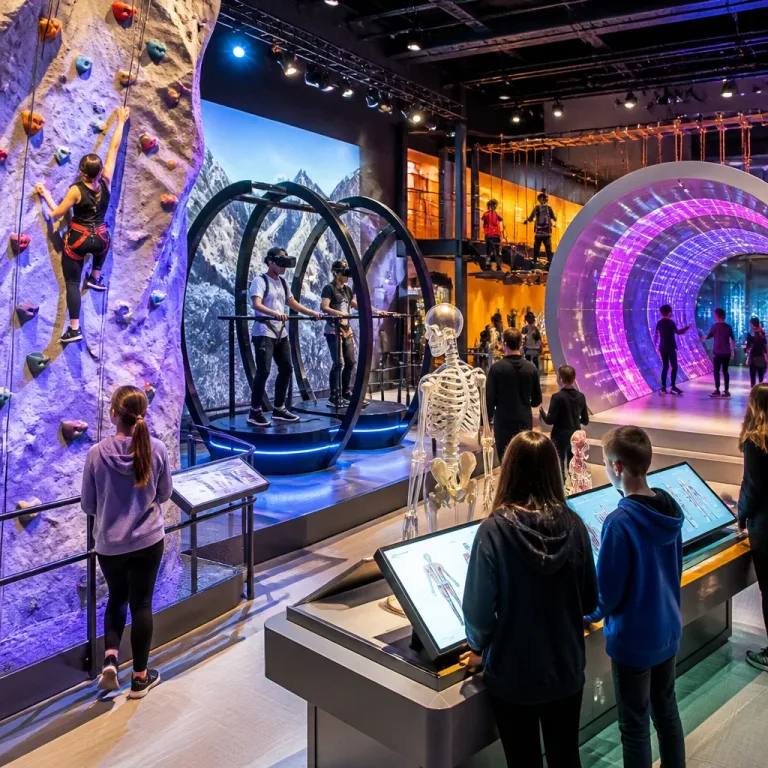

The Cranbrook Institute of Science in Bloomfield Hills, Michigan, is leaning on its deep collections and a mix of galleries to draw visitors into questions about Earth’s formation, geological processes and the long arc of life on the planet.
Collections as storytelling
The museum houses more than 200,000 objects, including gems and minerals, anthropological artefacts, taxidermy and paleontological specimens that museum leaders say are organised to help the public translate curiosity into scientific learning.
“My hope is that people will come and spend the day and make memories that forever connect them to nature, science, and art,” said Lucy Hale, the Susan Flint Cooper Director of the Cranbrook Institute of Science. The museum blends permanent and travelling displays to build narratives about our planet and its past.
“There’s a lot of minerals that are incredibly beautiful, and will draw you in, and you want to know more about them,” Hale said.
From pink tourmaline to plate tectonics
Staff point out that the mineral displays are more than decorative: they are tools for explaining how the Earth formed and how different chemical and physical processes produce the variety of colours and textures seen in gem‑quality specimens. Visitors can examine questions such as why one tourmaline appears pink while another is green — a doorway into chemistry, crystallography and geologic context.
In the “Every Rock Has a Story” gallery, rocks are presented as evidence of Earth’s history. Exhibits walk visitors through volcanic activity, the movement of tectonic plates and the processes that cause minerals to aggregate into rocks. The goal is to transform everyday stones into clues about planetscale systems.
Deep time and a familiar dinosaur
The museum’s “Life Changes Over Time” gallery focuses on evolution and deep time. One of the most visible centrepieces is a model Tyrannosaurus rex that staff have nicknamed Black Beauty. The dinosaur display connects visitors to palaeontological methods and the millions of years of biological change that produce modern biodiversity.
Curators highlight that the collections include some of the original mineral specimens that helped found the institute, providing a throughline from the museum’s origins to current educational programming. By situating old pieces alongside newer acquisitions and rotating exhibits, Cranbrook aims to make scientific concepts accessible to families and school groups.
- Collection size: more than 200,000 objects
- Galleries: Mineral Study Gallery; Every Rock Has a Story; Life Changes Over Time
- Notable exhibit: model T‑Rex nicknamed Black Beauty
| Gallery | Primary focus |
|---|---|
| Mineral Study Gallery | Minerals, gems and Earth formation |
| Every Rock Has a Story | Geological processes and rock formation |
| Life Changes Over Time | Palaeontology and evolutionary history |
The institute positions beauty as an entry point to scientific questions: displays that capture attention also prompt visitors to ask how and why natural materials differ. That pedagogical strategy underpins much informal science education, where hands‑on curiosity and visual spectacle are used to introduce concepts that might otherwise seem abstract.
For museums broadly, the challenge is balancing conservation, scholarship and public programming. Cranbrook’s permanent holdings — some of which date back to the institute’s founding — offer researchers and staff an archival depth that supports both displays and study. At the same time, travelling exhibits allow the museum to refresh content and reach returning visitors with new perspectives.
As institutions such as Cranbrook continue to reframe collections as narratives, they also play a role in community science literacy. By connecting mineral colours to chemistry, rock textures to tectonics and fossil mounts to deep time, the museum seeks to help visitors leave with a clearer sense of how Earth and life have changed — and how those changes are still relevant to the present day.