
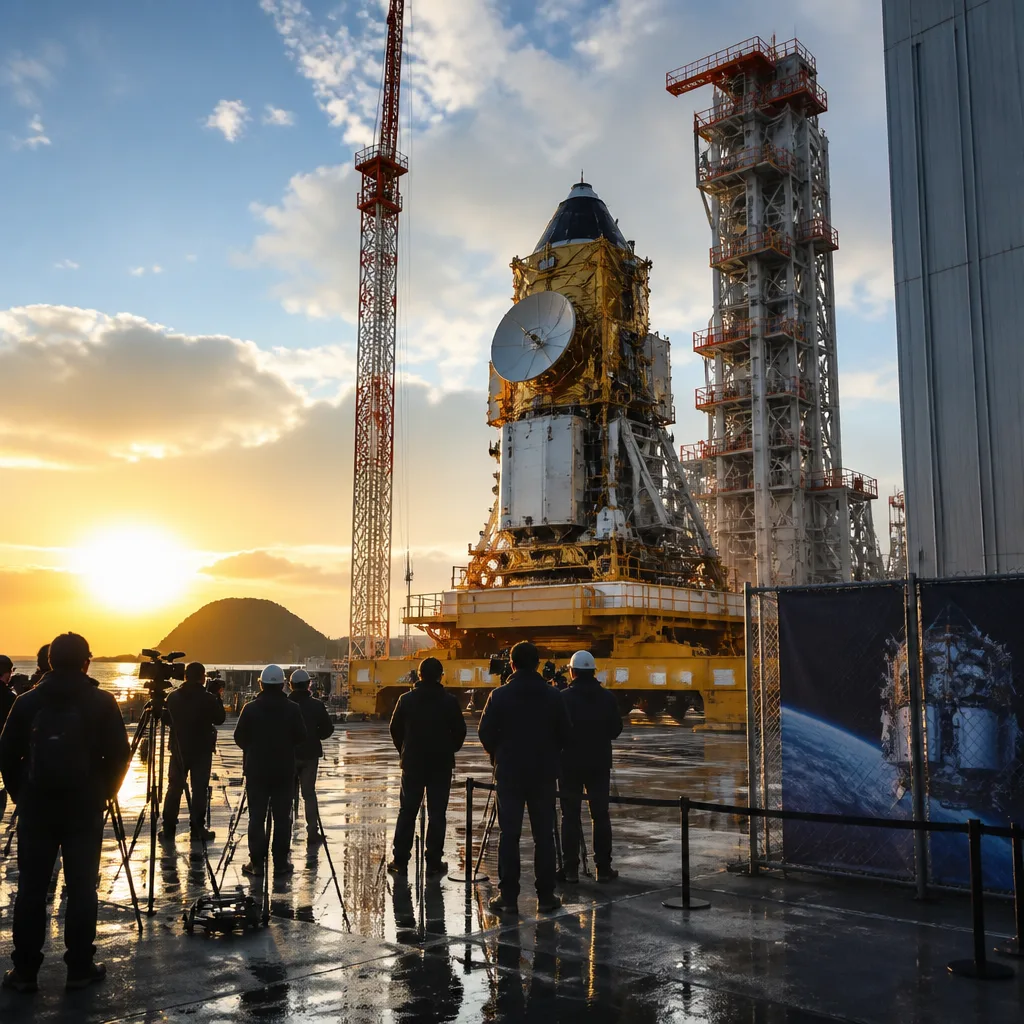
Japan has unveiled the spacecraft for an ambitious mission to the moons of Mars that aims to bring back material that could help scientists probe the early solar system and the origins of life on Earth. The unmanned Martian Moons eXploration, or MMX, is scheduled to launch from the Tanegashima Space Center in the coming months and will spend roughly three years operating around Mars, including an attempt to land on the larger moon Phobos.
Mission goals and timeline
The MMX mission was shown to the media this week at Tanegashima, where project manager Yasuhiro Kawakatsu spoke in front of the spacecraft. The mission will focus on collecting and returning samples from Phobos, with the broader scientific aim of shedding light on the processes that shaped the solar system and possibly contributed to the emergence of life on Earth. The spacecraft will remain in Martian orbit for about three years while undertaking surface operations.
Scientific significance
Samples from Phobos could provide unique information because the moon may preserve materials that are rare or altered on Earth. By analysing returned fragments, researchers hope to test competing ideas about the moons’ origins and the history of material exchange in the inner solar system. The mission also carries a practical dimension: its technologies and operations could help prepare future crewed missions to Mars by validating landing, sampling and return techniques in the Mars environment.
International context and competition
Japan’s effort is unfolding against a backdrop of active competition in planetary exploration. Chinese space authorities are pursuing a rival mission to Mars’ moons and aim to be the first to return samples. That rivalry sharpens the strategic and scientific stakes of MMX and underscores the broader international drive to secure high-value samples from planetary bodies beyond the Moon.
- Spacecraft: Martian Moons eXploration (MMX)
- Launch site: Tanegashima Space Center
- Primary target: Phobos (landing and sample collection)
- Orbital operations: Approximately three years around Mars
| Aspect | Detail |
|---|---|
| Mission name | MMX (Martian Moons eXploration) |
| Primary objective | Land on Phobos and retrieve samples |
| Operational period | ~3 years in Mars orbit |
| Launch location | Tanegashima Space Center |
The public reveal at Tanegashima highlighted both Japan’s technical preparedness and the mission’s scientific promise. MMX’s designers face the difficult challenge of conducting a soft approach and surface operations on Phobos, a low-gravity body with a rugged, irregular surface that complicates landing and sampling.
Beyond its immediate science goals, MMX is also being watched as a step toward eventual human exploration of Mars. Engineers and planners view successful robotic sample return missions as essential precursors that reduce risk and build operational knowledge for future crewed expeditions.
As launch preparations proceed in the coming months, the mission will draw attention from planetary scientists eager to examine returned material as well as from policy observers tracking the intensifying competition in deep-space exploration. If MMX succeeds in returning Phobos samples, the results could reshape aspects of planetary science and provide fresh material for laboratories worldwide to test longstanding hypotheses about our solar neighbourhood.