
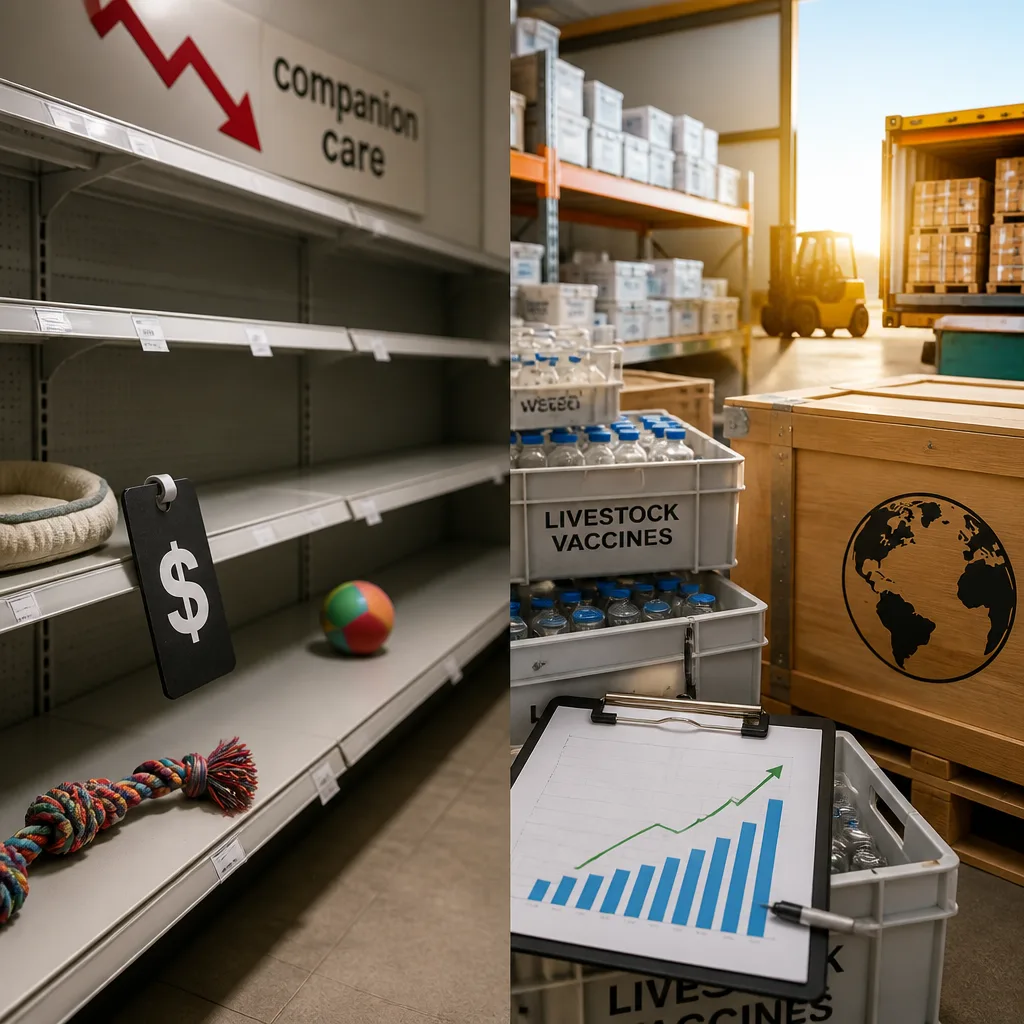
Zoetis Inc. reported fiscal second‑quarter revenue of $2.5 billion, effectively flat year‑on‑year, with organic operational revenue down by 1%. The company said pressure in the US companion‑animal market offset gains in livestock and international markets, producing a bifurcated performance across its business.
Two faces of Zoetis: pets under pressure, livestock and overseas firms growing
The quarter underlines how durable market positions do not fully immunise firms from changing consumer behaviour. Zoetis' companion‑animal business, long a core earnings engine, stalled in the United States as pet owners reportedly became more price sensitive. By contrast, its livestock operations and overseas sales provided resilience.
Key segment outcomes for the quarter, as reported by the company, included:
- Livestock revenue: up 12% on a reported basis, helped by cattle and poultry products.
- US livestock sales: rose 23% on both a reported and organic operational basis, reflecting favourable beef‑cattle economics, supply timing and higher poultry‑vaccine volumes amid disease outbreaks.
- International revenue: increased 8% reported and 6% on an organic operational basis to $1.2 billion.
- International companion‑animal sales: grew 5% organically, supported by parasiticides and diagnostic and osteoarthritis products.
| Metric | Change | Notes |
|---|---|---|
| Total revenue | $2.5bn | Flat year‑on‑year; organic down 1% |
| Livestock revenue | +12% | Strong growth in cattle and poultry products |
| US livestock sales | +23% | Benefitted from cattle economics and poultry‑vaccine demand |
| International revenue | $1.2bn | +8% reported, +6% organic |
Pipeline and new products: routes back to growth
Zoetis is also pursuing growth through product development. The company reported a pipeline of more than a dozen potential blockbuster candidates covering chronic kidney disease, oncology, cardiology, anxiety and obesity — therapeutic areas that could reshape future revenue mix if clinical and regulatory milestones are met.
In the nearer term, Zoetis has launched two long‑acting osteoarthritis therapies — Lenivia and Portela — which offer dogs and cats up to three months of pain relief from a single injection. The firm is also expanding beyond medicines, signalling an effort to broaden revenue streams.
What the quarter means for investors and industry participants
The split result matters for several groups. Investors looking for reliable income and defensive exposure in animal health will note that headline revenue held steady, but organic weakness in the US pet market introduces near‑term uncertainty for margins and dividend coverage. For agricultural suppliers and processors, the strong livestock performance underlines how animal‑health demand can track commodity cycles and disease events.
For pet owners and veterinary practices, the pause in US companion‑animal growth suggests greater price sensitivity — a reminder that premiumisation in pet care can be cyclical. For international markets, steady growth in parasiticides and diagnostics demonstrates continued demand for preventive care and newer therapeutics.
Zoetis’ growth narrative therefore pivots on two levers: converting pipeline candidates into approved, revenue‑generating products and sustaining momentum in livestock and international markets while navigating subdued demand in the US pet segment.
As ever with corporate results, timing matters. The company’s investments in long‑acting therapies and a broad clinical pipeline could deliver outsized returns if trials and launches succeed, but they also carry the development risk that investors must weigh against the near‑term headwinds in companion‑animal spending.
WE NEWS does not provide financial advice. Readers should consider company filings and consult authorised advisers before acting on investment information.













