
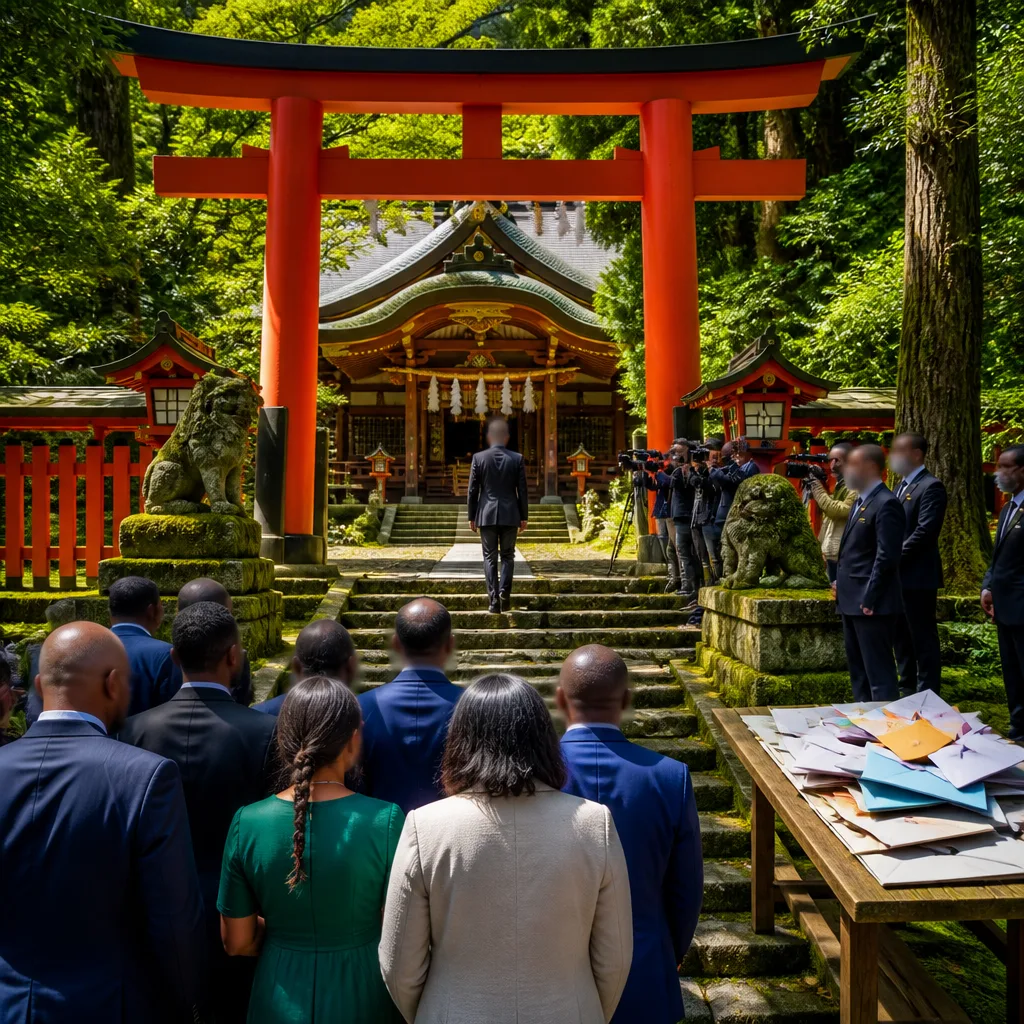
People crowded Yasukuni Shrine on 17 August 2026 to mark the 81st anniversary of Japan’s surrender in World War II, and the familiar political choreography followed: a Cabinet minister attended and, as has become routine, the governments of China and South Korea issued diplomatic protests.
Politics, memory and a fixed script
The ritual surrounding Yasukuni Shrine has long been a barometer of Tokyo’s postwar diplomacy. Every 15 August, attention turns to which Japanese politicians will visit and in what numbers. This year, that script played out in recognisable fashion: attendance by a government minister was followed by protests from Japan’s neighbours, who cite unresolved wartime grievances.
Understanding the controversy requires more than noting the annual exchanges. The shrine’s history, the political baselines and how circumstances have shifted over decades are central to why these visits elicit such sustained reaction from the international community. In short: the site is not merely a place of remembrance but a contested symbol of how Japan remembers — and how others interpret that memory.
"People crowd in front of Yasukuni Shrine to pay tribute to the war dead on the 81st anniversary of Japan's surrender in World War II, in Tokyo on Saturday." — Reuters, 17 August 2026
Who benefits and who pays
The ritual offers clear political returns for domestic actors. Attendance at Yasukuni can be presented to certain voter segments as a demonstration of respect for those who died, and a marker of national identity. That political benefit comes with a diplomatic cost: routine protests from Beijing and Seoul, and periodic strains in bilateral relations.
For Tokyo, the stakes are both symbolic and practical. Symbolically, visits to a site associated with Japan’s wartime past force a reckoning — internal and external — about how history is commemorated. Practically, repeated diplomatic protests complicate efforts to build regional cooperation on security, trade and shared strategic concerns.
- Date: 17-08-2026 (81st anniversary of Japan's surrender)
- Event: Annual visits and public commemoration at Yasukuni Shrine
- Immediate reaction: Diplomatic protests from China and South Korea following ministerial attendance
Context matters
Reporting around Yasukuni has to balance details of attendance with the broader historical context. The shrine enshrines those who died in conflict, but because it also honours Class-A war criminals from the Second World War, visits by politicians have long been perceived abroad as a refusal to fully acknowledge wartime transgressions. That perception drives the diplomatic protests that routinely follow.
In an era of fast information and frequent misinformation, the ritualised nature of these exchanges can be misread as mere posturing unless readers are given the fuller backdrop: the origins of the shrine, the evolution of Japanese domestic politics around national memory, and how those debates project outward. Quality journalism, including patient historical explanation, remains essential to make sense of the annual choreography.
For observers in the region and further afield, the recurring pattern around Yasukuni is a reminder that memory politics still shape contemporary diplomacy. The actors may change, and the immediate political calculation may vary, but the underlying tensions — between domestic commemoration and regional reconciliation — endure.
| Item | Detail |
|---|---|
| Anniversary | 17 August 2026 (end of World War II) |
| Common pattern | Ministerial attendance → protests from China and South Korea |
The annual observance at Yasukuni is therefore more than ritual; it is a diplomatic test case. Each visit, each protest, and each public debate cumulatively shape how the region manages a painful shared past — and how governments weigh domestic political advantage against the costs to international relations.












