The transition to a low‑carbon economy cannot be judged only by how quickly solar panels, batteries or wind turbines travel around the globe. Equally important is who holds the know‑how to design, adapt and manufacture those technologies. Historical patterns of concentrated capability raise hard questions about whether the benefits of the green transition will be widely shared.
Historical concentration of capability
Industrial history shows a repeated separation between where goods are used and where the power to design and extract value from them sits. By the mid‑1800s, steam locomotives were operating in almost 60 countries, yet full capability to supply them was restricted to Britain, the United States and certain German states. Telegraphy followed a similar pattern. The auto industry, which matured around the turn of the 20th century and globalised after World War II, still left original equipment manufacturing concentrated: only Japan and South Korea ultimately joined an exclusive club that developed, produced and exported whole vehicles.
Those precedents matter because they show two distinct outcomes. One is rapid global spread of products while design, high value services and profitable intellectual property remain tightly held. The other is a more distributed model in which countries develop local capabilities to build and adapt technology to their own needs, and to capture more of the value chain.
“The success of the low‑carbon transition should not be measured only by the speed at which technologies spread, but also by how widely the capabilities to innovate, adapt, and produce them are distributed.”
Why capability matters
When capability is concentrated, importing countries gain access to products but miss out on the better‑paid activities of design, advanced manufacturing and services. That has two consequences for economies: fewer high‑value jobs and greater vulnerability to supply shocks or shifts in global market power. A more evenly distributed industrial base, by contrast, allows countries to tailor solutions to local conditions, support domestic industry and build resilience through regional cooperation.
- Adaptation: Local design capacity helps tailor technologies to specific climates, infrastructure and skills.
- Value retention: Manufacturing and services retain more of the economic benefit within countries and regions.
- Resilience: Distributed capability reduces dependence on a narrow set of global suppliers.
What history suggests for the low‑carbon transition
The information‑technology era illustrated a further evolution: design concentrated in some places, assembly and mass production in others — the “designed in California, assembled in China” model. That arrangement created vast employment and export opportunities in assembly economies, but it also institutionalised a division between knowledge‑intensive, better‑remunerated activities and labour‑intensive, lower‑paid work.
For the low‑carbon transition, the question is whether a similar split will emerge — with design, intellectual property and high‑margin components remaining in a few centres — or whether a different model can be pursued. The alternative is a world in which countries develop end‑to‑end capabilities at scales that match their needs and where complementary competencies enable mutually beneficial collaboration.
| Technology or era | Observed pattern |
|---|---|
| Steam locomotives (mid‑1800s) | Deployed widely; full supply capability concentrated in Britain, US, German states |
| Telegraphy | Uneven pattern of capability |
| Automotive industry (20th century) | Global manufacturing spread; OEM capability limited to a few (Japan, South Korea joined later) |
| Information technology (post‑Cold War) | Design concentrated; assembly and mass production distributed (“Designed in California, assembled in China”) |
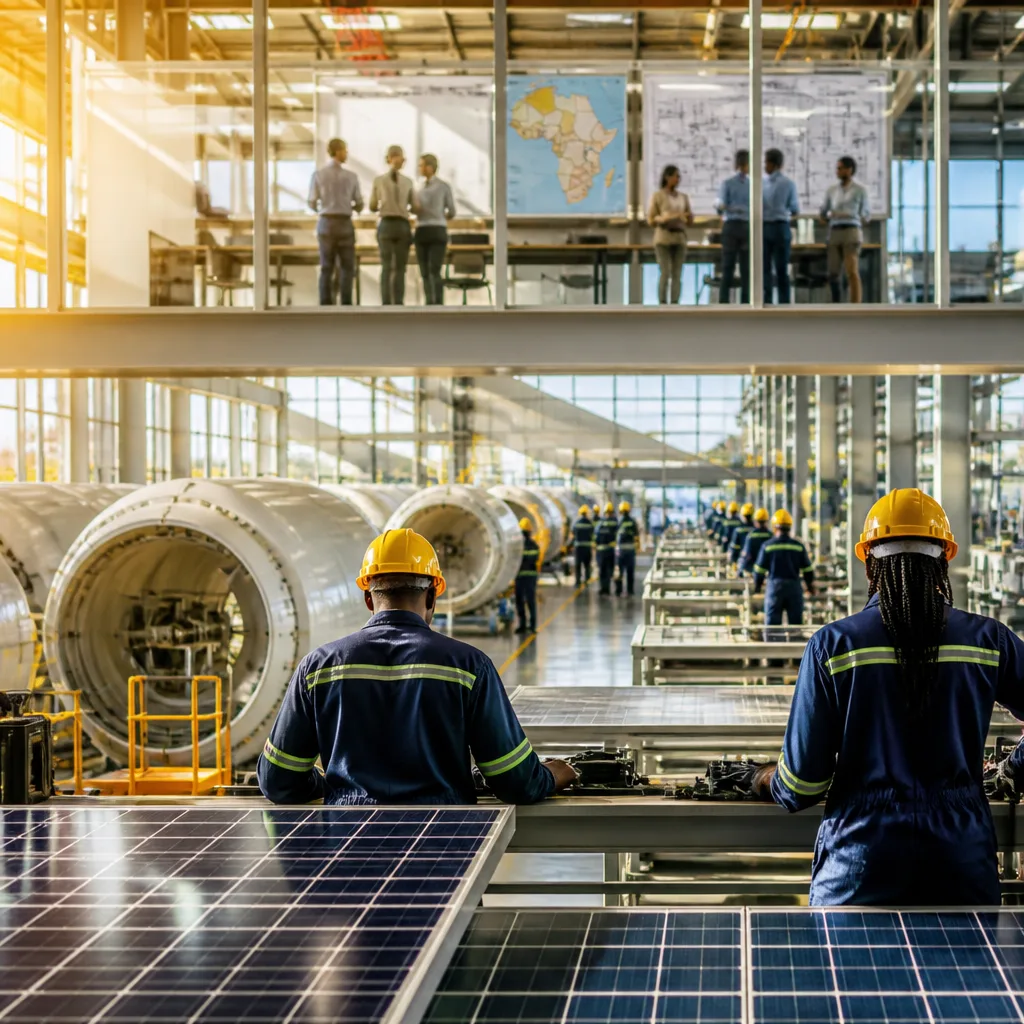
Policymakers and industry leaders thinking about renewables, batteries, hydrogen and other low‑carbon technologies need to decide which model they wish to pursue. Should a country aim primarily to be a large installer and assembler, or should it invest in research, development and manufacturing capacity that captures more of the value chain?
Each path implies different industrial policy, skills development and trade strategies. Building local capability requires patient investment in research institutions, training, pilot manufacturing and regulatory frameworks that support scaling. Conversely, relying on imported finished goods can deliver rapid deployment but risks leaving economies exposed to foreign competition for the higher value activities.
History offers both caution and possibility: past globalisation concentrated control of design and high value functions, but complementary competencies and cooperation created pathways for countries to climb the value chain. The success of the low‑carbon transition will hinge not only on the speed of technology diffusion but on deliberate choices about where capability is created and retained.
That strategic choice will determine which countries gain jobs, industrial growth and resilience as the world decarbonises.