The World Health Organization has publicly challenged recent changes to United States childhood vaccination policy, saying political moves to alter schedules and split combined vaccines run against long‑standing scientific evidence.
WHO stresses science should guide immunisation policy
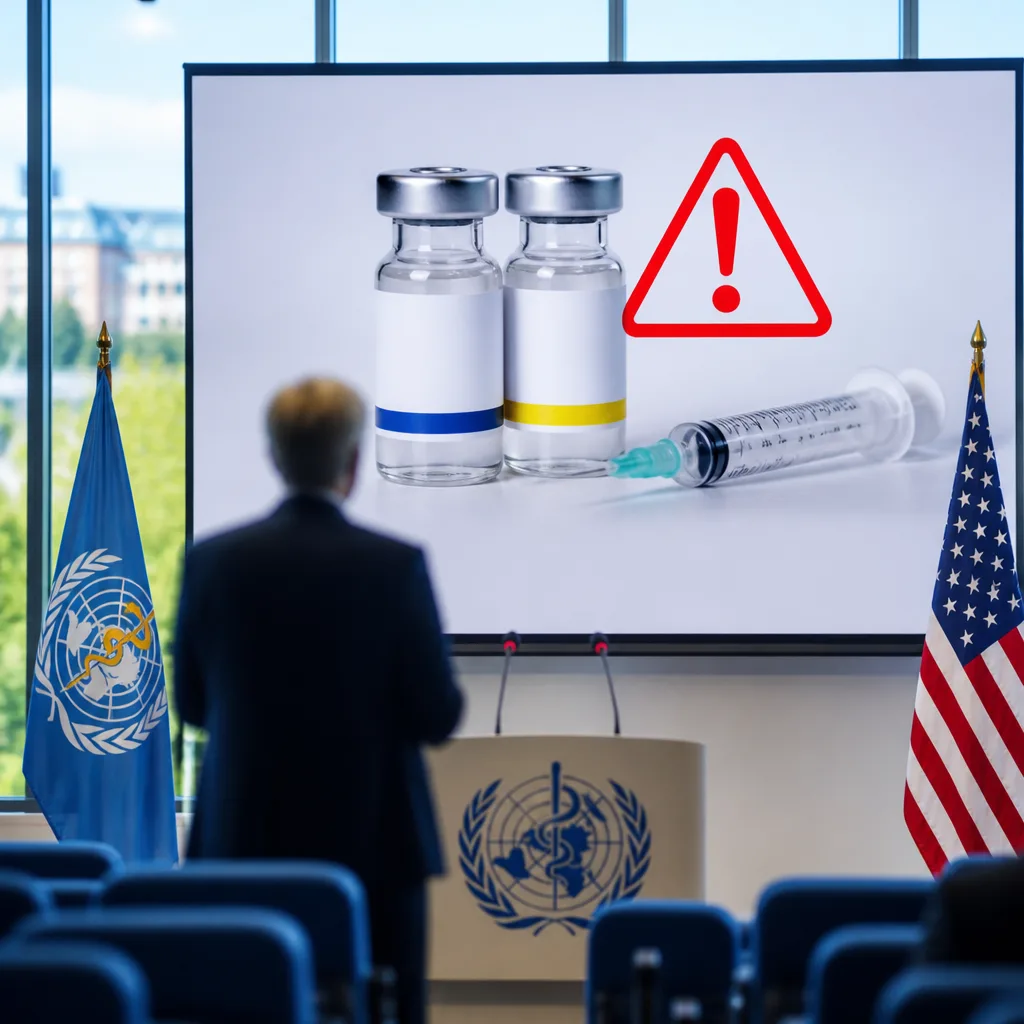
Tedros Adhanom Ghebreyesus, the WHO director‑general, posted a blunt reminder on social media that vaccines are safe and urged national authorities to base policy on independent review of the evidence. He warned that unnecessary delays or separation of vaccine doses can reduce protection for children.
“Vaccination policy should be guided by rigorous, independent and transparent review of the best available science, not by political influence,” the WHO chief wrote. “Vaccines including the MMR vaccine are safe and do not cause autism.”
The statement followed an executive order from United States President Donald Trump calling for a reassessment of school vaccine mandates and renewed advocacy by the US Health Secretary for splitting the measles, mumps and rubella (MMR) immunisation—currently delivered as a combined vaccine—into separate injections.
Concerns over US policy shifts and their consequences
WHO cautioned that separating the MMR into three distinct doses or delaying recommended timing does not make vaccination safer and may leave children susceptible to preventable disease. The agency emphasised that evidence is continuously reviewed as fresh data emerge worldwide.
Public attention to this debate has intensified amid renewed measles activity in the US: one health report cited in the original coverage noted that the US had recorded 2,318 measles cases, a total that exceeded the whole of 2025. That rise underlines the stakes of any change to childhood immunisation practice.
Actions taken by the US Health Secretary
The US Health Secretary, Robert F. Kennedy Jr, has for years questioned the safety profile of the MMR vaccine and promoted a link with autism—a claim that remains unsupported by scientific research. Since his appointment the source material reports he has:
- launched a broad review of established vaccines,
- rewritten the childhood immunisation schedule, and
- reduced funding for new vaccine development.
Those moves prompted the WHO director‑general to stress that immunisation programmes should be shaped by transparent, independent evaluation rather than political direction.
| Issue | WHO position |
|---|---|
| MMR safety | Safe; no link to autism |
| Splitting MMR doses | Not recommended; can reduce protection |
| Policy basis | Should follow rigorous, independent science |
What this means for South African readers
Although this exchange is centred on US policy, WHO guidance influences immunisation strategy worldwide. National programmes rely on the same body of evidence cited by the WHO chief when setting schedules and communicating vaccine safety to caregivers.
Health communicators and clinicians are reminded that undermining confidence in well‑established vaccines can have rapid public‑health consequences. Where vaccine uptake falls, outbreaks of highly contagious illnesses such as measles can and do follow.
Readers are urged to consult local clinic staff or paediatricians about vaccination questions rather than relying on political statements. Healthcare professionals and parents should continue to seek information from recognised public‑health authorities and peer‑reviewed science when making decisions about childhood immunisations.
All medical concerns should be discussed with a qualified clinician. This report is based on statements from the World Health Organization and accounts of recent US executive actions and public health data as described in the source material.