
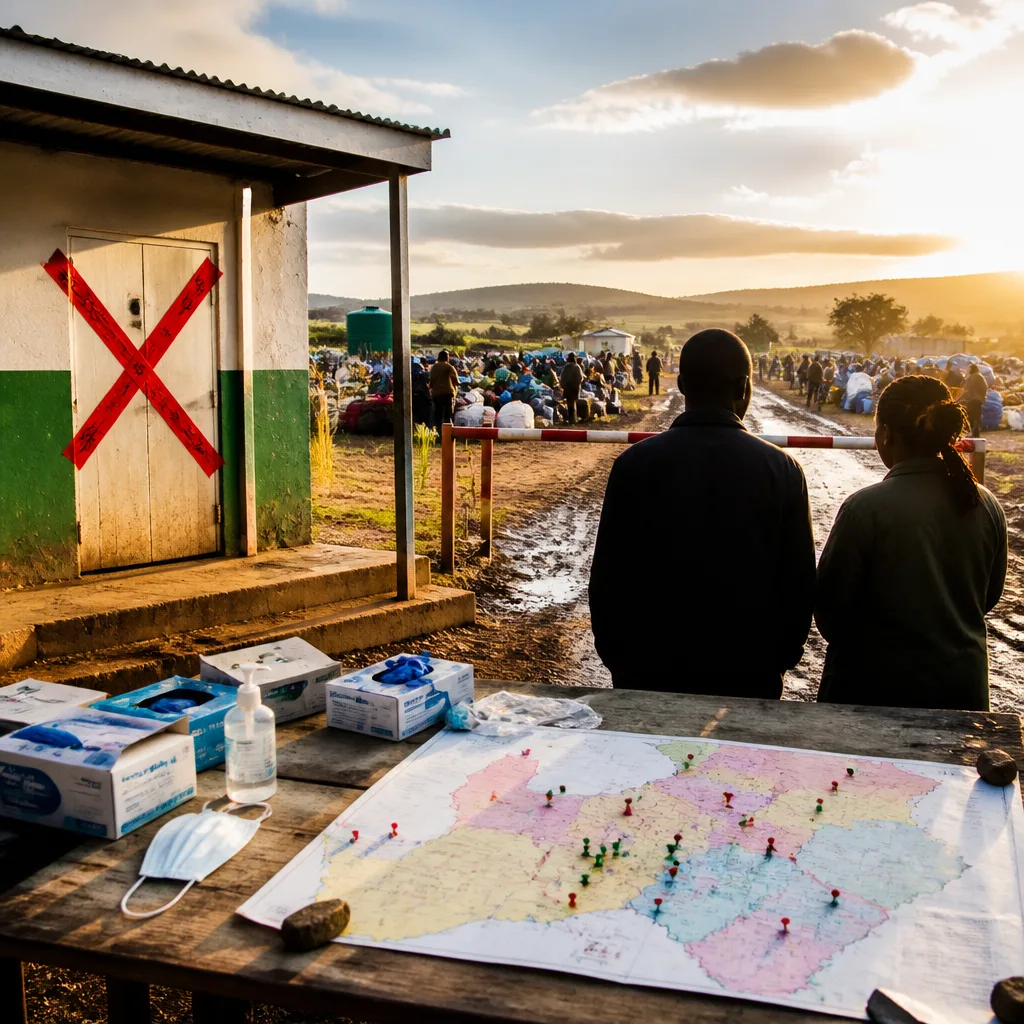
The World Health Organization (WHO) has reported that the Ebola outbreak caused by the Bundibugyo strain in the Democratic Republic of the Congo (DRC) has extended to two further health zones on international borders, complicating containment efforts.
New cases at borders raise cross‑border risks
On Friday the WHO said new infections were detected in Bulu in South Ubangi province, which borders the Central African Republic, and in Dungu in Haut‑Uele province, adjacent to South Sudan. The additional detections raise the number of affected health zones to 63 across seven provinces.
As of 23 September the WHO recorded 7,890 confirmed cases and 3,799 deaths in the outbreak — a fatality ratio approaching half of confirmed infections. The agency warned that the epidemic remains difficult to control where conflict and population displacement restrict access for health teams.
“It’s very difficult to see Ebola in isolation because even our response to Ebola is affected by the conflict, because there is displacement and there is an access problem to some areas,” said WHO Director‑General Tedros Adhanom Ghebreyesus.
Contact tracing and research gaps
The response faces two major technical obstacles. First, Bundibugyo is a strain for which there are no vaccines approved specifically for use, prompting the WHO to accelerate clinical trials of candidate vaccines and therapeutics. Second, contact tracing — a cornerstone of outbreak control — is falling well short of expected coverage.
Dr Jean Kaseya, director‑general of the Africa Centres for Disease Control and Prevention (Africa CDC), said that the number of confirmed cases should, by standard estimates, correspond to roughly 420,000 contacts to be traced. Current lists contain only about 30,000 people, leaving large gaps in efforts to identify and monitor exposed individuals.
- New health zones affected: Bulu (South Ubangi) and Dungu (Haut‑Uele)
- Health zones impacted overall: 63 across seven provinces
- Cases and deaths (to 23 Sept): 7,890 confirmed cases; 3,799 deaths
Limited access to some communities due to insecurity, population movement across porous borders and disrupted health services have all been cited by WHO leadership as factors impeding contact tracing, case isolation and community engagement.
| Indicator | Value |
|---|---|
| Confirmed cases | 7,890 |
| Deaths | 3,799 |
| Health zones affected | 63 |
Implications for the region and public health advice
Cases in border health zones increase the likelihood of cross‑border transmission and place a premium on coordinated surveillance and rapid information‑sharing among neighbouring countries. For southern African health services, the WHO’s warnings underline the need to maintain vigilance at points of entry and to ensure rapid laboratory confirmation and contact follow‑up for any suspected cases.
This outbreak also highlights the imperative of expanding clinical trials for vaccines and treatments where no approved preventive product exists. The WHO has said it is accelerating research pathways to evaluate candidate vaccines and therapeutic agents for Bundibugyo.
Health authorities and clinicians are reminded to follow national guidelines for suspect Ebola cases and to refer patients to designated treatment centres. People with symptoms or exposure concerns should consult a clinic or doctor rather than attempting self‑diagnosis or home care.
Regional health co‑ordination, stronger community engagement in hard‑to‑reach areas, and scaling up contact tracing remain critical if transmission chains are to be interrupted and further spread prevented.











