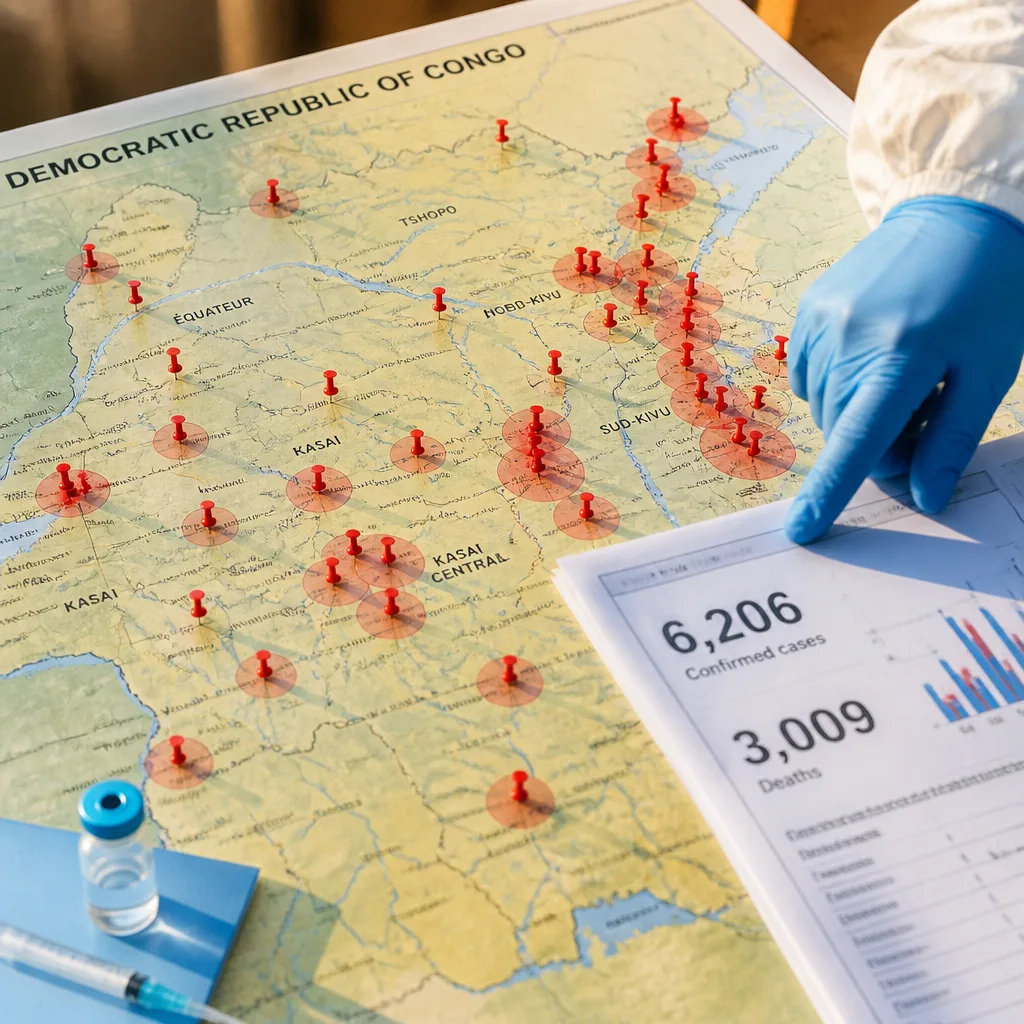
The Ebola outbreak in the Democratic Republic of Congo (DRC) remains “extremely serious”, the Africa Centres for Disease Control and Prevention (Africa CDC) said on Wednesday, as the death toll surpassed 3,000 and confirmed cases reached 6,206 since the current wave began in May.
Widening geographic spread
According to Africa CDC, the epidemic initially affected a single province and two health zones when it was declared on 15 May. It has since spread to 60 health zones across six provinces—Haut‑Uele, Ituri, North Kivu, South Kivu, Bas‑Uele and Tshopo—covering an area of roughly 240,000 square kilometres. Africa CDC director‑general Jean Kaseya said the scale of transmission means the response remains the organisation’s highest priority.
“Despite the considerable efforts of the government and partners, we are not yet where we need to be,” Jean Kaseya said on X.
As of the latest Africa CDC report, 3,009 people have died and 1,409 people have recovered, while 830 patients remain in isolation or hospital. The figures underscore ongoing transmission and continued pressure on health services in affected provinces.
International coordination and vaccine guidance
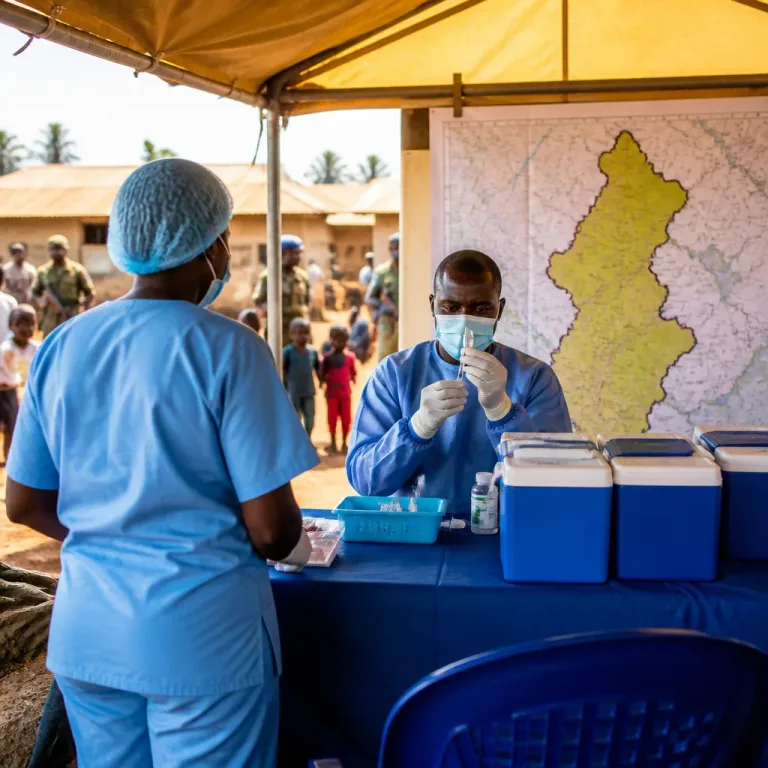
Africa CDC said it is working closely with the World Health Organization (WHO) and other partners to support the DRC government “in strengthening every aspect of the response”. WHO on Wednesday issued updated emergency guidance on the use of licensed Ebola vaccines during outbreaks caused by the Bundibugyo virus species.
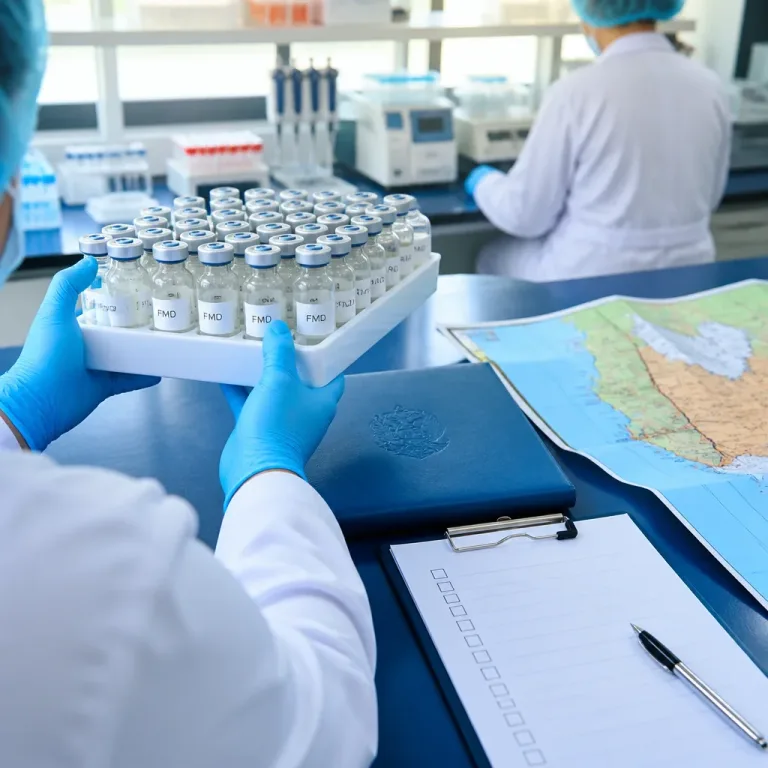
WHO’s Strategic Advisory Group of Experts on Immunization concluded there is insufficient evidence to support the routine programme‑level use of the Ervebo vaccine for prevention of Bundibugyo virus disease. As a result, WHO recommended that Ervebo be used only within the context of a research protocol for Bundibugyo virus outbreaks.
Implications for regional preparedness
Although the current outbreak is focused in the DRC, the speed and scope of spread across health zones heighten concerns about cross‑border transmission and the capacity of neighbouring countries to detect and respond to cases. For health authorities, the priorities remain:
- strengthening surveillance at border and point‑of‑entry clinics;
- maintaining rapid diagnostic and isolation capacity in district hospitals and treatment centres;
- ensuring clinical staff have appropriate personal protective equipment and training in infection prevention and control; and
- coordinating vaccination research efforts where appropriate under WHO guidance.
Regional public‑health agencies, including Africa CDC, will continue to support laboratory testing, contact tracing, case management and risk communication alongside national authorities and international partners.
| Metric | Number |
|---|---|
| Confirmed cases | 6,206 |
| Deaths | 3,009 |
| Recovered | 1,409 |
| Currently in isolation/hospital | 830 |
Health officials have stressed that response activities must be sustained and scaled where necessary. Africa CDC reiterated that it will not relent until the outbreak is brought under control, signalling continued regional mobilisation of resources and expertise.
For readers: Ebola is a severe viral illness that requires clinical assessment and laboratory confirmation. Anyone who has travelled to affected areas or who has had contact with a suspected or confirmed case and develops symptoms such as fever, severe weakness, vomiting, diarrhoea or unexplained bleeding should seek medical attention promptly at a clinic or hospital. Do not rely on self‑diagnosis; consult a clinician or public‑health facility for testing and care.
Reporting by Africa CDC and the World Health Organization formed the basis of this update.