The Ebola virus outbreak in eastern Democratic Republic of Congo (DRC) has spread to two further health zones, Biena and Manguredjipa in North Kivu Province, bringing the total number of affected zones to 60, the DRC Ministry of Health reported on 28 August 2026.
Scale and speed of transmission
The ministry’s latest figures put the outbreak at 5,794 confirmed cases with 2,786 deaths. Officials described the event as the fastest-growing Ebola outbreak in history, noting the epidemic is advancing more quickly than efforts to identify and contain cases.
North Kivu has seen a markedly higher case fatality rate than the overall outbreak average of 48%. The ministry attributed the higher mortality in some zones, including North Kivu, in part to delayed response efforts, which hamper timely diagnosis, isolation and care.
Humanitarian and public‑health concerns
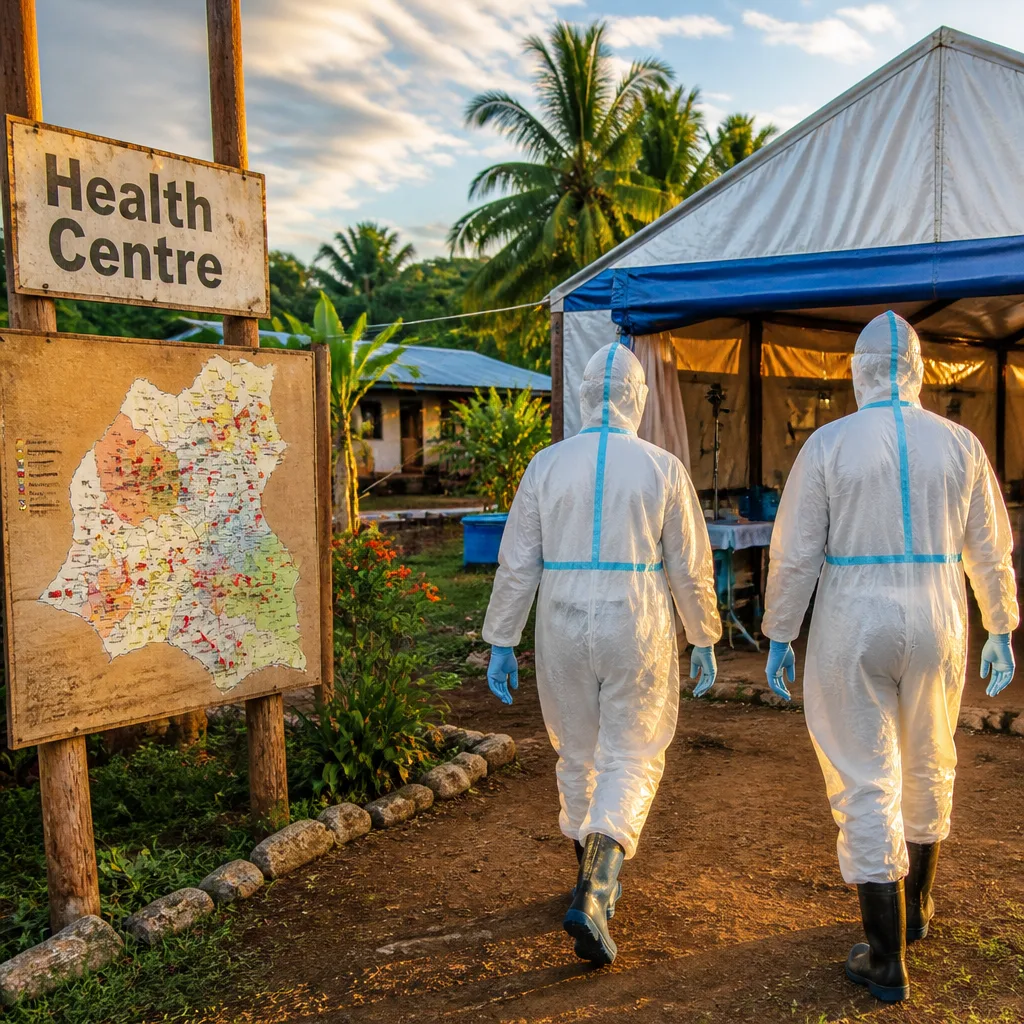
Images circulated with the ministry report show displaced people observing health workers in full personal protective equipment (PPE) disinfecting areas during burials at the Kigonze displaced persons camp in Bunia. Displacement, crowded living conditions and disrupted health services complicate outbreak control and increase the risk of rapid transmission.
Key pressures highlighted by the DRC data include:
- Geographical spread to 60 health zones, including the newly affected Biena and Manguredjipa;
- High fatality burden with 2,786 deaths among confirmed cases;
- Faster spread than the capacity to trace contacts, test and isolate cases, especially where responses were delayed.
What the numbers show
The following table summarises the principal figures released by the DRC Ministry of Health on 28 August 2026.
| Measure | Figure |
|---|---|
| Confirmed cases | 5,794 |
| Deaths | 2,786 |
| Health zones affected | 60 |
| Overall case fatality rate | 48% |
Regional implications and next steps
For neighbouring countries and regional health systems, the rapid expansion underscores the need for heightened surveillance, strengthened cross‑border collaboration and support for affected communities. Displaced populations, such as those in Bunia’s camps, are particularly vulnerable because overcrowding and limited access to health services can facilitate rapid transmission and delay case detection.
The ministry’s assessment links higher mortality in some zones to late detection and response. That emphasises the critical value of rapid case finding, contact tracing, safe and dignified burials, timely clinical care and community engagement to build trust and encourage early presentation for care.
Health services and humanitarian actors operating in affected zones will need to prioritise:
- Improving access to testing and clinical care in hard‑to‑reach and displaced populations;
- Accelerating contact tracing and isolation to break chains of transmission;
- Ensuring proper infection prevention and control measures during burials and clinical care.
While these measures are broadly recommended by public‑health authorities in Ebola responses, the ministry’s data highlight the practical urgency: when responses lag, case fatality rises and outbreaks expand into new areas.
Readers should note that information about this outbreak is evolving as health authorities continue to collect and publish new data. People with symptoms consistent with viral haemorrhagic fever or who have been in affected areas should seek medical assessment promptly. Do not self‑diagnose; consult a clinic or doctor for testing and guidance.
The ministry publication of 28 August 2026 is the latest formal update on case numbers and geographic spread; further details may be released as surveillance and response activities continue.