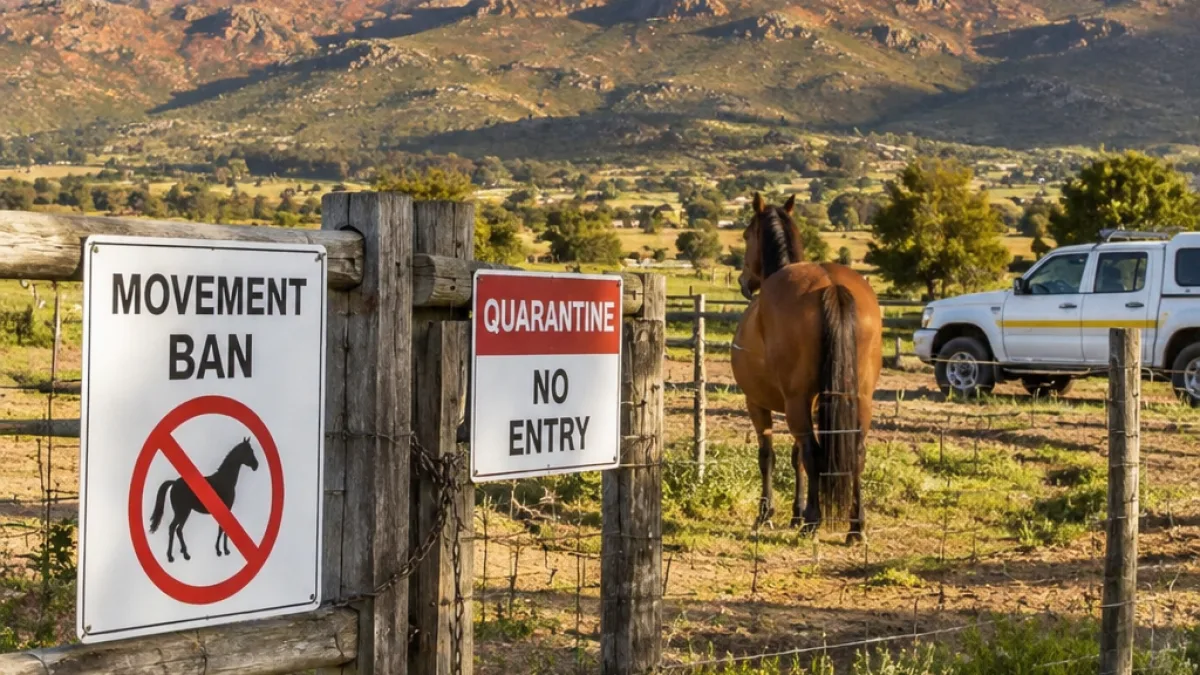
Containment measures activated
Authorities have confirmed African horse sickness (AHS) in a single horse on a property in the Cederberg Local Municipality, prompting restrictions on the movement of horses and a wider veterinary investigation.
The case was confirmed on 30 October 2026 after testing by the University of Pretoria’s Veterinary Genetics Laboratory identified AHS virus serotype 7. The affected property is within South Africa’s established AHS Protection Zone.
AHS is being managed under the Animal Diseases Act, 1984, and the Western Cape Department of Agriculture’s contingency plan for the disease. An outbreak containment area has been established, with officials now working to establish whether any additional animals may have been exposed.
“The swift detection of this case in the Cederberg Local Municipality is a good example of how South Africa’s veterinary surveillance system works.”
Agriculture Minister Willie Aucamp said the surveillance system allowed officials to identify the case and respond rapidly. He said the authorities had moved to the affected area and implemented the required containment protocols.
Horse movements restricted
Horse movements inside the controlled area normally require a permit issued by the State Veterinarian: Boland. However, the department has made clear that permits will not be issued for horses to leave the affected area while investigations and surveillance are under way.
The restriction places a particular responsibility on owners, trainers and other people responsible for horses in the controlled area. It also means that decisions about movement cannot be treated as an individual matter, given the department’s effort to prevent the disease from spreading beyond the property where the case was detected.
| Measure | Current position |
|---|---|
| Confirmed infection | One horse on a Cederberg property |
| Laboratory finding | AHS virus serotype 7 |
| Area status | Outbreak containment area established |
| Horse movement out of area | No permits will be issued during the investigation |
Surveillance and tracing under way
Veterinary Services, authorised veterinarians and industry partners have begun intensive surveillance, tracing and census work. The purpose is to determine the extent of the outbreak and identify any further cases linked to the affected area.
The department’s response relies on cooperation from equine owners. Owners in the controlled area have been urged to report animals that develop signs consistent with AHS, rather than waiting for the condition to worsen or assuming that symptoms have another cause.
- Unexplained fever;
- Swelling around the head or neck;
- Breathing difficulties; and
- Sudden death.
These signs should be reported to Veterinary Services, according to the department’s guidance. The warning is especially relevant while officials are conducting their tracing and census activities, because early reporting can assist the investigation into the disease’s extent.
Owners urged to reduce midge exposure
Horse owners have also been encouraged to take precautions against Culicoides midges, which transmit AHS. One of the measures listed by the department is to stable horses, reducing their exposure to the insects.
The advice forms part of the immediate containment response alongside the movement controls. Owners should follow instructions issued by Veterinary Services and authorised veterinarians, particularly where those instructions affect the location or movement of animals.
The confirmed case does not, on the information released by the department, establish how far the disease may have spread beyond the affected property. That is the question now being addressed through surveillance, tracing and the census of horses in the controlled area. Until that work is completed, the prohibition on moving horses out of the area remains in force.
For owners, the practical position is therefore straightforward: horses should not be moved out of the affected area, suspected signs must be reported, and precautions against midge exposure should be implemented. Further decisions will depend on the findings of the veterinary investigation.