Engaging in creative activity — drawing, music, drama, play — has measurable benefits for children’s development, wellbeing and resilience, according to a comprehensive review commissioned by the World Health Organization that drew on more than 3,000 studies across the WHO European Region and beyond. The review concluded that the arts play a meaningful role in preventing ill health, promoting wellbeing and supporting people through illness and hardship at every stage of life.
Evidence for children: language, emotion and behaviour
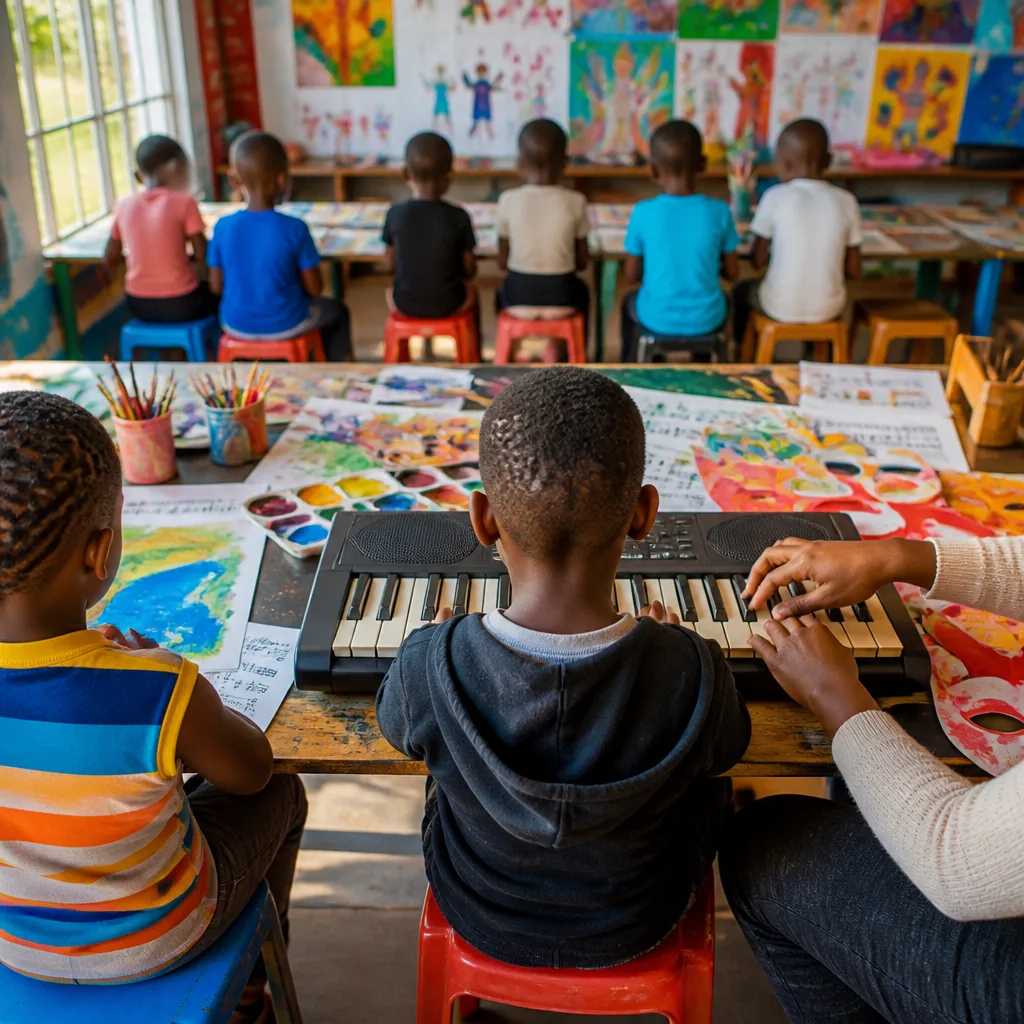
For children specifically, the review identified several areas where creative engagement is associated with improvements. Musical and creative activities were linked to gains in language development, auditory attention and reading ability. Benefits extended to children with dyslexia, communication difficulties and developmental disabilities. Beyond cognition, the review highlighted improvements in what researchers call emotional competence — the ability to recognise, understand and manage feelings — which in turn supports social interaction, coping with setbacks and sustained engagement at school.
Researchers also reported associations between participation in creative activities and reduced stress, lower levels of hyperactivity, and improved social skills. The review emphasised that these benefits are not confined to children who display traditional artistic talent: confidence, self-acceptance and a sense of self-worth can rise simply through making things, regardless of technical skill.
Why creative activity helps
The review offers a psychological explanation for these effects. Creative work often induces a state of deep absorption in which attention is focused and worries recede — a condition sometimes called flow. This immersive state helps reduce stress and can improve mood and concentration. In children, such experiences provide safe, non-verbal ways to process feelings and rehearse social situations.
- Cognitive benefits: improved language, auditory attention and reading.
- Emotional benefits: better emotion recognition and management, higher self-esteem.
- Behavioural benefits: reduced stress and hyperactivity; better peer relations.
- Equity effects: particular advantages for children from lower-income backgrounds and those with developmental challenges.
| Domain | Reported benefits |
|---|---|
| Language & literacy | Improved language development, auditory attention, reading ability |
| Emotional development | Greater emotional competence, self-worth, confidence |
| Behaviour & social skills | Lower stress, reduced hyperactivity, improved social interactions |
Implications for policy and practice
The scale and consistency of the evidence carry direct implications for education and health policy. If arts and creative programmes help prevent ill health and promote wellbeing, they should be considered part of early childhood and school-based interventions rather than optional extras. This is especially relevant for settings where children face economic disadvantage or developmental barriers; the review found these groups often benefit most from creative engagement.
Practical implications include supporting accessible arts programmes in schools, community centres and health services, training teachers and facilitators to use creative methods, and ensuring evaluations of such programmes measure mental health and social outcomes as well as academic attainment.
Care is needed in interpreting the findings. While the review is extensive, it synthesises a wide variety of studies with different designs, contexts and measures. That means robust causal claims — that arts activities alone produce a specific outcome in every setting — remain difficult to make. Policymakers and practitioners should therefore favour well-designed local evaluations and scalable, evidence-informed practice over one-size-fits-all prescriptions.
The review’s central message is straightforward and practical: creative activities are not mere enrichment; they are tools for development and wellbeing. For educators and health professionals seeking low-cost, high-impact ways to support children, the arts merit serious consideration.