
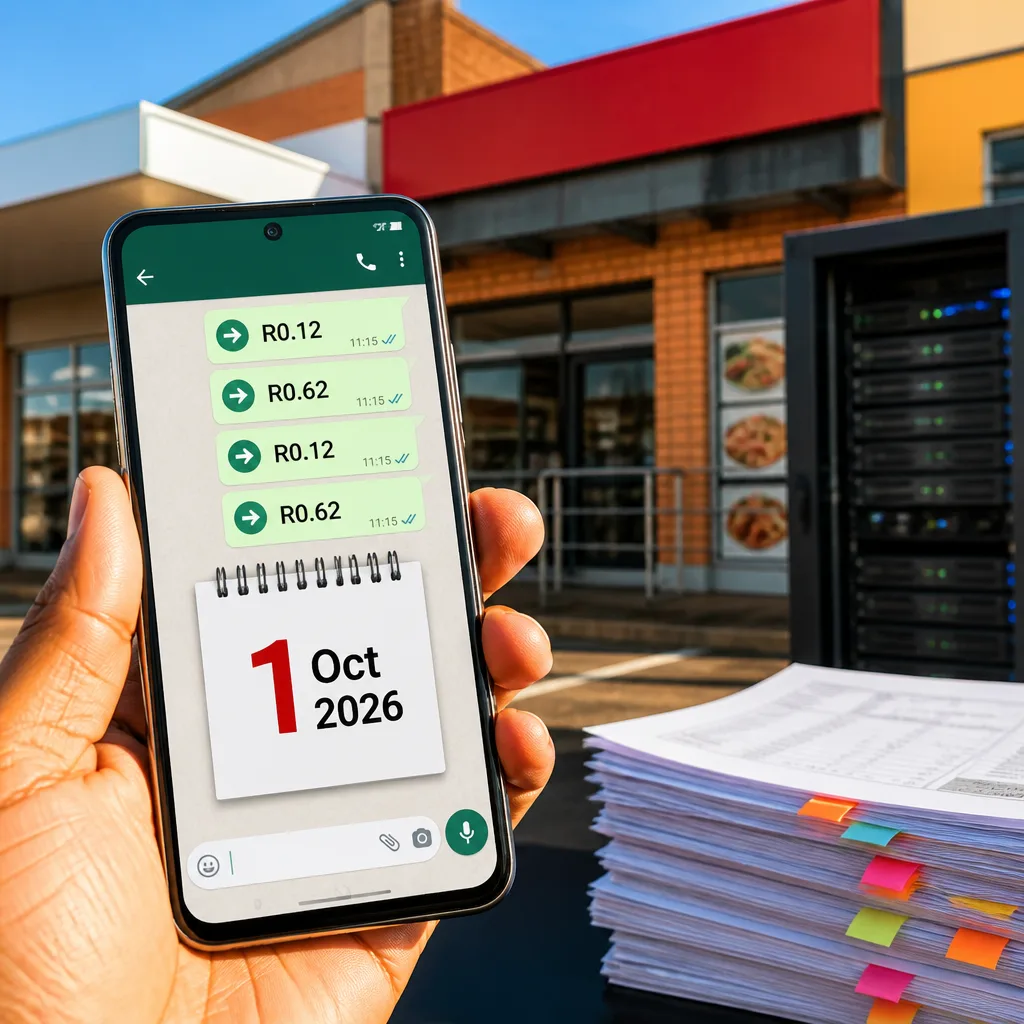
From 1 October 2026 companies using the WhatsApp Business Platform API in South Africa will face a direct per-message charge for customer replies and transactional messages, Meta has said. The move ends the period in which many such outbound messages were unbilled and introduces two distinct rates: a lower utility rate for service messages and a higher marketing rate for promotional communications.
What the new pricing is and who it affects
Meta’s published July 2026 rate cards show that the South African utility rate — the fee for structured service messages such as shipping updates, payment receipts or order confirmations — will be about R0.12 per message. The marketing or promotional rate is listed at around R0.62 per message.
“In H2’2026, Meta will introduce these pricing updates as part of continued efforts to ensure pricing reflects the value these messages deliver to businesses,” the company said in its documentation.
Meta said the change applies to the WhatsApp Business Platform API only and does not affect regular WhatsApp mobile-app users or standard personal accounts. That means developers, platforms and companies that send messages through Meta’s servers via the API will be charged; small businesses using the basic app without the API will not be directly affected by the new per-message fees.
Examples and immediate implications
To illustrate the scale of the charge: sending 10,000 marketing messages at the marketing rate of R0.62 would cost a firm R6,200. Businesses that make heavy use of automated customer updates, receipts and support replies will now see those volumes translated directly into monthly messaging costs.
| Message type | Approximate South African rate |
|---|---|
| Utility / service messages | R0.12 |
| Marketing / promotional messages | R0.62 |
The source names a range of South African firms and sectors that use the WhatsApp Business API, including major banks and large retailers: Absa, FNB, Standard Bank, Capitec, Takealot, MTN, Vodacom and carriers of customer-facing services such as FlySafair. Any company or third-party platform that sends messages via Meta’s API will need to include these new costs in budgeting and contracts with clients.
Budgeting, customer service and pricing considerations
- Companies will need to decide whether to absorb the per-message fee, reduce message volumes, or pass costs on to customers through service charges, fees or higher prices.
- Organisations that rely on high volumes of transactional messages — logistics updates, payment confirmations and support replies — face a direct increase in operating costs.
- Developers and platforms that resell messaging services must rework pricing models for business clients to reflect Meta’s charges.
For households, the effect will depend on how firms respond. If companies pass on some of the increased costs, consumers could see marginally higher prices in services that rely heavily on automated messaging; if firms absorb the costs, margins could be squeezed. At this stage Meta’s announcement sets the fee framework but not how businesses will alter customer-facing practices.
Scope and timing
Meta emphasised that the change is global and part of its wider policy of charging for service messages on a per-message basis. The company noted that these message types had not been charged since 1 November 2024 and that the new pricing aligns service messages with the template-message charging model.
For South African businesses the decisive date is 1 October 2026, when free replies end and the per-message billing begins. Firms that use the API should audit current message volumes, estimate monthly costs under the new rates and discuss options with their messaging providers to avoid billing surprises.
WE NEWS does not offer financial advice. Businesses should consult their advisers or messaging vendors for tailored cost projections and contract implications before the new charges take effect.













