The James Webb Space Telescope will soon be able to photograph Solar System targets that were previously too bright for its detectors after engineers on the ground began sending a software update to the observatory. The change introduces a new readout method, called "superstripe", which the Space Telescope Science Institute says can handle targets roughly 100 or more times brighter than Webb could before.
Why Webb struggled with nearby targets
Webb was designed foremost to detect extremely faint, distant infrared light – the glow of the earliest galaxies and stars. That exceptional sensitivity, however, has made imaging bright objects in our own cosmic neighbourhood difficult. Planets such as Mars, Jupiter and Saturn, and some of their moons, deliver far more light to Webb’s detectors than the instrument was optimised to accept. Without mitigation, the detectors become saturated and much of the image information is effectively lost.
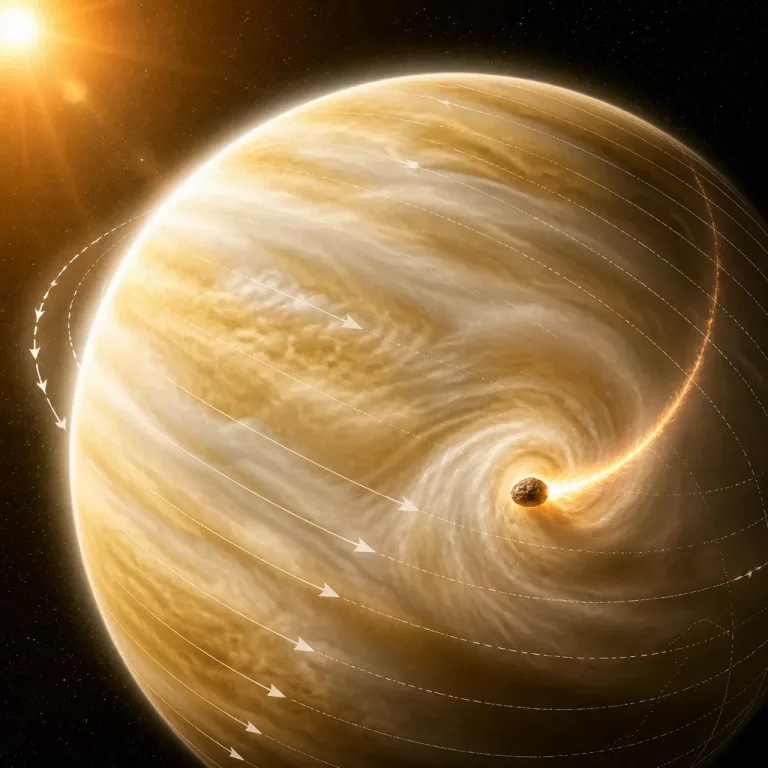
To avoid saturation during early Solar System observations, astronomers used heavy attenuation — equivalent to equipping the telescope with very dark filters — and short sub‑exposures. Those workarounds came with drawbacks. Early images of Jupiter and Europa were overexposed or blurred because the camera took several seconds to read the full detector while the planet’s fast‑moving cloud features shifted.
What the "superstripe" readout does
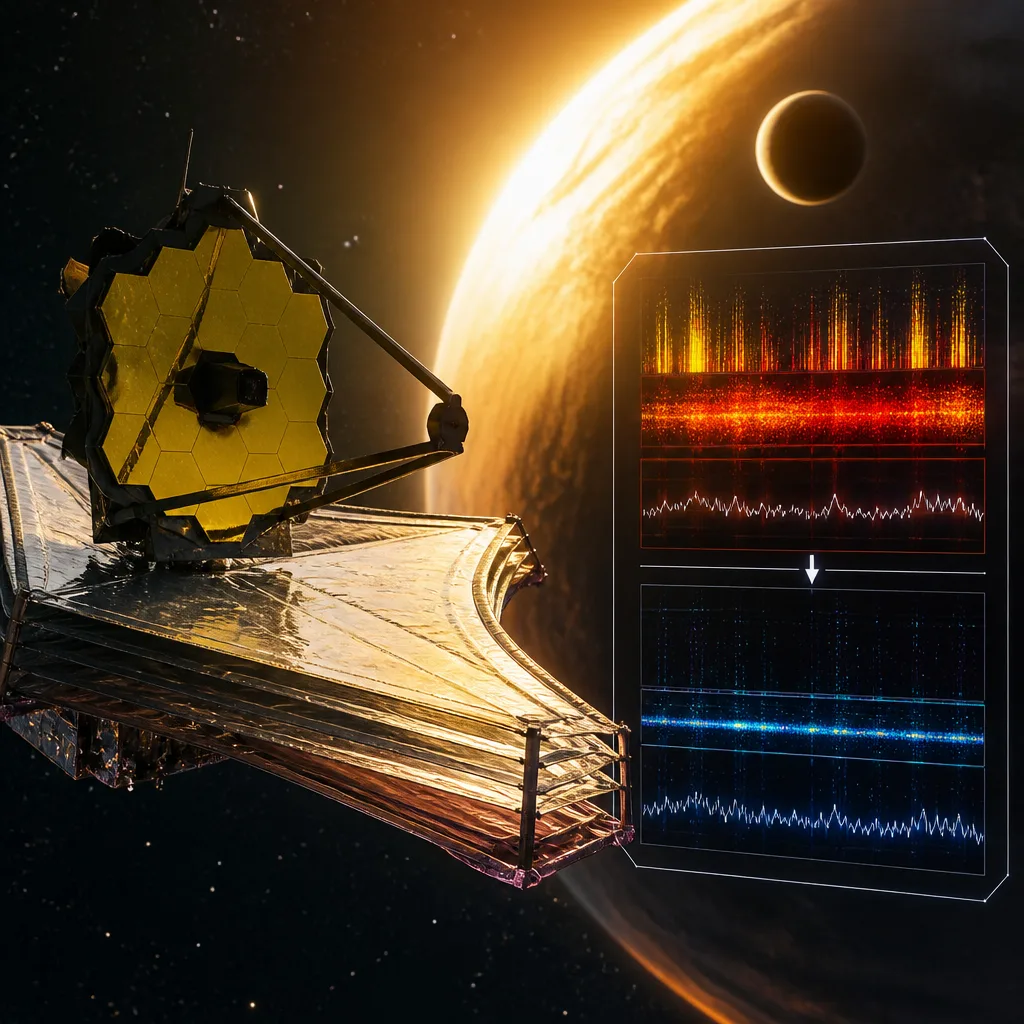
The new readout method is a software-level change in how the detectors are read and the resulting data are processed. According to the Space Telescope Science Institute and quoted scientists, superstripe allows the camera to avoid throwing away useful data when observing bright objects and reduces motion blur from rapidly changing features.
"superstripe"
That will let Webb produce clearer, scientifically useful images of planets and moons without sending astronauts a million miles to modify hardware. The update demonstrates how operational software can extend the capabilities of a space observatory long after launch.
Immediate and longer-term consequences
For planetary scientists, the change opens Webb to a wider range of Solar System science:
- High‑resolution imaging of planetary atmospheres and moving cloud systems without severe saturation artefacts.
- Improved photometry of bright moons and ring systems, enabling better measurements of surface and atmospheric properties.
- Potential for time‑series observations where short‑timescale changes (heat spots, storms) can be tracked with less data loss.
For observatories and researchers planning proposals, the update reduces some constraints on target selection and exposure strategy. It may also influence how follow‑up observations are coordinated between Webb and ground‑based facilities, including South African telescopes engaged in planetary science and infrared astronomy.
| Characteristic | Before update | After update (superstripe) |
|---|---|---|
| Relative bright‑target handling | Baseline | ~100× improvement |
| Detector readout time | Several seconds for a full read | Shorter effective readout for bright‑target imaging |
It is important to be clear about limits. Webb will not observe extremely bright sources in the same way as small ground‑based telescopes equipped with neutral density filters or specialised occulting hardware. Rather, the software expands the dynamic range that Webb can usefully record without saturating, reducing lost data and motion blur for many planetary targets.
The development also highlights a practical point for observational astronomy: instrument capability can be meaningfully extended by software and operational changes after launch. Webb’s original design emphasised faint, ancient light, but this update shows how the observatory can be retooled to serve a broader set of scientific questions, including those much closer to home.
Observers and instrument teams will now assess which Solar System programmes can be proposed or revised for upcoming Webb observing cycles, and how best to combine Webb data with complementary observations from Earth. For South African researchers and institutions active in planetary science or infrared astronomy, the update offers new opportunities to propose studies that leverage Webb’s unprecedented sensitivity together with improved handling of bright targets.
The change underlines the ongoing value of Webb as a flexible scientific tool: exceptional for the very faint and, increasingly, capable of probing the comparatively bright worlds that share our Solar System.