
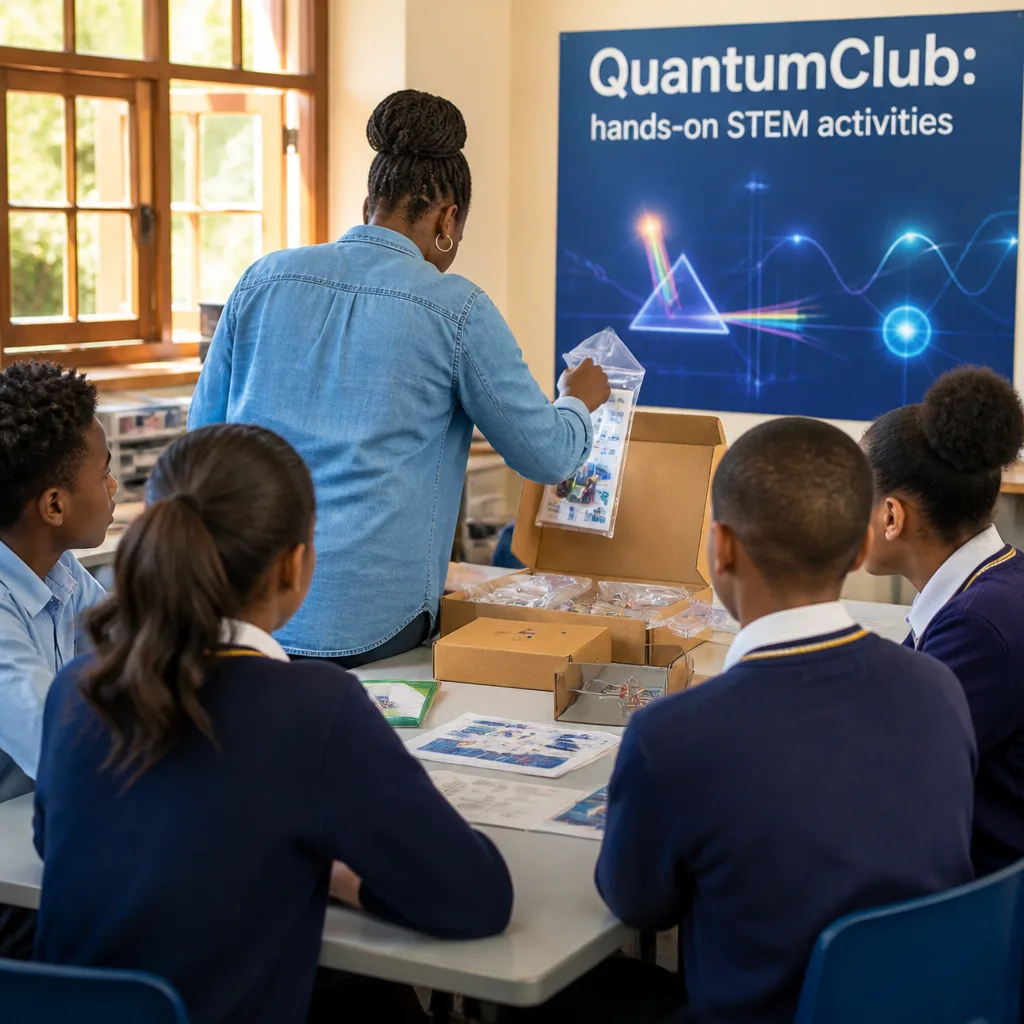
Montana State University has launched a free outreach programme, QuantumClub, that will train middle‑school educators and supply curriculum materials and equipment to five selected organisations to deliver at least 10 hours of quantum‑science programming between November 2026 and May 2027.
What the programme offers
The programme is led by MSU’s QCORE (Quantum Collaborative Research and Education) facility and the Science Math Resource Center, in partnership with the National Girls Collaborative Project. According to the university’s announcement, successful applicants will receive:
- virtual educator training in the QuantumClub curriculum;
- all required supplies to run the activities;
- ongoing virtual support while implementing the programme;
- resources designed for at least 10 hours of learner contact between November 2026 and May 2027.
The organisers emphasise that no prior knowledge of quantum science, specialised technology or experience is required to lead QuantumClub activities. The curriculum is described as hands‑on and interdisciplinary, combining science, technology, engineering and mathematics (STEM) with arts and collaborative learning.
Why this matters
Quantum science explores the behaviour of extremely small particles and the ways in which those behaviours can be harnessed for computing, sensing, communications and other technologies. While the field remains technical, outreach initiatives like QuantumClub aim to make core ideas accessible to younger learners and to broaden the pipeline of students who consider quantum careers.
Programmes of this kind serve several functions for national education systems and science communities:
- They lower the barrier to entry for educators who may lack subject expertise or specialised equipment.
- They provide a structured introduction to concepts that feed into higher‑level science and engineering pathways.
- By partnering with organisations such as the National Girls Collaborative Project, they can target improved representation of underserved groups.
Programme components at a glance
| Component | Detail |
|---|---|
| Host institution | Montana State University (QCORE & Science Math Resource Center) |
| Partners | National Girls Collaborative Project |
| Target participants | Middle‑school learners via five selected Montana organisations |
| Duration | At least 10 hours of programming per site (Nov 2026–May 2027) |
| Requirements for educators | No prior quantum knowledge or specialised technology needed |
Context and limitations
Quantum technologies are frequently described as a strategic area for research, with potential applications across sectors from healthcare to national security. However, introducing quantum ideas to younger learners does not mean they will be working with quantum computers; the aim is pedagogical: to build intuition about superposition, entanglement and the probabilistic nature of quantum systems using low‑cost, hands‑on activities and discussions about careers.
The announcement makes clear the programme is an education and outreach effort. It does not claim immediate workforce outcomes or direct links to employment; rather, it supplies educators and community organisations with a turnkey curriculum and support so they may introduce learners to the field.
Implications for South African science education
While QuantumClub is a Montana‑centred initiative, its model is instructive for South African educators and policymakers who are expanding STEM and digital skills provision. Key lessons include the value of:
- packaged, low‑barrier curricula that require minimal specialist equipment;
- partnerships between universities, outreach centres and organisations focused on inclusion;
- structured short‑form programmes that can be integrated into existing after‑school or enrichment activities.
For countries seeking to broaden participation in nascent technologies, such interventions can form part of a longer pipeline linking school outreach, tertiary training and industry internships.
How to apply: the programme call targets Montana organisations and is managed by Montana State University. Interested parties outside Montana should monitor local universities and national science bodies for similar opportunities and consider partnerships with institutions running established quantum outreach efforts.









