
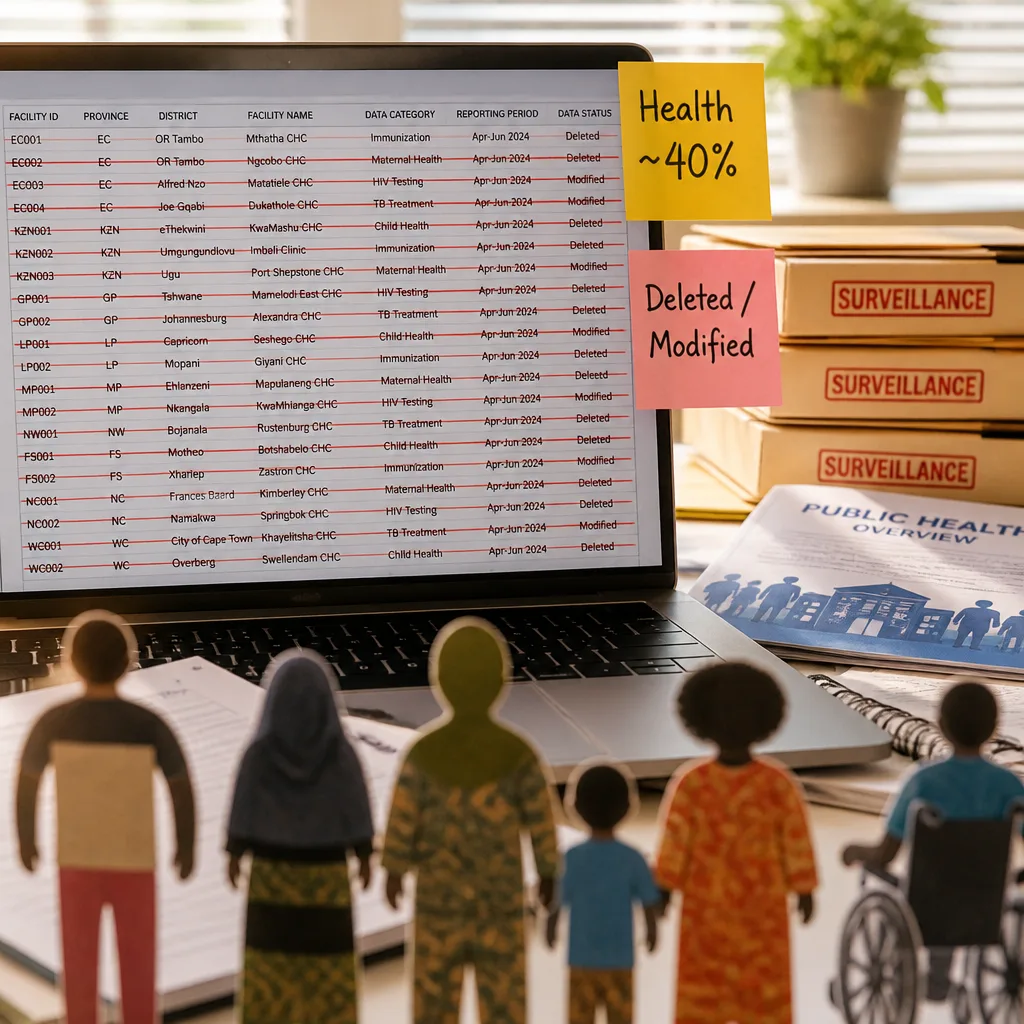
The US federal government has deleted or altered hundreds of datasets across multiple agencies, with health collections among the most affected, an online tracker reported. The change has raised concerns about the loss of information used to guide public health decisions.
Scope of the changes
Dataindex.us, a group of data policy experts, researchers and developers formed last year to monitor changes to government data, published a tracker showing at least 28 datasets deleted and 338 data collections modified over the past 18 months. The tracker covers records from more than 60 federal agencies, spanning the environment, labour, law enforcement and other sectors.
| Category | Count |
|---|---|
| Deleted datasets | 28 |
| Modified datasets | 338 |
| Agencies covered | More than 60 |
Dataindex.us said the deletions and modifications include resources used by researchers, clinicians and policy-makers. Health-related datasets represent about 40% of the terminated or altered collections tracked.
Health data changes and implications
Among the specific changes reported, multiple Centers for Disease Control and Prevention (CDC) surveys have removed questions about respondents’ gender identity. The report links some removals to an executive order titled Defending Women from Gender Ideology Extremism and Restoring Biological Truth to the Federal Government, which directs federal agencies to restore what the administration describes as “biological truth” in government records.
Datasets cited as affected include the National HIV Surveillance System, the primary source of case data for HIV infections, and the National Violent Death Reporting System. Other health collections were also listed, though the tracker’s summary is the principal source for details.
“We’re at a very vulnerable point as a nation,” said Denice Ross, former US chief data scientist under the Biden administration and a cofounder of dataindex.us. “We’re facing a future where we are not going to have the information that we need to make decisions that will save lives and benefit American communities.”
Public health researchers and service planners rely on consistent, disaggregated data to identify at‑risk groups, monitor disease trends and target interventions. Advocates warn that removing questions on gender identity or otherwise altering variables weakens the ability to track health inequities among queer and trans people and other marginalised groups.
- Changes affect environmental, labour, law enforcement and health datasets.
- Health collections account for roughly 40% of deletions and modifications tracked.
- Removal of gender identity questions could reduce visibility of queer and trans health needs.
The tracker also catalogues deletions beyond health, such as a database of federal law enforcement officer misconduct records and international air quality readings from US embassies. The breadth of changes has provoked debate about transparency and the capacity of federal agencies to provide evidence for policymaking.
Dataindex.us compiled its findings from publicly observable changes to online federal datasets and made the information available to researchers, journalists and the public. The group said it will continue to monitor and document further removals or modifications.
Loss or alteration of core surveillance systems can have practical consequences: gaps in national datasets make it harder to detect outbreaks early, quantify harms experienced by specific groups, and allocate resources effectively. Researchers also rely on historic and longitudinal data to evaluate programmes and guide clinical practice.
Public health professionals and clinicians consulted about health concerns should remain the first port of call for individual medical advice. When interpreting population‑level trends or policy implications, analysts will need to account for changes to the underlying datasets.
What this means for South Africa: while these developments are based on US federal data, the episode underscores broader global risks when routine public health surveillance is interrupted. National health programmes and researchers here and elsewhere depend on open, robust datasets to inform prevention, treatment and equity efforts.











