
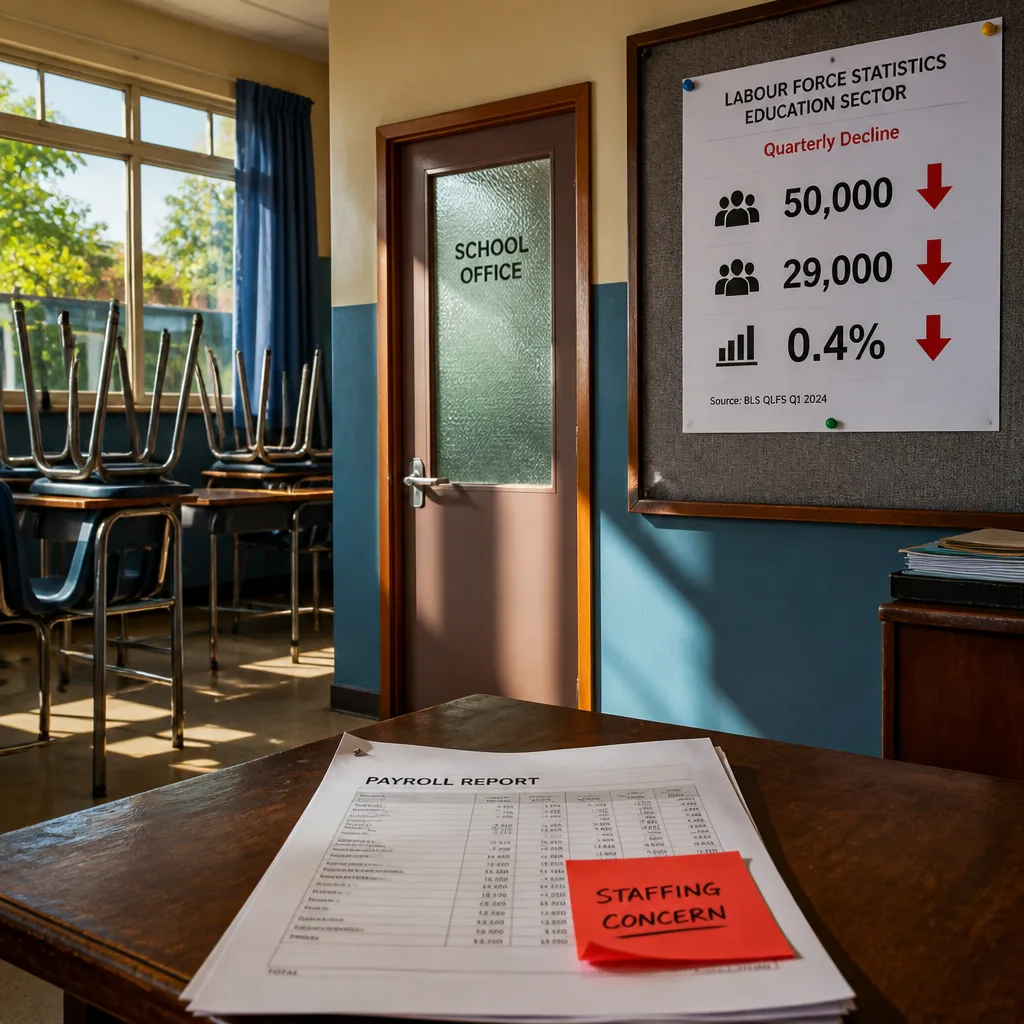
Public K–12 schools in the United States shed workers in mid‑2026, according to the latest jobs report from the Bureau of Labor Statistics (BLS), marking the first year‑on‑year decline in school employment since the COVID‑19 pandemic.
Key numbers from the report
- 50,000 workers: the seasonally adjusted decline in K–12 employment from June to July.
- 47,000 workers: the downward revision to May’s employment figures.
- 29,000 fewer workers: the non‑seasonally adjusted year‑on‑year decline in public school employment as of July.
- 0.4%: the percentage fall in total school workers year‑on‑year.
The BLS figures illustrate two important features of school payroll data. First, public school employment typically shows a large summer dip — about 1 million employees come off payrolls each year as schools close for the break and are rehired in the autumn. Second, analysts caution that seasonally adjusted and non‑seasonally adjusted series tell different stories; the latter can be more informative for identifying unusual year‑to‑year shifts.
Context: how 2026 differs from recent years
After sharp declines in 2020 when many schools closed and cut support staff, overall K–12 payrolls rebounded in subsequent years. The non‑seasonally adjusted data plotted over recent calendar years showed steady growth through 2021–2025. The 2026 line had been tracking slightly above 2025 in the spring months but had fallen below it by July.
Although the current drop is modest in proportion — a 0.4% decline — it is notable because it represents the first annual decrease since the pandemic era. The BLS and analysts emphasise that these preliminary figures are subject to revision.
Implications for schools, teachers and learners
School systems typically make staffing adjustments at the margins, reducing part‑time hours or trimming support roles before cutting full‑time teaching posts. Nonetheless, even small percentage declines in overall employment can translate into fewer classroom assistants, administrative staff, bus drivers and meal workers — roles that affect the day‑to‑day functioning of schools and the time teachers can spend on instruction.
For parents and learners, the immediate effects may be felt in larger class sizes, reduced extracurricular or remedial programmes, and delays in maintenance or student services. For teachers, fewer support staff can increase administrative burdens and reduce time for lesson planning and learner support.
| Measure | Reported change |
|---|---|
| June–July (seasonally adjusted) | -50,000 |
| May revision | -47,000 |
| Year‑on‑year (non‑seasonally adjusted) | -29,000 (about -0.4%) |
Policymakers and district leaders will need to monitor whether the mid‑year weakening persists into the autumn rehiring season. If districts are unable to restore summer‑laid‑off workers when schools reopen, the effects could amplify across classrooms already coping with learning recovery and curriculum catch‑up after the pandemic.
Education systems internationally — including in South Africa — watch US labour trends because they can signal broader shifts in the supply of school personnel, collective bargaining pressures, or fiscal choices about education budgets. For school communities, the priority remains ensuring sufficient, well‑supported adults in schools so learners receive the instruction and support they need.
These BLS numbers are preliminary and may be revised. Analysts recommend examining both seasonally adjusted and non‑seasonally adjusted series to understand the normal summer turnover in school staffing and to detect unusual year‑to‑year changes.











