
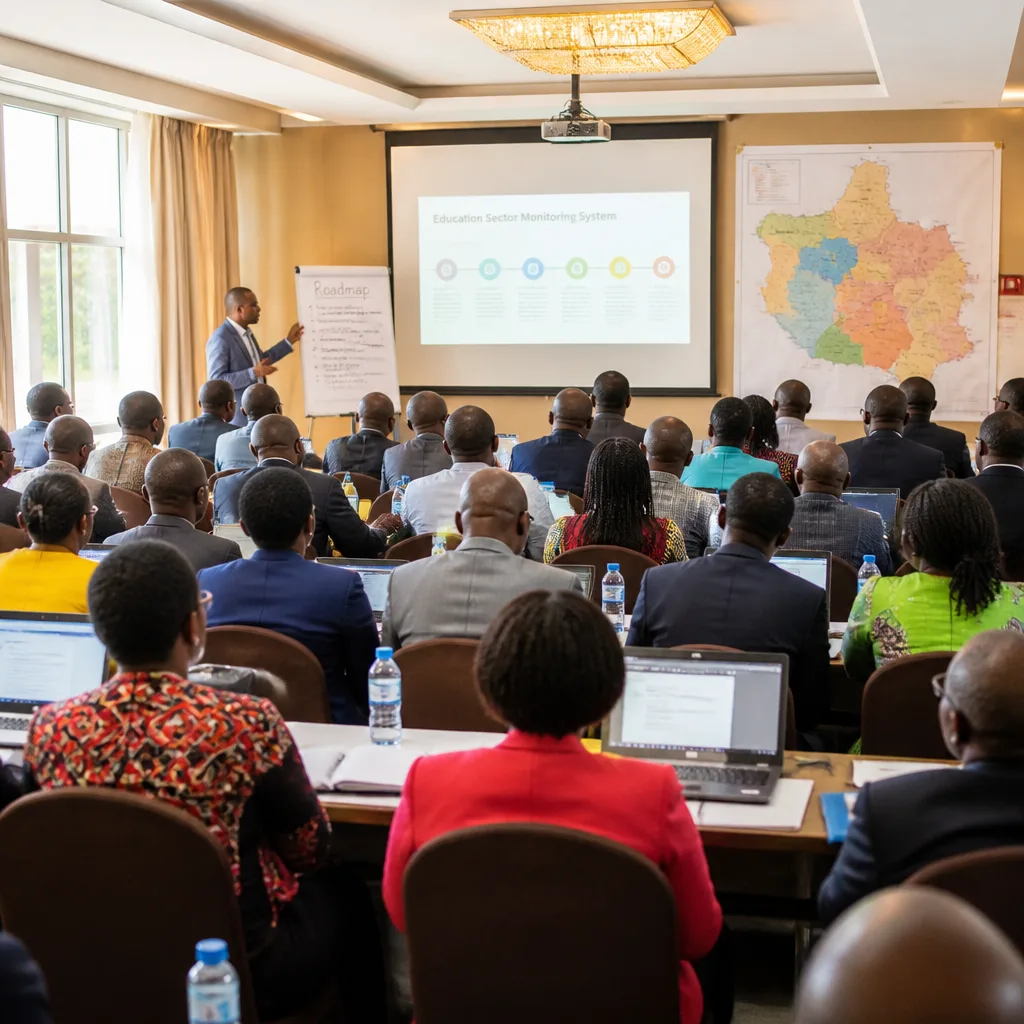
Juba. A four‑day consultation in Juba has produced a roadmap to create South Sudan’s first formal education sector monitoring system, organisers reported. The meeting, convened with support from UNESCO, brought together roughly 30 representatives from government ministries, UN agencies, non‑governmental organisations and civil society to map current initiatives and gaps against the country’s five‑year General Education Strategic Plan (GESP).
Why a monitoring system matters
Although the GESP was approved in 2023 and sets the government’s priorities for the education sector through its five‑year duration, participants agreed that no mechanism existed to consistently measure progress against the plan’s targets. The consultation aimed to lay a foundation and build a shared understanding among the Ministry of General Education and Instruction (MoGEI) and partners about how a robust monitoring system should function, EIN Presswire reported.
In opening remarks, the Director General for Planning and Budgeting at MoGEI, George Mogga Bengamin, described the work as a turning point. He said:
“This is a milestone for South Sudan. We have developed education plans since 2005, but none had a tool like this to monitor performance. Setting goals is not enough if we cannot measure the outcomes. Let this demonstrate our ability to monitor our sector and turn our plans into action.”
The emphasis on measurement reflects growing recognition among officials and partners that plans without reliable monitoring cannot reliably guide resource allocation, inform corrective action or demonstrate results to parents, teachers and donors.
What the consultation produced
Participants used interactive group work, plenary sessions and practical exercises to map current interventions and consider design options for a monitoring system. Discussions focused on:
- system architecture and data needs;
- leadership, coordination and ownership mechanisms;
- capacity development for government and partners;
- steps to align existing initiatives and close coverage gaps.
The meeting concluded with a set of agreed actions and a timeline to guide development of the monitoring system over the coming months, according to the report.
| Action | Timeline |
|---|---|
| Develop monitoring system | In the coming months |
Implications for learners and educators
For a fragile education system such as South Sudan’s, establishing reliable monitoring is a practical step towards improving classroom outcomes. A functioning system can help track enrolment, teacher deployment, learning achievement and school infrastructure, enabling targeted support where needs are greatest. It can also provide evidence for donors and partners to coordinate funding and technical assistance more effectively.
However, participants warned that technical design alone will not guarantee success. The consultation highlighted that sustainable results will depend on clear leadership, well‑defined coordination roles, investment in staff capacity and genuine ownership by national authorities and local actors.
UNESCO’s involvement follows the agency’s mandate to support education systems in post‑conflict and low‑capacity settings. The consultation’s outcome signals a move from planning to measurement, an important step in translating policy into action.
Next steps, as reported, include detailed design work and practical steps to operationalise the system. How quickly these moves translate into better data and improved classroom support will depend on the strength of collaboration between MoGEI, UN agencies, NGOs and civil society, as well as the availability of technical and financial resources.
By setting out agreed actions and a timeline, participants aimed to ensure that the GESP’s targets can be monitored and that progress — or lack of it — becomes visible to policymakers, educators, parents and donors.











