
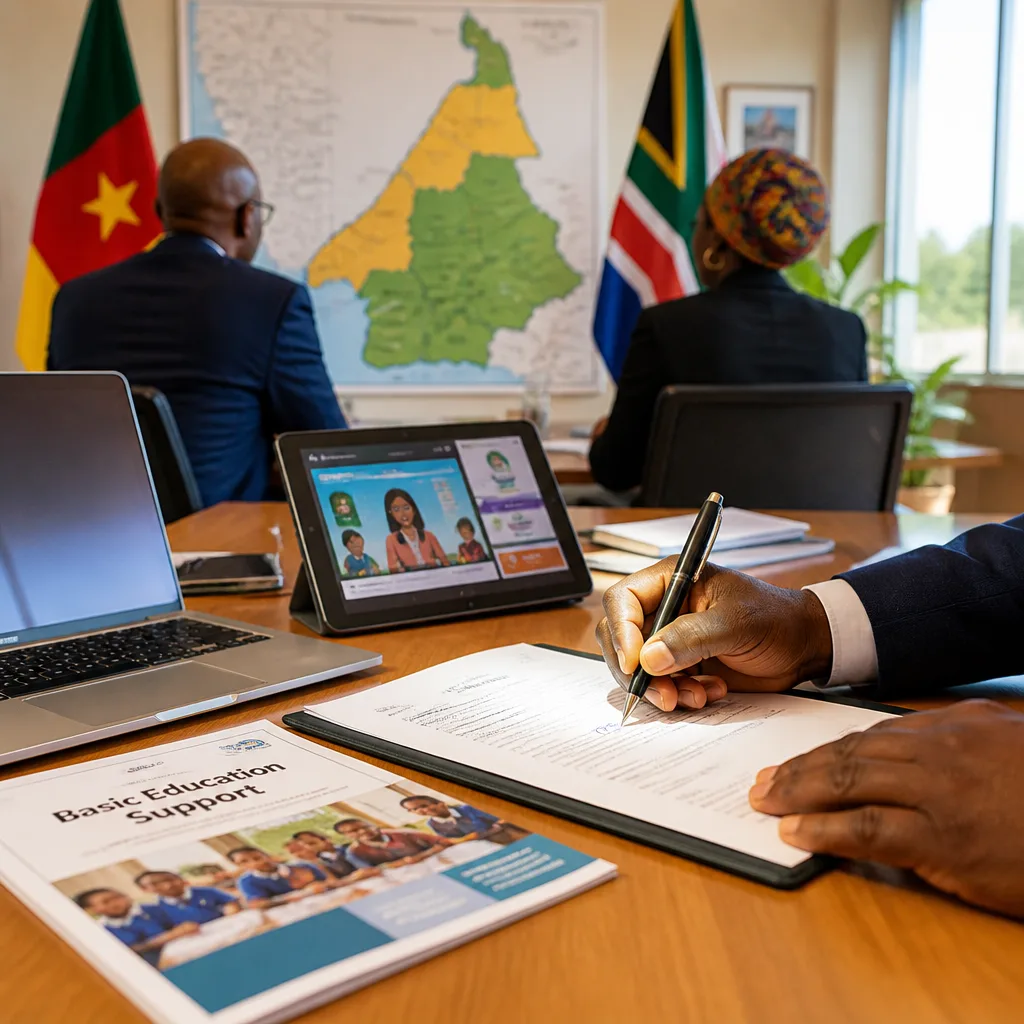
The Government of Cameroon and UNESCO have signed an agreement to roll out a new phase of the country’s Basic Education Support Project (PAEBC) that places digital technologies, teacher professional development and education data systems at the centre of reform.
Funding, scale and aims
The agreement, signed at UNESCO’s Regional Office for Central Africa in Yaoundé, commits €8 million in technical assistance over 36 months. UNESCO said the programme will strengthen the capacities of more than 50,000 teachers, supervisors and other education stakeholders and is expected to benefit more than 153,000 learners.
The project brings together three linked strands: professional development for teachers and supervisors, digital learning resources and the modernisation of the country’s Education Management Information System (EMIS). By connecting these elements, UNESCO and Cameroon intend to make digitalisation useful both in classrooms and for sector planning.
What implementation will include
UNESCO reported that the programme will:
- Support the development of innovative educational resources and integrate digital technologies into classroom teaching;
- Modernise the national assessment system to better measure learning outcomes;
- Strengthen the EMIS by connecting education databases and creating dynamic dashboards for decision-making;
- Develop Massive Open Online Courses (MOOCs) and upgrade the Ministry of Basic Education’s WebGIS platform to improve access to training and information.
These measures aim to give education authorities more reliable information for planning while expanding opportunities for digital learning and professional development.
Why this matters for basic education
Digital transformation in education is more than installing devices. UNESCO’s approach in Cameroon deliberately pairs teacher capacity building with the creation of online resources and improved data systems. That combination is intended to ensure that technology supports teaching practice and that improvements in classrooms are reflected in national planning and resource allocation.
For countries facing similar challenges, the Cameroon programme underscores two practical priorities: invest in the people who use digital tools (teachers and supervisors) and invest in the systems that make data visible and actionable (EMIS and dashboards).
Programme snapshot
| Item | Detail |
|---|---|
| Technical assistance | €8 million |
| Duration | 36 months |
| Teachers, supervisors and stakeholders | 50,000+ |
| Primary beneficiaries (learners) | 153,000+ |
Linking online professional development such as MOOCs with a strengthened EMIS and WebGIS platform can provide both immediate classroom support and medium-term evidence for policy adjustments. That dual focus may help reduce the gap between well-intentioned digital pilots and sustained, system-wide improvement.
For teachers, access to structured online courses and updated curricular resources could address professional isolation and uneven access to training, particularly outside major urban centres. For planners, dynamic dashboards promise more timely indicators of enrolment, learning progress and infrastructure needs.
While the scope and ambition of the PAEBC phase are clear in the agreement, the ultimate test will be how effectively digital tools are integrated into day-to-day teaching and whether the upgraded EMIS translates into better-targeted policy and budgeting decisions. For education systems across the region, the Cameroon–UNESCO model will be watched for lessons on scaling teacher development and using data to improve learning outcomes.











