
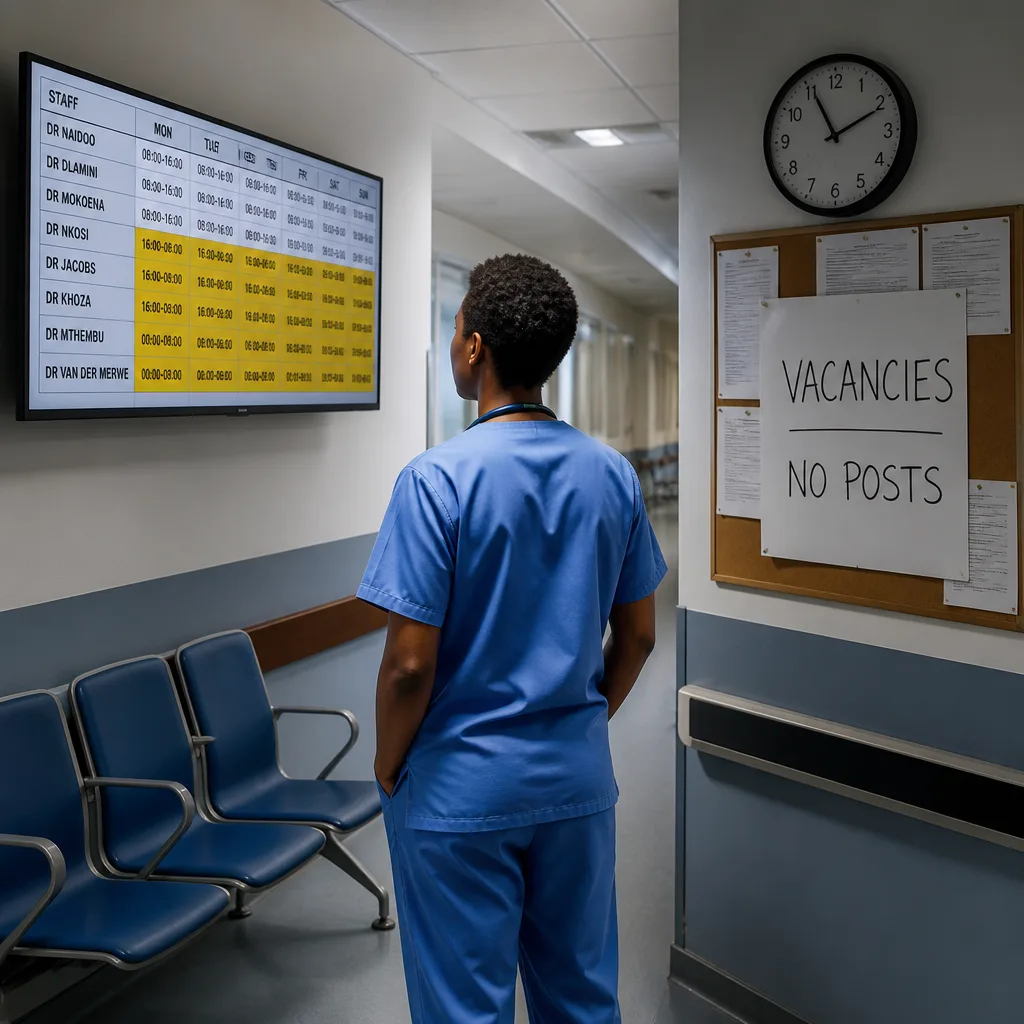
Qualified but unemployed doctors could provide relief to South Africa's pressured public healthcare system, medical organisations have said, as existing staff face excessive hours, fatigue and staffing gaps that affect service delivery and patient safety.
Union warns of patient-safety risks from sustained overtime
The Health and Other Public Sector Employees’ Union of South Africa (HOSPERSA) in Gauteng highlighted what it called an apparent contradiction: the continued existence of qualified doctors without posts alongside persistent vacancies in public facilities that force current doctors to work extended shifts.
HOSPERSA Gauteng provincial secretary Nhlanhla Mthize said the problem should not be seen only as an employment challenge but as a matter of healthcare system capacity and patient safety. He warned that sustained pressure on clinicians could lead to fatigue and burnout, which in turn may compromise concentration, clinical judgement and decision-making.
“The issue should not be viewed merely as an employment challenge, but as a healthcare system and patient safety concern,” said Nhlanhla Mthize.
The union questioned whether continuing to rely on overtime payments to sustain services is the most appropriate response, suggesting instead that government assess whether available qualified doctors can be employed to fill persistent staffing gaps.
Shortages affect broader service delivery
According to HOSPERSA, staffing pressures extend beyond doctors to nurses, allied health professionals and administrative staff. When medical staffing is inadequate, workloads rise across the multidisciplinary teams that deliver care, producing longer waiting times, delayed assessments and deferred treatment.
The union pointed to Gauteng Forensic Pathology as an example of extreme staffing vulnerability, noting that some facilities – including Springs and Bronkhorstspruit – have only one appointed doctor. In such settings, legitimate leave or illness can leave a facility without a clinician to process cases efficiently.
- Risk to clinicians: extended shifts, fatigue, burnout.
- Risk to patients: longer waiting times, delayed assessments, potential for medical errors.
- Systemic concern: reliance on overtime rather than filling vacancies can mask workforce gaps.
HOSPERSA urged a reassessment of workforce planning and utilisation of existing qualified personnel to address the mismatches between unemployment among doctors and persistent vacancies in the public sector.
Policy and practical implications
If the government were to systematically employ qualified but currently unemployed doctors, the union argues, it could reduce reliance on overtime, improve clinician wellbeing and strengthen continuity of care. The union framed this as not only an employment issue but a strategy to protect patient safety and service quality.
| Current problem | Potential consequence |
|---|---|
| Excessive overtime for existing doctors | Fatigue, impaired clinical judgement, retention challenges |
| Vacant posts while doctors remain unemployed | Longer waiting times, delayed treatment, system inefficiency |
The union's recommendations imply administrative and budgetary action: identifying qualified unemployed doctors, matching them to vacant posts, and factoring the costs of new appointments against the ongoing expense of overtime and the potential costs of adverse patient outcomes. The source material does not include official government response or figures on the number of unemployed doctors or vacant posts.
This debate sits within broader concerns about staff morale and retention in the public health sector. HOSPERSA warned that without addressing workload drivers, the system risks further attrition of experienced clinicians, which would exacerbate existing shortages.
People with urgent health concerns should continue to seek care from their nearest public clinic or hospital and consult a doctor rather than self-diagnose. Any proposed workforce changes would need to be implemented alongside supportive measures to prevent burnout and ensure quality care.
Further reporting is needed to track whether national or provincial health departments will respond to the union’s call to assess and employ qualified, currently unemployed doctors to fill persistent vacancies in the public sector.











