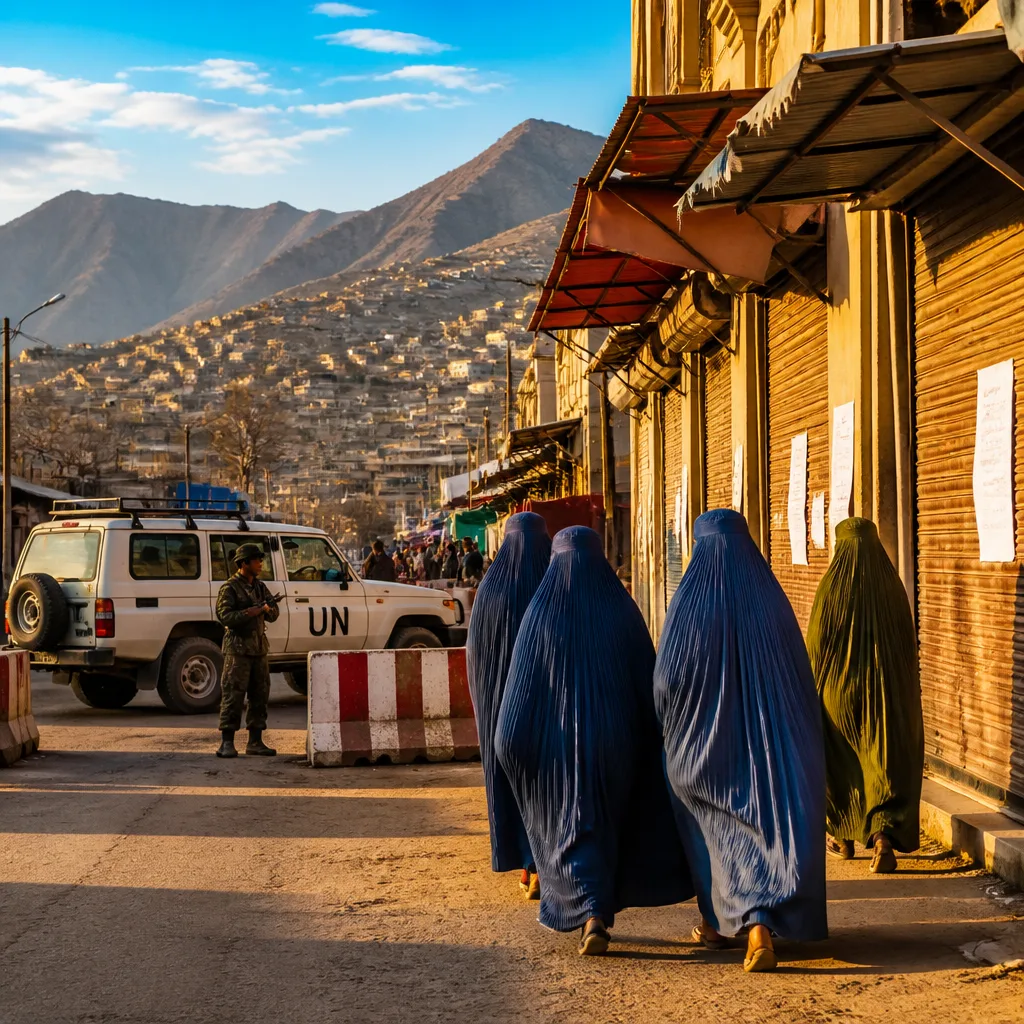
The United Nations Assistance Mission in Afghanistan (UNAMA) says the country has seen a measure of improved security since the Taliban returned to power five years ago, but warned that heavy-handed restrictions on women and girls and continuing terrorism concerns threaten the prospect of lasting peace and regional reintegration.
Security gains accompanied by serious rights and governance challenges
UNAMA noted a reduction in conflict that has brought “tangible benefits” for some Afghans and created openings for recovery, development and regional economic cooperation. The mission highlighted a number of positive steps, including a ban on opium poppy cultivation.
At the same time, the United Nations said that “significant challenges” remain. The mission singled out “increasingly damaging restrictions on women and girls” as a principal obstacle to post‑conflict recovery, and raised concern about ongoing terrorism, both of which, it said, impede Afghanistan’s path toward becoming a country at peace with itself and its neighbours and fully reintegrated into the international community.
“The last five years have shown that Afghans deeply value peace and stability after decades of war,” said Georgette Gagnon, Deputy Special Representative of the Secretary‑General and Officer‑in‑Charge of UNAMA. “But sustainable peace and prosperity require more than just an absence of conflict. Afghanistan’s future depends on building a society in which the rights and potential of all Afghans are realised and institutions are responsive and accountable.”
Since 2021, the UN has continued to engage with the de facto authorities and to support the Afghan people through humanitarian assistance and basic services, as well as engagement on political and human‑rights issues, UNAMA reported. The mission said this sustained engagement has helped to produce a degree of stability and outlined a pathway for reintegration premised on respect for human rights and inclusion.
Implications for regional cooperation and international engagement
UNAMA framed its assessment around four interlinked priorities that together determine Afghanistan’s prospects for sustainable recovery and normalisation of relations with the rest of the world:
- Addressing restrictions on women and girls to enable their full participation in education, employment and public life;
- Protecting fundamental rights and freedoms across the population;
- Reducing the threat posed by extremist and terrorist groups;
- Fulfilling international obligations that underpin reintegration into regional economic and political frameworks.
The UN’s position underscores a wider diplomatic reality: security improvements alone do not guarantee international acceptance or the restoration of development assistance at scale. UNAMA made clear that the de facto authorities must take concrete steps on rights and governance if the country is to make progress toward internationally affirmed goals.
| Observed change | UNAMA note |
|---|---|
| Security | Reduction in conflict with tangible benefits for some Afghans |
| Drug cultivation | Positive steps such as a ban on opium poppy cultivation |
| Human rights | Increasing restrictions on women and girls remain a major concern |
| Terrorism | Ongoing concerns that undermine recovery and stability |
For South Africa and other countries engaged in humanitarian and diplomatic efforts, the UNAMA assessment offers a reminder that assistance and constructive engagement must be linked to robust advocacy for human rights and inclusive governance. Without reversals in policies that exclude women and girls from education, work and public life, UNAMA warns that long‑term recovery and reintegration will remain precarious.
UNAMA’s report does not present a single blueprint for resolving Afghanistan’s deep challenges, but it draws a clear connection between internal inclusion and external ties: sustainable peace depends not only on the absence of violent war, but on institutions that are responsive, accountable and respectful of the rights of all citizens.