The United Arab Emirates' Cybersecurity Council has reported that national cyber‑security teams successfully detected and prevented a series of coordinated attacks that targeted the country's aviation, energy and education sectors, the official news agency WAM said.
What the UAE says happened
According to the Council, the incidents were advanced and coordinated in nature and involved multiple methods aimed at breaching systems, accessing operational data and exploiting user accounts. Authorities said they contained intrusion attempts before the attackers could achieve their objectives or disrupt essential services.
“The attacks involved multiple vectors and techniques, including attempts to breach systems and digital infrastructure, target accounts and operational data, as well as targeted ‘phishing’ campaigns and attempts to exploit users as an entry point into the targeted environments.”
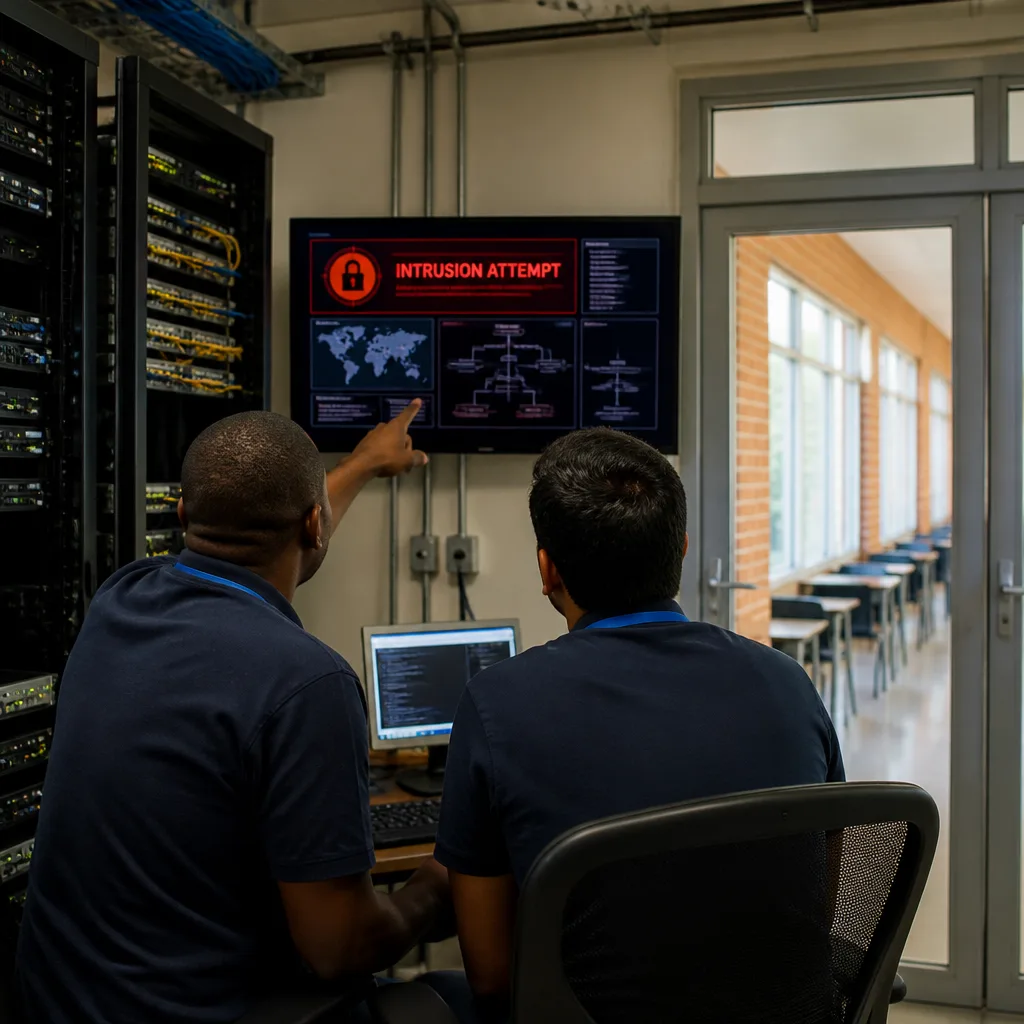
WAM reported the Council added national teams tracked attack paths, identified indicators of compromise and implemented technical measures to neutralise threats and prevent further spread.
Implications for education systems
While the statement did not provide specific details about which educational institutions were targeted, the inclusion of the education sector underscores a growing global trend: schools, universities and related services are increasingly attractive targets for cyber‑criminals. Education systems typically hold personal data on learners and staff, operate financial transactions and rely on networked infrastructure for learning management systems and administrative functions.
For education authorities and institutions — whether in the UAE, South Africa or elsewhere — the incident highlights several priorities:
- Strengthening user awareness — phishing remains a common entry point and staff and learners must be trained to recognise suspicious messages.
- Improving detection and response — rapid identification and containment can limit harm to services and data.
- Securing operational systems — protecting administrative, financial and learning platforms is essential to keep schools and universities functioning.
Education institutions with limited IT capacity are particularly vulnerable, as they may lack the resources to deploy continuous monitoring or to implement robust incident response plans.
What was revealed and what remains unknown
The UAE statement described the attacks as handled proactively and immediately, and said national teams had repelled the activity and taken the necessary technical measures. However, authorities did not offer information on the origin of the attacks, the specific targets within each sector, or whether any data were exfiltrated before containment.
| Sector named | Reported activity |
|---|---|
| Aviation | Attempts to breach systems and target operational data |
| Energy | Coordinated intrusion attempts and multi‑vector techniques |
| Education | Phishing campaigns and attempts to exploit users as gateways |
That level of detail — limited to techniques and sectors — is common in initial official cyber‑security statements, which aim to reassure the public while preserving investigative leads and sensitive defensive information.
Lessons for South African education authorities
Although this development concerns the UAE, it carries practical lessons for South African education stakeholders. The risks described — phishing, account compromise and attacks on operational systems — are universal. Strengthening basic cyber‑hygiene across the education sector can reduce exposure. Practical steps include:
- regular phishing awareness campaigns for educators, administrative staff and learners;
- basic network segmentation to limit spread if a breach occurs;
- routine backups of critical systems and verified recovery plans;
- clear incident‑reporting channels so that suspected breaches are escalated quickly.
National and provincial education departments, as well as school governing bodies and higher‑education institutions, will need to weigh investments in cyber‑security training and infrastructure. The UAE account serves as a reminder that protecting learning environments now includes defending digital systems.
Authorities in the UAE said national teams have contained the incidents and taken measures to stop further spread. Further public updates may follow as investigations progress.