
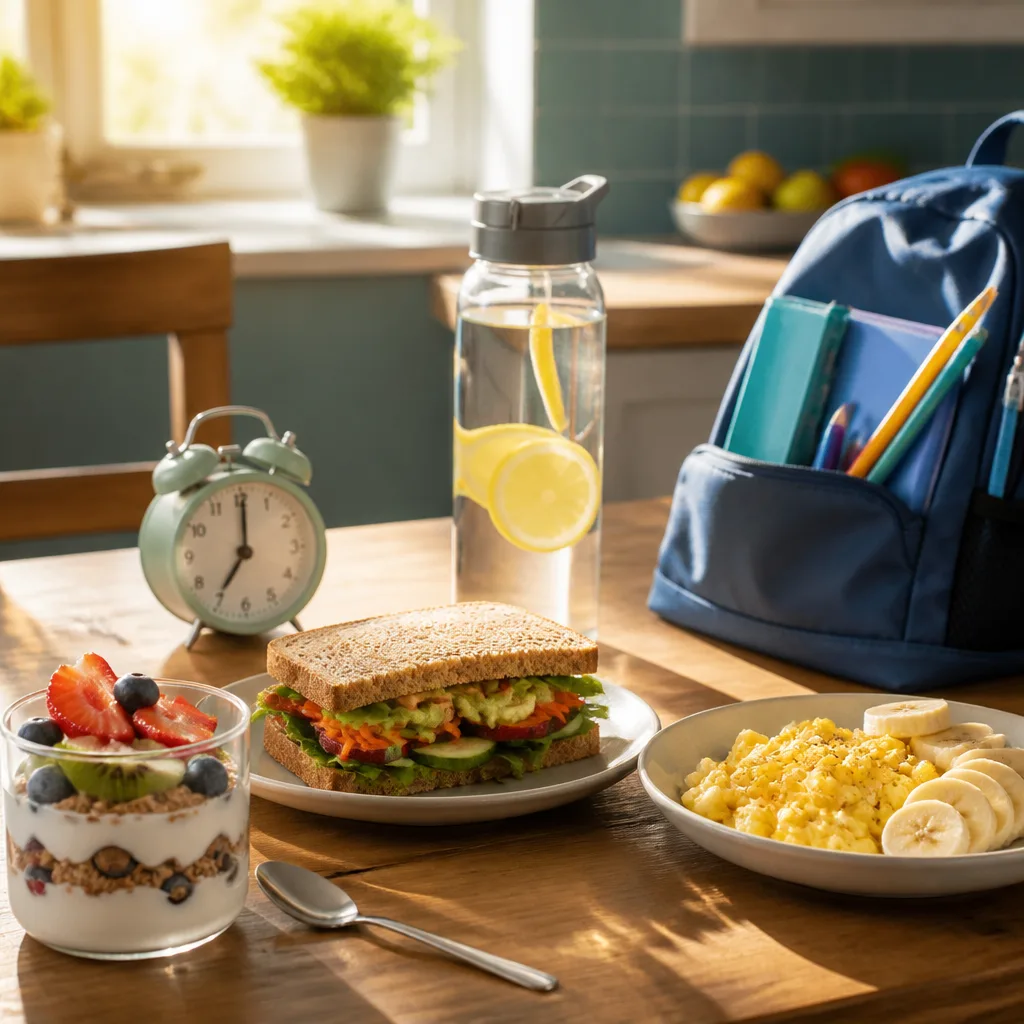
As learners return to class after the break, three simple, research-informed measures can substantially improve their energy, concentration and overall wellbeing: a balanced breakfast, regular hydration and sufficient sleep. These foundational habits support learning, reduce fatigue and strengthen the immune system, experts say.
Start the day with a nourishing breakfast
A morning meal that balances protein, whole grains and fruit helps sustain energy and attention through the first lessons. Foods high in refined sugar may trigger a mid-morning energy slump and impair focus. Practical, easy-to-prepare options recommended by paediatric nutrition guidance include:
- Greek yogurt parfait — layered with fruit and a small portion of granola for protein and natural sweetness.
- Veggie whole-grain sandwich — whole-grain bread with cheese and sliced vegetables plus a spread such as hummus or a nut butter.
- Banana with egg — scrambled or fried eggs served with fruit for a quick, protein-rich plate.
- Apple with peanut butter — fibre from fruit combined with protein and healthy fats to keep hunger at bay.
- Homemade smoothie — blended fruit with milk and a touch of honey for a portable option on busy mornings.
Good nutrition not only fuels the brain for classroom tasks but also supports resistance to common infections. Caregivers should aim for variety and portion sizes appropriate for the child’s age.
Make water the daily default
Even mild dehydration can cause headaches, tiredness and reduced concentration, particularly in active children who play sport or spend time outdoors. Encouraging regular water intake is therefore key.
If plain water is rejected, try inexpensive flavour enhancers such as slices of lemon, lime or strawberries added to a jug. Another child-friendly option is to prepare popsicles using diluted fruit juice for an occasional treat. Routine use of sugary sports drinks is discouraged unless a clinician specifically recommends them for prolonged, intense physical exertion.
Protect sleep to support growth and learning
Sleep is crucial for memory consolidation, emotional regulation and physical development. Most school-age children require about 9 to 12 hours of sleep each night to function well during the school day.
Consistent bedtimes, a calm pre-sleep routine and limiting stimulating screens before sleep all help improve sleep quality. Parents should observe their child’s daytime alertness and mood as practical indicators that sleep needs are being met.
| Area | Practical tips | Why it matters |
|---|---|---|
| Breakfast | Include protein + whole grains + fruit; try yoghurt parfaits or egg and banana | Steady energy, better focus, fewer mid-morning crashes |
| Hydration | Encourage plain water; add fruit slices or make diluted juice popsicles | Prevents headaches and fatigue; improves concentration |
| Sleep | Aim for 9–12 hours; keep regular bedtime and wind-down routine | Supports learning, mood regulation and growth |
These measures are straightforward to implement and can be adapted to local resources and family schedules. Schools and caregivers should collaborate where possible: ensuring access to safe drinking water, supporting healthy tuck-shop options and promoting consistent start times can reinforce healthy habits.
Caregivers should consult a clinician if a child has persistent sleep problems, unexplained fatigue, or changes in appetite or weight, rather than attempting to self-diagnose. Local clinics and paediatric services can assess underlying causes and advise on nutrition, hydration needs and sleep disorders.
Key takeaway: Small, consistent changes — a balanced breakfast, regular water intake and adequate sleep — can make a tangible difference in children’s school performance, wellbeing and resilience against illness.











