
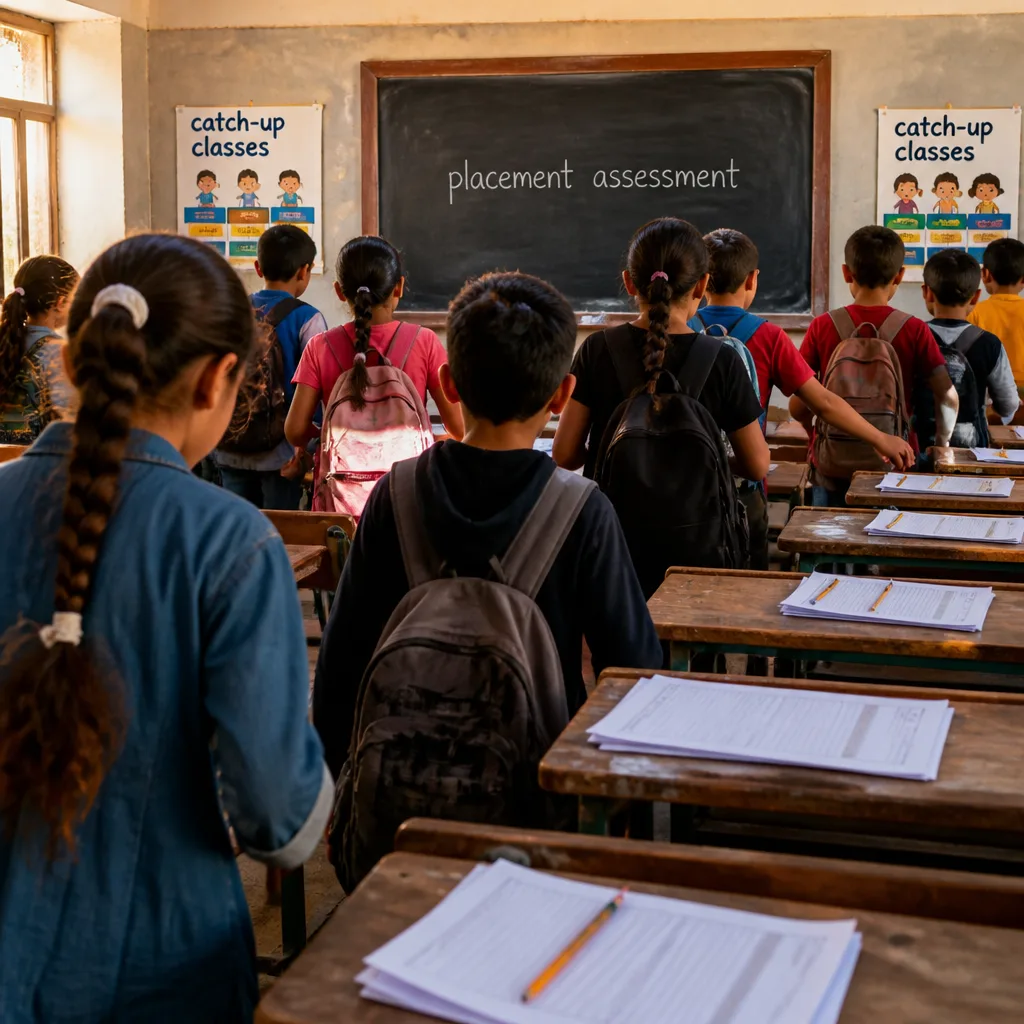
The Syrian Education Ministry has intensified efforts to bring an estimated 2 million out‑of‑school children back into formal education, deploying assessment programmes and expanded support to address widespread learning loss, the ministry said.
Assessment drives placement and catch‑up
Authorities in Hasakah province have conducted knowledge assessments for children who have been out of school to evaluate their educational levels and identify learning needs. The stated aim is to accurately place these learners into grades and programmes that match their actual abilities and to design interventions to help them recover missed learning.
The ministry told a People’s Assembly hearing on 14 September that economic and social pressures, and the lack of schools in some areas, had contributed to the rise in dropouts. Officials expect total student numbers to reach 6 million in the current academic year, a larger cohort that will place additional strain on classrooms and resources.
“About 2 million students were estimated to have dropped out of education, citing economic and social factors as well as the absence of schools in some areas,” the ministry said.
Practical measures already under way
Measures first rolled out earlier this year in Hasakah include assessment tests for returning students in key grades. On 2 April, the Hasakah Directorate of Education administered exams for learners at the eighth and 11th grade levels in Hasakah and Qamishli cities and multiple rural education complexes, officials said. The tests were intended to enable pupils who had stopped studying because of local circumstances to sit basic education and general secondary certificate examinations and thereby continue their education.
The ministry also highlighted problems faced by learners returning from abroad: missing documentation, language differences and curricular misalignment between systems. Addressing these administrative and pedagogical barriers is central to the reintegration plan.
- Assessments to evaluate learning loss and place children at appropriate levels;
- Measures to address learning gaps, including targeted catch‑up instruction and examination pathways;
- Plans to expand access where schools are absent or damaged, and to accommodate increased enrolment.
From emergency response to longer‑term system repair
According to the ministry, emergency and strategic plans are being implemented with the goal of securing the right to education and transforming the system from one that fills immediate gaps to one that is stronger and more equitable. The ministry framed the current actions as part of a shift from crisis management toward rebuilding an education system better able to absorb shocks and serve vulnerable learners.
Officials signalled that placing returning and previously out‑of‑school children into accurate grade levels is a crucial first step, because inappropriate placement can deepen learning loss and increase the risk of further dropouts. By using targeted assessments, the ministry aims to reduce those risks and streamline pathways back into examinations and continuing learning.
| Metric | Reported figure |
|---|---|
| Estimated out‑of‑school children | 2 million |
| Projected total student enrolment this year | 6 million |
| Key assessment dates in Hasakah | 2 April (eighth and 11th grades) |
International experience shows that rapid assessment and tailored catch‑up programmes can reduce repetition and dropout. But scaling such interventions to reach millions requires teachers, learning materials, exam accommodations and administrative systems capable of verifying learners’ records and recognising varied curricular backgrounds.
For Syrian classrooms already coping with resource constraints and large numbers of learners, the ministry’s plans will require co‑ordination across directorates and with any international partners involved in education in emergencies. The emphasis on systemic reform suggests officials are aiming not only to reintegrate children in the short term but also to build more resilient schooling structures for the future.
As implementation continues, monitoring progress on placement accuracy, rates of return to sustained enrolment, and improvements in learning outcomes will be critical to judge whether the ambitious target of returning 2 million children to education can be met and sustained.











