
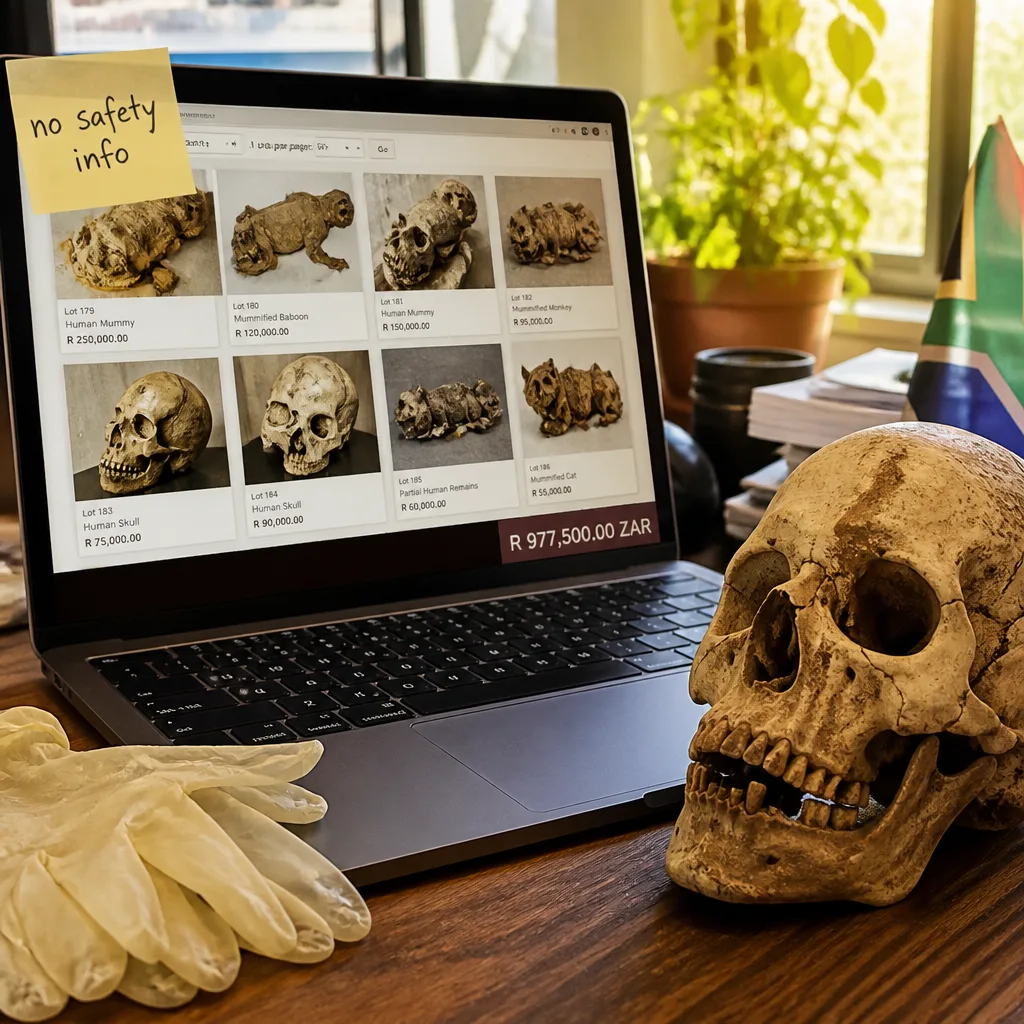
A new analysis of online auction listings for mummified human and animal remains warns that buyers frequently receive contaminated, degraded material with little or no guidance on safe handling or transport. The study, published in the International Journal of Cultural Property, examined almost 130 listings and found widespread evidence of biodeterioration, inadequate vendor information and direct handling of specimens without protective equipment.
Health risks and poor vendor practices
Bioarchaeologist Kirsty Squires of the University of Staffordshire, who led the review, said the research shows sellers often do not provide safety advice to prospective buyers. The paper flags two principal hazards: the survival of microorganisms in ancient tissue that can pose infection risks, and the presence of toxic embalming residues, including heavy metals.
“Our research revealed that mummified remains sold online exhibit signs of biodeterioration, yet sellers provide no safety guidance, suggesting limited awareness or deliberate disregard of hazards,” said Squires.
The authors noted listings included a range of body parts. Human hands and feet were common, while more than half of the lots reviewed contained heads in varying states of preservation. Several listings displayed images of people touching or posing with remains without gloves, and the paper documents examples of mummified material being posted to buyers both within countries and internationally.
- Sample reviewed: nearly 130 online listings
- Most common items: human hands and feet
- Heads present: in over half of lots reviewed
- Safety guidance: largely absent from listings
Why ancient remains can still be dangerous
Mummified tissue can harbour microorganisms that survive for long periods under desiccated conditions. When material is disturbed, rehydrated or transported, dormant bacteria and fungal spores may become active or spread. The paper also draws attention to chemical hazards introduced during past embalming practices: toxic substances such as lead, mercury and arsenic are historically documented in some treatments and can persist in tissue and wrappings.
Those two vectors — biological and chemical — create different risk profiles. Biological agents can cause infection if viable organisms are present and exposure occurs; heavy metals and other toxicants pose chronic poisoning risks through inhalation of dust, skin contact or ingestion if the object is handled without protection.
Implications for collectors, museums and customs
The authors warn that online marketplaces and individual collectors are often ill prepared to manage these risks. Without clear provenance, condition reports or safety instructions, buyers may inadvertently place themselves, their households or postal workers at risk. The international shipment of mummified material raises additional concerns for customs and public-health authorities, particularly where packaging or declaration is inadequate.
The study does not quantify infection events linked to contemporary purchases, but it highlights avoidable practices that increase exposure risk: handling remains without gloves, inadequate packaging, and the absence of professional conservation or decontamination procedures prior to sale.
| Characteristic | Finding |
|---|---|
| Listings analysed | Nearly 130 |
| Items frequently sold | Hands, feet; heads in over half of lots |
| Seller safety guidance | Generally absent |
For museum professionals and curators, the paper reinforces established protocols: use of personal protective equipment when handling human remains; condition assessments by qualified conservators; and laboratory screening for pathogens or hazardous chemicals where indicated. For private buyers and sellers, the authors recommend refraining from handling or transporting human remains without expert advice and proper packaging.
Broader ethical and legal context
Beyond health risks, trade in mummified human remains raises ethical questions about provenance, ownership and the treatment of the dead. Many countries have laws and conventions governing the export and sale of cultural property and human remains. The study underscores the need for better regulation of online marketplaces and greater awareness among buyers about legal and ethical responsibilities.
In short, the romantic idea of a cursed artefact should be set aside in favour of practical caution: these objects can carry biological and chemical hazards. The authors call for improved seller disclosure, responsible curatorial practice and, where necessary, intervention by customs or public-health authorities to prevent unintended harm.
Readers who encounter listings for human remains should exercise scepticism, seek expert advice and consider reporting suspicious or inadequately documented sales to relevant authorities.









