Scientists report evidence that the earliest free‑living cells on Earth may have emerged in two different forms — the ancestors of modern bacteria and archaea — as life moved away from hydrothermal vents about 4 billion years ago, according to a paper published in Science Advances.
How the team reached its conclusion
An international research group led by biologists at Heinrich Heine University Düsseldorf (HHU) examined a suite of chemical reactions, their associated enzymes and protein structures across the tree of life to reconstruct the metabolic toolkit available to the earliest cells. The team concentrated on roughly 420 chemical reactions that living cells use to synthesise building blocks such as amino acids, the components of RNA, and vitamins — reactions that would have been essential as primitive life became more independent from its environment.
The researchers compared genomes, protein structures and biochemical pathways from bacteria and archaea to determine which steps in this core metabolism are carried out by conserved enzymes and which might have depended on non‑biological catalysts in early Earth settings.
"We would see two very different kinds of cells emerging, pioneer bacteria and pioneer archaea,"
said Natalia Mrnjavac, a biologist at the University of Düsseldorf and the study’s lead author, as reported by the team.
Findings on enzymes and environmental chemistry
The authors report that although the network of reactions is extremely ancient and widespread, the enzymes that catalyse those reactions are not equally conserved between bacteria and archaea. William Martin, listed as senior author and also at HHU, noted that the last universal common ancestor of all cells — often abbreviated LUCA — appears to have encoded enzymes for only about half of these core reactions. The remainder, the team proposes, were likely facilitated by naturally occurring metals and mineral chemistry in the LUCA’s surroundings.
That interpretation implies early life was more dependent on environmental catalysts than modern cells are, and it supports a scenario where two distinct cellular lineages developed when life began to exploit niches beyond hydrothermal vents.
- Scope of analysis: ~420 core metabolic reactions examined
- LUCA’s enzymatic repertoire: enzymes for roughly half of those reactions
- Environmental role: remaining reactions plausibly driven by metals or mineral catalysts
- Evolutionary implication: emergence of separate pioneer bacteria and pioneer archaea as cells became free‑living
Context and caveats
The study integrates comparative genomics and biochemical logic to infer early metabolic states, an approach that draws on present‑day diversity to read the deep past. Such reconstructions necessarily depend on assumptions about how conserved protein structures and pathways reflect ancestral states. The authors present their conclusions as consistent with the data they analysed; they do not claim absolute certainty about the precise chemical environments of the Hadean and early Archean Earth.
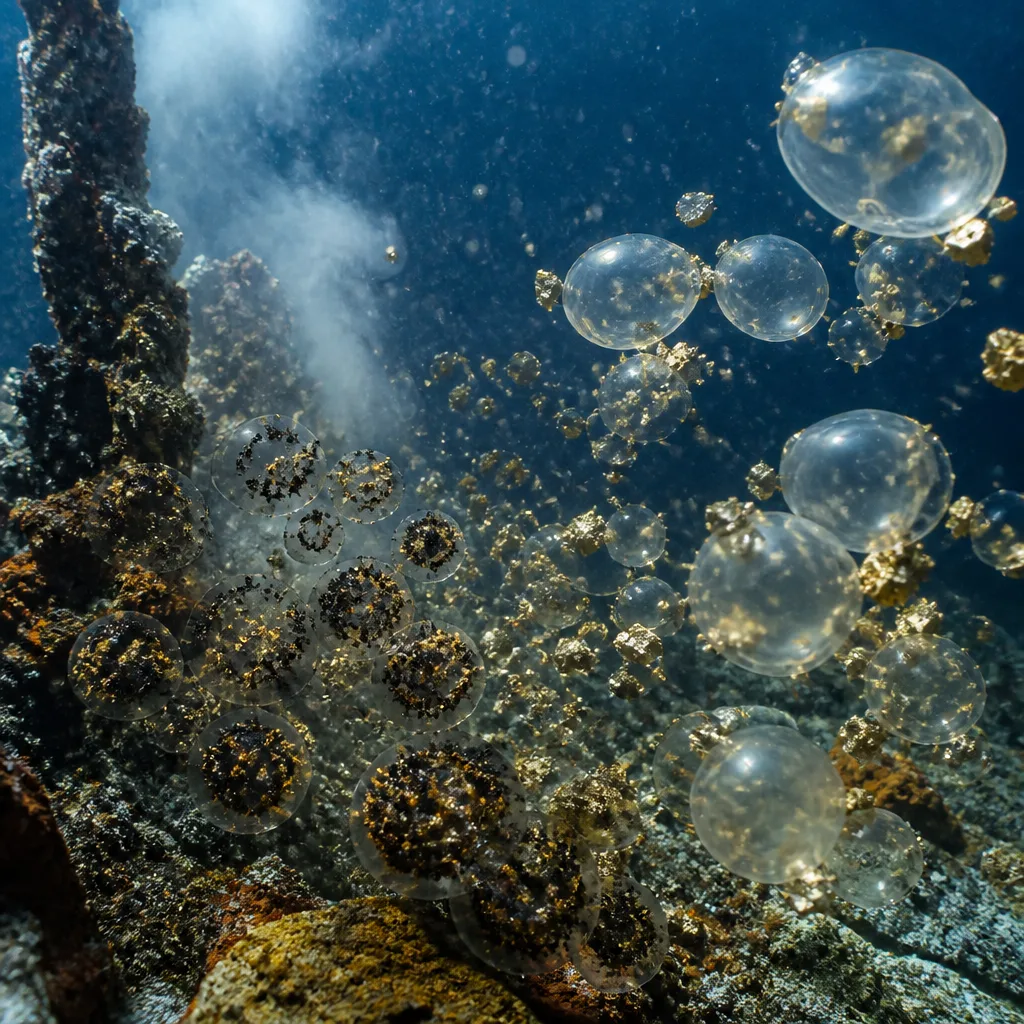
The suggestion that metals in the environment performed many early catalytic tasks echoes long‑standing hypotheses about hydrothermal systems as cradles for life, where abundant hydrogen, ammonia and carbon dioxide could feed primitive chemistry. The paper adds a layer of genomic and structural evidence indicating that, as organisms transitioned away from strict reliance on those geochemical settings, two divergent cellular solutions may have stabilised into the lineages we now recognise as bacteria and archaea.
| Item | Approximate value |
|---|---|
| Core reactions analysed | ~420 |
| Reactions with LUCA‑encoded enzymes | ~50% |
| Reactions likely aided by environmental metals | ~50% |
This work was led by researchers at Heinrich Heine University Düsseldorf and published in Science Advances. It provides a testable narrative for the early stages of life’s biochemical independence and highlights the continuing role of geochemistry in origin‑of‑life research.
Further work will be needed to refine the picture — for example, by better constraining which metal or mineral catalysts could substitute for missing enzymes, and by integrating geological evidence about the composition of early Earth environments. For now, the study offers a clear, evidence‑based argument that the path from geo‑chemical systems to modern cellular life may have taken at least two distinct routes.