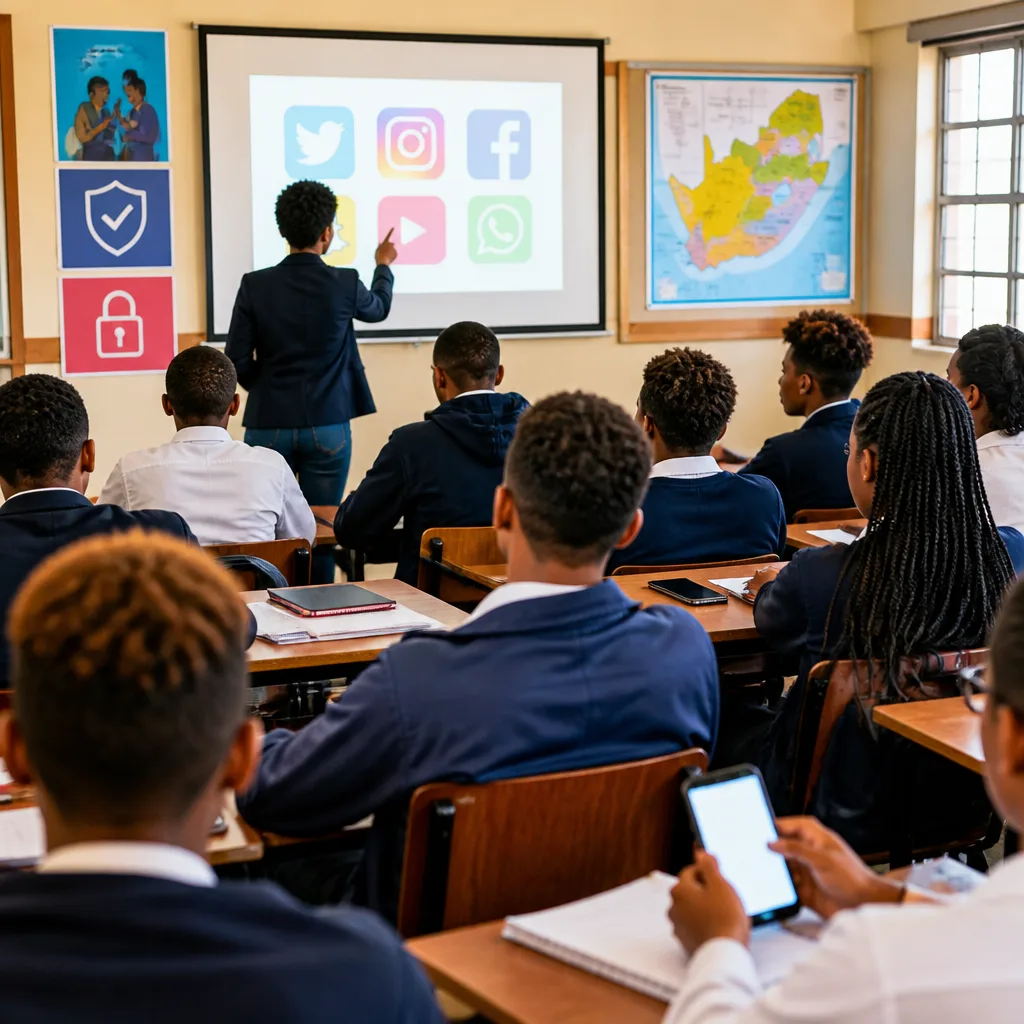
Teaching young people how to navigate TikTok, Snapchat, Instagram and YouTube may be one of the most promising strategies to protect youth mental health from the harms of social media, a new review of state-level policies concludes. The paper, led by Melissa Villodas at George Mason University and published in the Journal of Policy Practice and Research, finds that media literacy—education that builds young people’s knowledge, tools and support for safer online use—remains underused and understudied despite its potential.
What the review examined
The authors analysed 16 interventions with state-level policies aimed at helping parents, educators and caregivers curb social media overuse among young people. They compared measures that limit access or exposure with those that centre on media literacy, and assessed the evidence for each approach.
- Access-control measures, such as restrictions and exposure limits, are widely adopted by states but have limited strong evidence of effectiveness.
- Media literacy policies—which teach youth about motivations for use, evaluating content credibility and safe engagement online—are less common but may offer downstream support after young people enter social media spaces.
- Overall, the review highlights a scarcity of robust research on which policies reliably reduce mental-health harms.
“Media literacy-oriented policies operate after a young person has entered social media spaces and represent a downstream approach to support youth mental health,” the authors write, adding that media literacy “may be one of the more promising strategies.”
Why the findings matter
The timing of the study is notable: over the past decade the prevalence of mental-health challenges among young people has worsened, the authors say. They cite two sobering statistics: suicide is the third leading cause of death among people aged 15 to 29 years, and suicide deaths increased 62% between 2007 and 2021. The review warns that anxiety, depression and suicide-related problems have become disturbingly common in young people.
Despite these trends, the review found that only a small number of jurisdictions have proactively embraced media literacy in policy terms — the authors note that just one state was identified as proactive on media literacy in their analysis — and call for more evaluation of such interventions.
Implications for parents, schools and policymakers
The review suggests a shift in emphasis: rather than relying solely on access controls (which remain popular), policymakers and educators should consider integrating media literacy programmes that:
- Help young people understand why they use social media and how it affects them;
- Teach critical appraisal of content and identification of potentially harmful material, including AI-generated content;
- Provide practical guidance on safe engagement and when to step back or seek help.
For parents and caregivers, the study reinforces the value of supportive conversations and guided education about online behaviour, in addition to any limits placed on device use.
What remains unknown
The authors emphasise that while media literacy shows promise, high-quality evidence demonstrating long-term mental-health benefits is limited. They call for further research to evaluate which curricula, delivery methods and policy combinations work best for different age groups and settings.
Health professionals and educators should be cautious about overpromising specific outcomes from media-literacy programmes until more rigorous evaluations are available. As ever, anyone concerned about a young person’s mental health should consult a doctor, clinic or mental-health professional rather than relying on self-diagnosis or untested interventions.
Table — Key findings at a glance
| Finding | Detail |
|---|---|
| Evidence base | Limited; interventions under-evaluated |
| Promising approach | Media literacy (education, tools, support) |
| Worrying youth trends | Suicide is third leading cause of death (15–29 yrs); 62% rise in suicide deaths 2007–2021 |
The review underscores a simple but important message: equipping young people with the skills to use social media thoughtfully could complement other policy measures and family practices. For policymakers, the study is a reminder to invest in well-designed evaluations so that interventions intended to protect youth mental health can be clearly shown to work.