
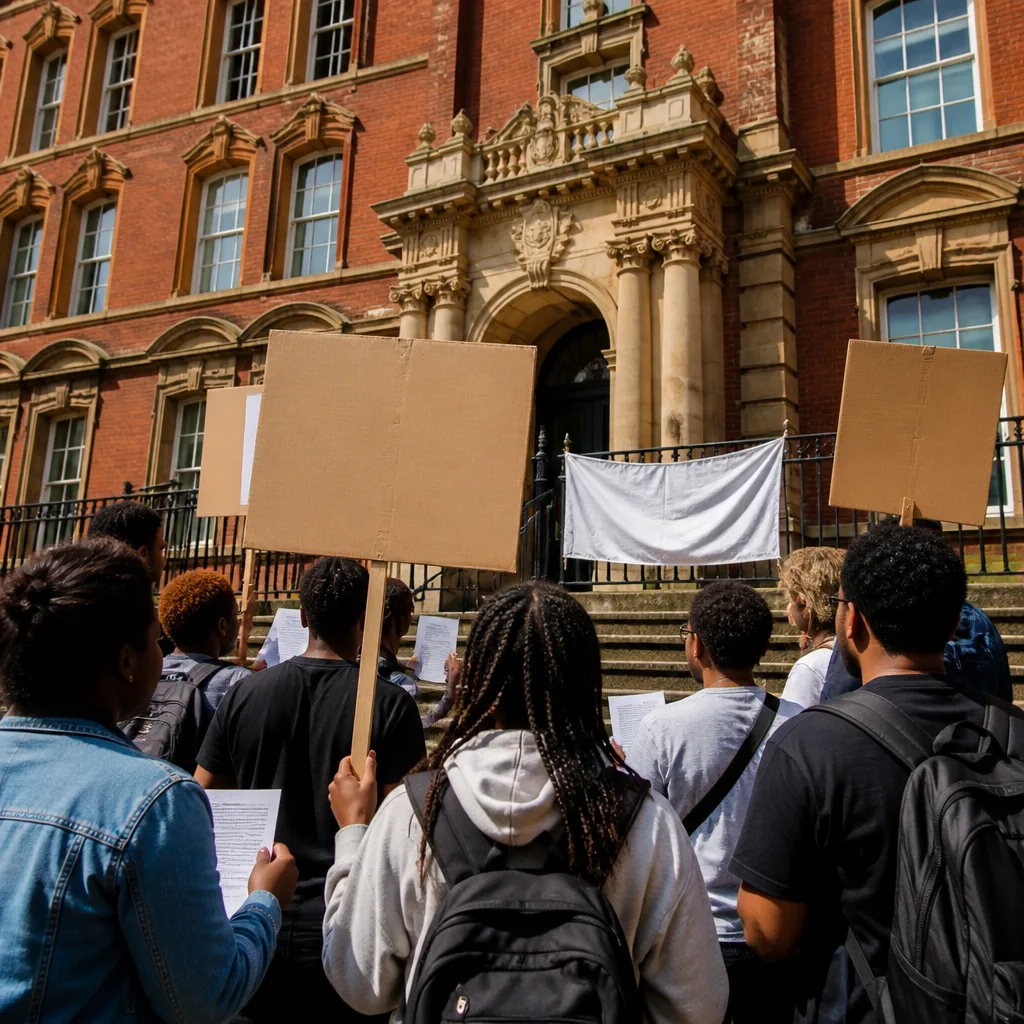
Around 120 student teachers in Northern Ireland who began training in Maths, Science, Technology and Irish before September 2026 will not benefit from a newly announced bursary scheme, leaving them without the financial support offered to those who start courses from that month, students have said.
What has changed
The Department of Education introduced a scheme that will waive tuition fees for those who begin teacher training in September 2026 in order to address shortages in STEM subjects and Irish-medium education. Those funded under the scheme will also be required to commit to teaching in Northern Ireland for at least two years after they qualify.
The scheme, announced by Education Minister Paul Givan, does not apply to current undergraduates who already began their courses. The department said that funding is not available to extend the scheme to current undergraduate students. That decision has left many trainee teachers feeling “disheartened” and underappreciated, according to student representatives at St Mary’s University College in Belfast.
“Our argument has been that there should be a level of acknowledgement for those students who are already enrolled in teaching capabilities in these areas,” said former Student Union President Caoilte Hamil, who backed a student proposal. “The minister rightly addressed what he considered an acute shortage of teachers and educators in STEM areas.”
Students’ proposal and estimated cost
Students have drawn up a proposal asking the Department of Education for a tapered support scheme to assist those who will graduate and qualify in 2027, 2028 and 2029. The student group estimates the cost of that support at £1.2 million in total.
Under the students’ plan, partial tuition support would be paid to existing trainees so that those who are close to qualifying do not lose out entirely because of the timing of the new scheme.
| Item | Detail |
|---|---|
| Current affected students | ~120 |
| Bursary available to new starters (Sept 2026) | Up to £20,000 |
| Students’ estimated cost to extend support | £1.2 million |
| Post-qualification teaching commitment for funded trainees | 2 years |
Context and consequences
The bursary scheme is intended to strengthen the supply of teachers in subject areas where shortages are acute. But the timing of the scheme’s start date has created a cohort of trainees who are ineligible despite already training in the same priority subjects.
For existing students, the gap in support could have practical consequences: increased debt or the need to combine work and study, which may affect placement availability and course completion rates. For the wider system, any barrier that reduces the number of qualified teachers entering the workforce risks undermining the very recruitment goals the bursary aims to address.
Student representatives at St Mary’s have sought engagement with the department and submitted a detailed proposal. It advocates a tapered model of support so that those qualifying in the next three years receive partial relief, rather than receiving nothing because their start dates precede the scheme.
- Students seek a pragmatic adjustment: a phased or tapered payment arrangement for those already enrolled.
- Department stance: current funding cannot be extended to existing undergraduate students.
- Wider policy aim: encourage new entrants into priority teaching subjects and retain them in Northern Ireland schools for at least two years.
The debate highlights a recurring policy challenge: how to target new incentives at recruitment gaps without unfairly disadvantaging those already in the system. Trainee teachers who were not able to access the bursary argue that timing should not determine eligibility for support when the goal is to produce more teachers in the same subjects.
As recruitment pressures in STEM and Irish-medium education persist, how the Department of Education responds to the students’ proposal will be closely watched by universities, teacher training providers and schools that depend on newly qualified teachers entering these priority fields.
Any decision will need to balance budgetary constraints with the practical realities facing student teachers and the public interest in a stable, well-supplied teaching workforce.











