
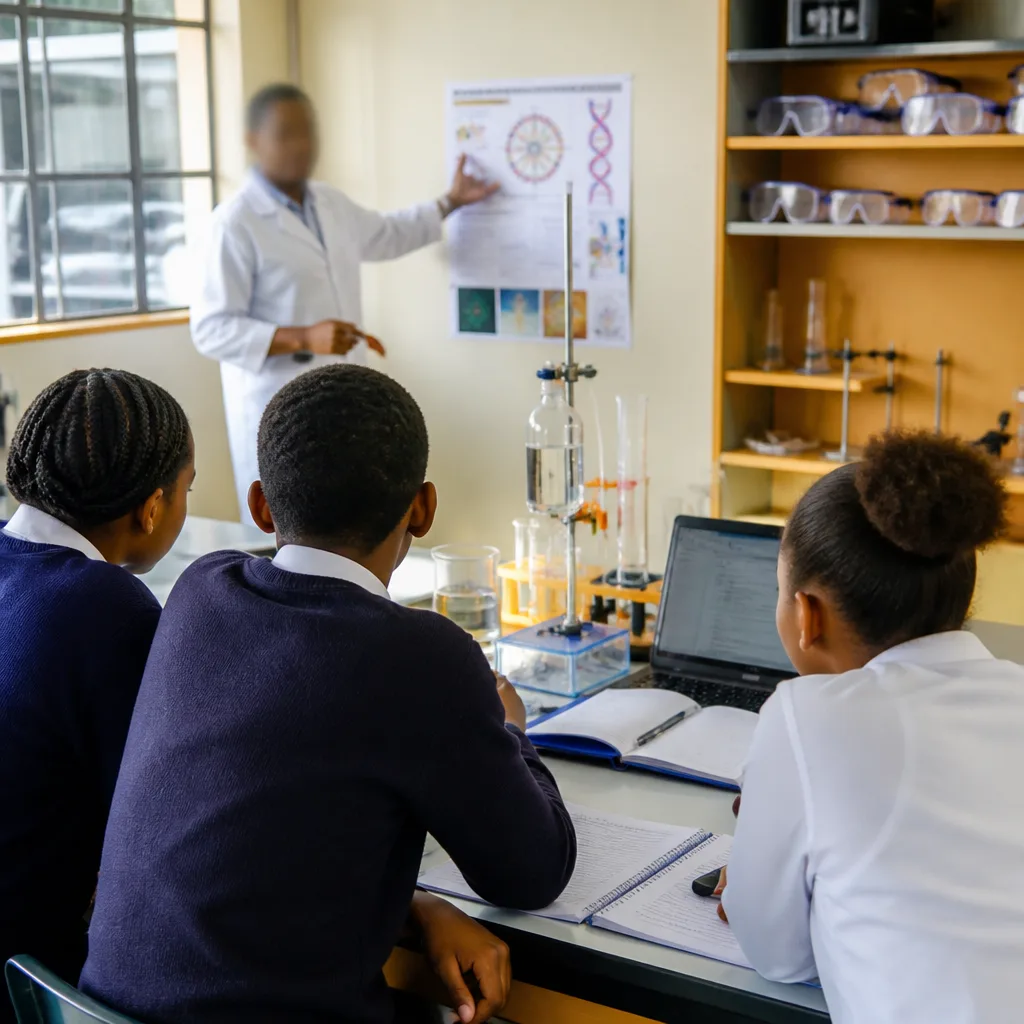
Science laboratory exercises risk becoming mechanical tasks unless teachers shift the emphasis from following steps to understanding reasons, proponents of inquiry-driven instruction say. Moving lab work away from compliance-based reports and towards student-led investigation can deepen critical thinking, foster creativity and better prepare learners for STEM careers, according to science education specialists.
From cookbook labs to inquiry
Many standard lab reports reduce experiments to a checklist: follow a procedure, record results, submit a report. That approach, described by curriculum designers, tends to reward "rule followers" and students motivated primarily by grades, while doing less to cultivate the higher-order skills employers and universities value.
Stephen Jehl, director of programme design and innovation at the National Math and Science Initiative and a former physics and robotics teacher, argues lab work should centre on a clear question and require students to design parts of the investigation themselves. Students ought to collect and analyse data, draw conclusions and justify those conclusions to peers, he said.
"Don't just collect a lab report and grade it. Instead, have students stand up and explain their reasoning — why they did what they did," Jehl said.
By insisting students articulate their reasoning, teachers create a peer-accountability dynamic that motivates participation and careful work, Jehl added. That peer pressure often engages learners who are less driven by grades, he said.
Local programmes and partnerships
How inquiry-based labs are implemented depends on context. The article highlights several practical adaptations that have worked in US schools and which may be instructive elsewhere:
- Industry partnerships: At Lennox Math, Science and Technology Academy in Lennox, California, physics and engineering teacher Jose Rivas has solicited mentors and internships from engineering companies to give students exposure to real-world problems.
- Community resources: In Marion County School District in rural Columbia, Mississippi, former science teacher Alicia Conerly — now director of federal programmes — tapped local assets such as horse breeding and indigenous plant life to make experiments relatable and place-based.
- Student ownership: Lab tasks that start from a student’s ‘‘need to know’’ and allow learners to develop their own method tend to produce deeper engagement than cookie‑cutter exercises.
These strategies reflect a broader emphasis on soft skills — communication, teamwork and problem solving — that accompany technical knowledge and are useful across careers, Jehl noted.
What good lab practice looks like
Educators describe a shift in emphasis rather than an outright rejection of structure. Effective lab programmes typically combine clear scientific questions with opportunities for student agency. Practical features include:
- Students proposing their own procedures or variations on a method;
- Data collection and analysis that require interpretation rather than rote recording;
- Whole-class discussion where pupils defend and compare approaches; and
- Connections to local industry or environment to increase relevance.
| Traditional lab | Inquiry-focused lab |
|---|---|
| Follow prescribed steps | Design procedure and justify choices |
| Produce a written report for grading | Present reasoning and critique peers' methods |
| Emphasises correct answer | Values explanation and process |
These contrasts are pedagogical. The inquiry approach does not abandon rigour; it reframes assessment to reward sound reasoning, reproducible methods and evidence-based conclusions.
Adoption challenges remain. Schools differ in resources, teacher preparation and access to community partners. Scaling inquiry-based labs requires professional development so educators can design open-ended tasks, manage classroom discussions about uncertainty, and assess reasoning as well as results.
Reorienting lab work also dovetails with broader curriculum goals: developing scientifically literate citizens who can evaluate claims, think critically about data and participate in technical discussions. For countries seeking to broaden their STEM pipelines, the lesson is practical — move beyond checklists and give learners reasons to ask, design and explain.









