
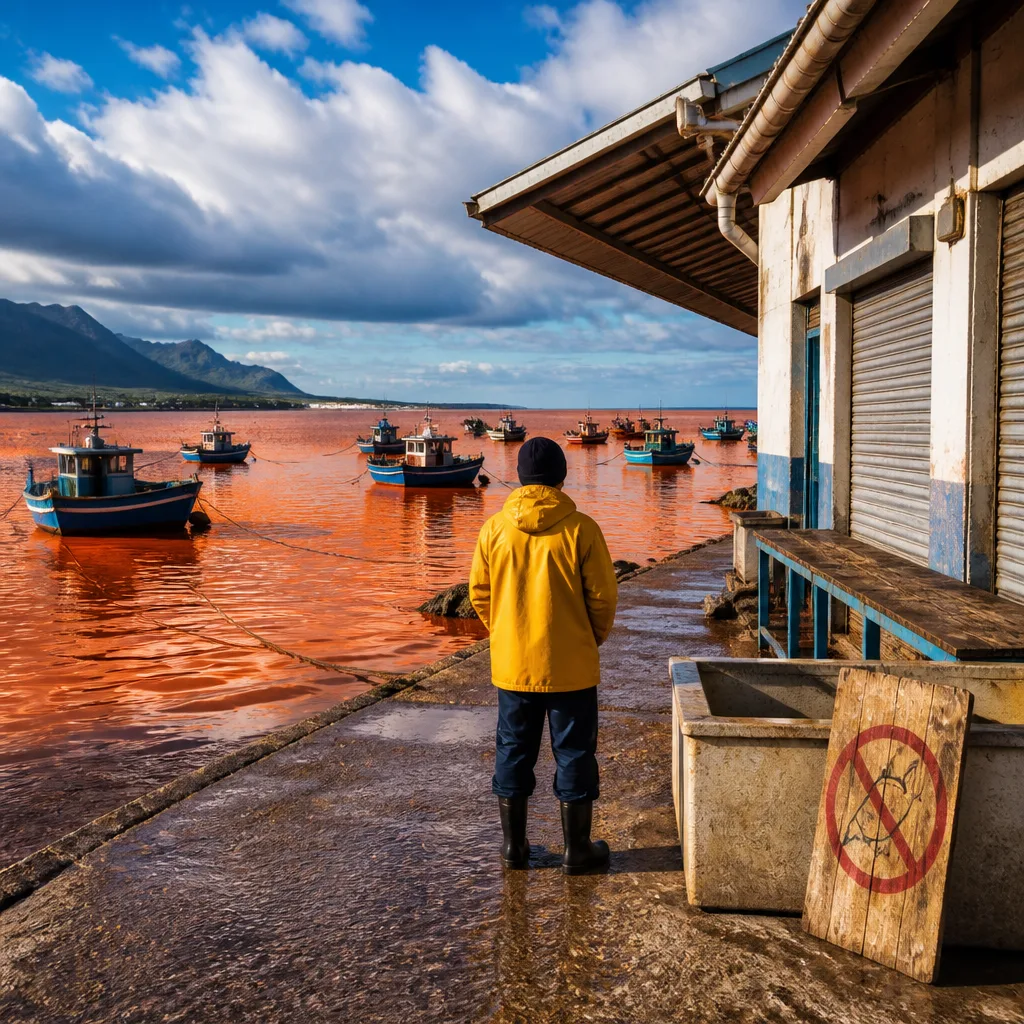
Researchers from the University of Adelaide and the University of Hong Kong are calling for marine heatwaves to be treated as a significant public health issue, after a study published in Nature Sustainability outlined multiple pathways by which unusually warm, prolonged ocean temperatures harm people.
From oceans to people: cascading risks
The paper argues that marine heatwaves — extended periods of unusually high sea surface temperatures — do more than damage ecosystems. They can amplify extreme weather events, reduce the availability and safety of seafood, disrupt livelihoods dependent on healthy oceans and contribute to anxiety, grief and other mental health challenges in coastal communities.
“Marine heatwaves are no longer just recognised as an environmental issue; they are increasingly also perceived as a human health issue,”
The comment comes from lead author Dr Laura Falkenberg of Adelaide University's School of Physics, Chemistry and Earth Sciences, who co-authored the analysis with colleagues at the University of Hong Kong. The researchers note that the health consequences have received comparatively little attention despite growing evidence of their reach.
High-profile examples linked to warmer seas
The authors highlight recent extreme-weather events that researchers have linked to marine heatwaves, including the rapid intensification of Hurricane Otis in 2023, which researchers estimate caused more than US$15 billion in damage in Mexico, and Typhoon Doksuri in 2023, which affected more than two million people across Asia. The study also references large algal blooms in South Australia, which have been associated with a range of human health problems in coastal communities.
According to the paper, the mechanisms connecting ocean warming to human health are varied and often indirect:
- Weather amplification — warmer oceans can intensify storms and atmospheric heatwaves.
- Food security and safety — changes in marine ecosystems can reduce seafood supplies and raise contamination risks.
- Livelihood disruption — fisheries, aquaculture and tourism are vulnerable to sudden ecological change.
- Mental health impacts — coastal communities may experience anxiety, grief and other psychological harms as natural resources decline.
Implications for public health planning
The authors call for marine heatwaves to be integrated into public health frameworks and emergency planning. They argue that recognising these events as health hazards would help guide surveillance, clinical preparedness and community support programmes — particularly in regions where people depend directly on ocean resources for food and income.
Health authorities are urged to monitor not only environmental indicators but also potential health outcomes, including gastrointestinal illnesslinked to seafood contamination, respiratory and skin conditions associated with algal blooms, and the mental health consequences of disrupted livelihoods.
| Pathway | Potential human health effect |
|---|---|
| Storm intensity linked to warm oceans | Increased injuries, displacement and infrastructure damage |
| Algal blooms and marine toxins | Gastrointestinal, respiratory and neurological symptoms; reduced seafood safety |
| Fisheries collapse | Food insecurity, loss of income, social stress |
| Chronic ecosystem change | Anxiety, grief and other mental health disorders in affected communities |
While the paper draws on international case studies, the issues it raises are relevant to South Africa's coastal provinces where fisheries, aquaculture and tourism support livelihoods. The authors caution that failure to account for the human-health dimension of marine heatwaves could leave health systems and communities underprepared for mounting risks.
What clinicians and communities should know
Public health practitioners and clinicians are encouraged to consider environmental drivers when assessing unusual clusters of illnesses in coastal areas, and to work with environmental agencies to improve early warning and communication. The paper also highlights the need for mental health services tailored to communities facing ecological loss.
Readers with health concerns related to marine exposures should consult their local clinic or a healthcare professional rather than self-diagnose. Timely reporting of suspected foodborne illness, skin rashes after beach exposure or respiratory problems during algal bloom events helps authorities monitor and respond to risks.
The authors' recommendation to reframe marine heatwaves as a public health matter aims to broaden the focus of adaptation and emergency response, ensuring that both ecological and human consequences of warming seas are addressed.











