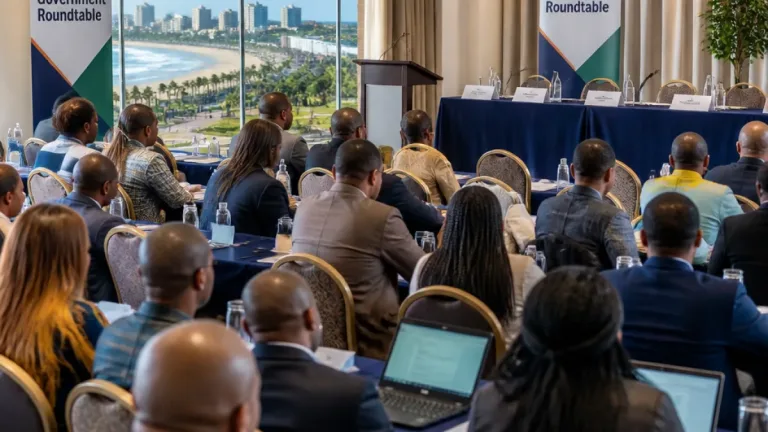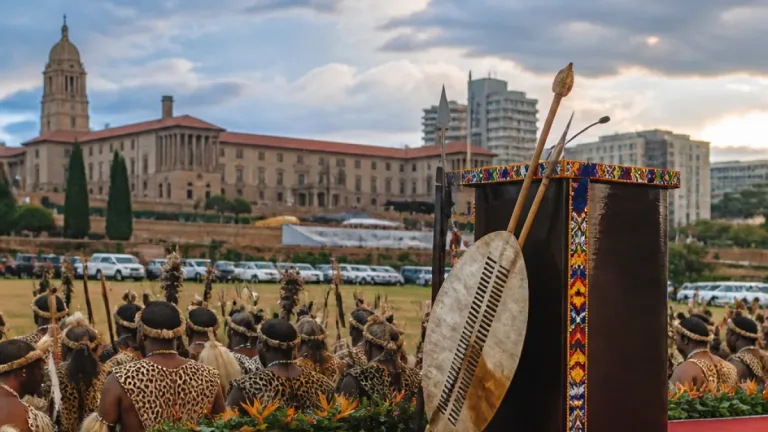

Durban. President Cyril Ramaphosa will host the Southern African Development Community’s 46th Ordinary Summit on Monday at the Durban International Conference Centre, where leaders of the regional bloc will focus on fast‑tracking industrialisation, infrastructure development, agriculture transformation and the critical minerals agenda.
Summit priorities and regional framework
The summit, which is being hosted and chaired by the South African head of state, will review the SADC strategic development plans for 2020–30 and the bloc’s Vision 2025. Delegates are expected to take stock of progress made in implementing previous summit decisions and to consider the impact of global geopolitical shifts on the region.
Key items on the agenda include:
- Resilient and inclusive industrialisation — aligning infrastructure, agriculture and critical minerals to create value chains within the region.
- Infrastructure and connectivity — advancing projects that underpin trade and movement of goods and people.
- Migration — a politically sensitive topic that has dominated headlines in recent months and will receive focused attention.
- SADC Regional Development Fund — the summit will deliberate on ways to mobilise finance for regional priorities.
Officials will also discuss wider economic trends, the state of the region and updates on socio‑economic and political performance across member states. The SADC bloc brings together 16 member states as a regional economic community and intergovernmental organisation aimed at promoting sustainable economic growth, political cooperation, peace and security, and regional integration.
Politics at home and the wider week
The summit coincides with a busy week in domestic politics. Leaders from the African National Congress (ANC), the South African Communist Party (SACP) and the Congress of South African Trade Unions (Cosatu) are scheduled to address the central executive committee meeting of the Police and Prisons Civil Rights Union (Popcru) in Boksburg, east of Johannesburg.
Popcru, an affiliate of Cosatu that represents roughly 160,000 police, prison and traffic officers nationwide, will hold its meeting from Tuesday to Saturday under the theme: "Building a Sustainable Organisation in Defence of Collective Bargaining". The gathering will cover collective bargaining, worker wellness, public safety, policing, corrections, traffic, border management and gender justice, as well as the broader political tasks facing workers.
The ANC is also expected to finalise its candidate lists during the week, a development that will have domestic political ramifications separate from the regional summit.
Who benefits, who pays
The summit’s thrust towards regional industrialisation and value‑addition is pitched as a benefit to member states seeking to capture greater returns from raw materials and agricultural products. Governments and regional institutions stand to gain if coordinated infrastructure and policy reduce trade costs and create jobs.
Funding those ambitions, however, will require sustained fiscal commitments. The SADC Regional Development Fund is meant to mobilise investment, but implementation will demand buy‑in from national treasuries, development partners and the private sector. In practice, the costs — and political trade‑offs — will fall on member states and, indirectly, taxpayers and consumers across the region.
Migration: a contentious domestic and regional issue
Migration has emerged as a politically charged subject in South Africa and across SADC. While the summit provides a platform for collective policy responses, disagreements over border control, labour mobility and documentation frequently test cooperation. How leaders navigate these tensions in Durban will signal whether SADC can move beyond episodic statements to durable policy instruments that balance security, labour market needs and human rights.
Observers will also watch for statements on geopolitical developments that affect the region, and for any concrete timelines or financing arrangements attached to the Regional Development Fund and other projects discussed at the summit.
For South Africa, hosting the summit presents both diplomatic opportunity and domestic scrutiny: it is a chance to shape regional priorities but also to demonstrate that national policy is aligned with commitments made at the regional table.