
South Africa has assumed the chairmanship of the Southern African Development Community (SADC) with International Relations and Cooperation Minister Ronald Lamola signalling that accelerating regional trade and beneficiation of critical minerals will be central to the country’s one-year tenure.
Accepting the SADC chairpersonship in Durban, Lamola framed the role as a collective responsibility, saying South Africa would pursue a programme guided by “solidarity, unity, sovereign equality and shared prosperity.” He identified four strategic priorities that will steer the chairship: peace and security, industrialisation, infrastructure development and human capital development.
“We accept this mandate fully conscious that this role does not belong to South Africa alone. This is a collective responsibility that we must discharge in the interests of our community,” Lamola said.
Shifting from extraction to value addition
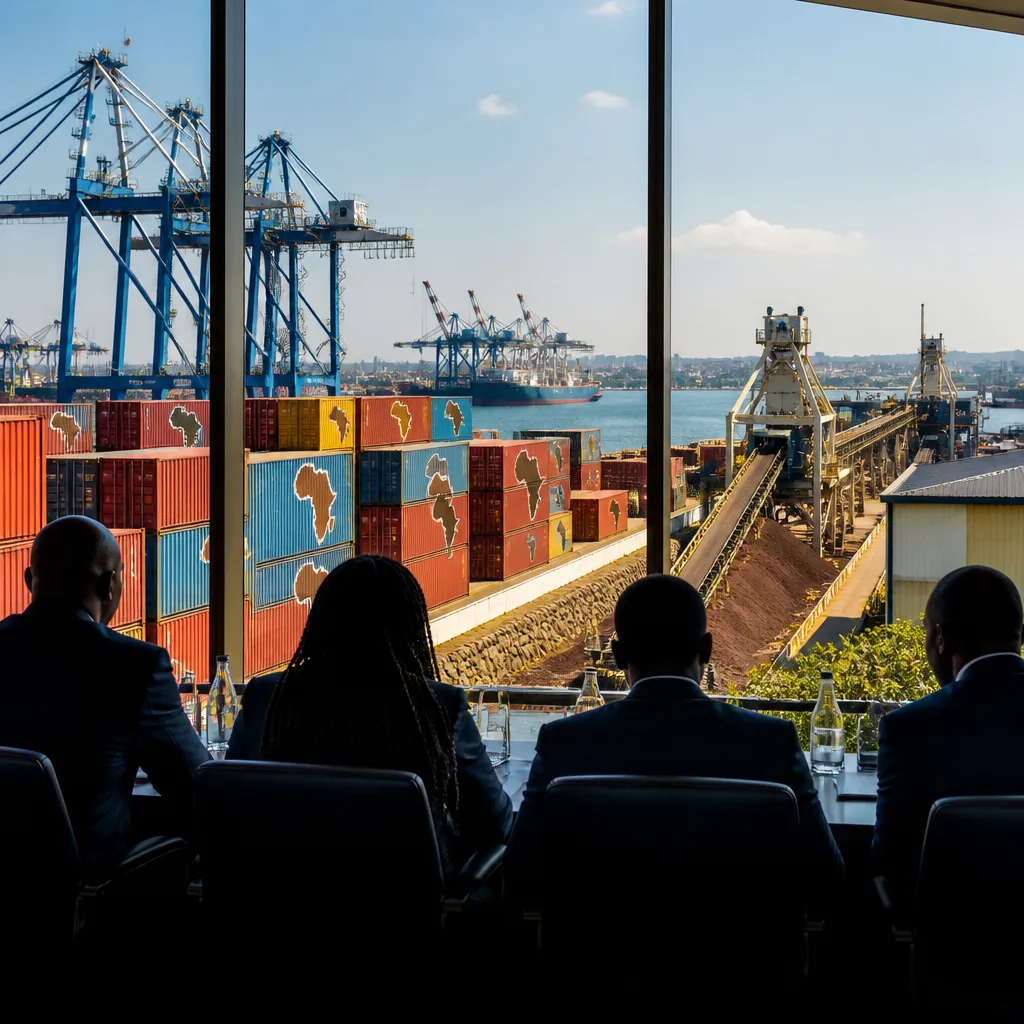
Lamola told SADC leaders that the region can no longer tolerate a pattern in which natural resources fuel growth elsewhere while member states remain trapped in extractive economic models. He said reversing that pattern requires beneficiation of resources, the construction of regional value chains and increased intra-regional trade.
To that end, South Africa’s programme will emphasise agricultural transformation and the beneficiation of critical minerals as levers for industrialisation and job creation. The region, Lamola noted, holds significant mineral wealth: about 30% of the world’s proven critical mineral reserves, including roughly half of global cobalt reserves and around 20% of graphite reserves.
Trade targets and infrastructure
Lamola pointed to a target agreed at the recent Skukuza retreat: raising intra-SADC trade to 50%. He contrasted that with the current figure of around 20%, saying intra-bloc trade remains “far too modest.” Achieving the target will require improved infrastructure links and coordinated policies to build regional value chains.
- Priority areas: peace and security; industrialisation; infrastructure development; human capital development.
- Regional resource base: ~30% of proven critical mineral reserves; ~50% of cobalt; ~20% of graphite.
- Trade ambition: raise intra-regional trade from ~20% to 50%.
| Indicator | Current | Target |
|---|---|---|
| Intra-SADC trade | ~20% | 50% |
| Share of world critical mineral reserves | ~30% | — |
Lamola said the region must avoid repeating historical patterns where raw materials are exported and value is realised elsewhere. By prioritising beneficiation and regional trade, South Africa aims to create deeper value chains that retain more economic benefit within SADC states.
The minister also linked industrialisation to agricultural transformation and to job creation across member states, indicating that a mix of primary-sector reform and downstream processing would form part of the chairship’s drive to broaden the region’s economic base.
As chair, South Africa will be tasked with coordinating member-state commitments and mobilising regional cooperation to implement the Skukuza objectives. How quickly and effectively the bloc can translate the stated priorities into concrete projects and increased trade flows will determine whether the chairship achieves lasting changes to the structure of regional economies.
Lamola’s presentation at the handover in Durban sets a pronounced economic agenda for South Africa’s year at the helm of SADC, with clear emphasis on using the region’s mineral and agricultural endowments to support industrial development and greater intra-regional commerce.









