
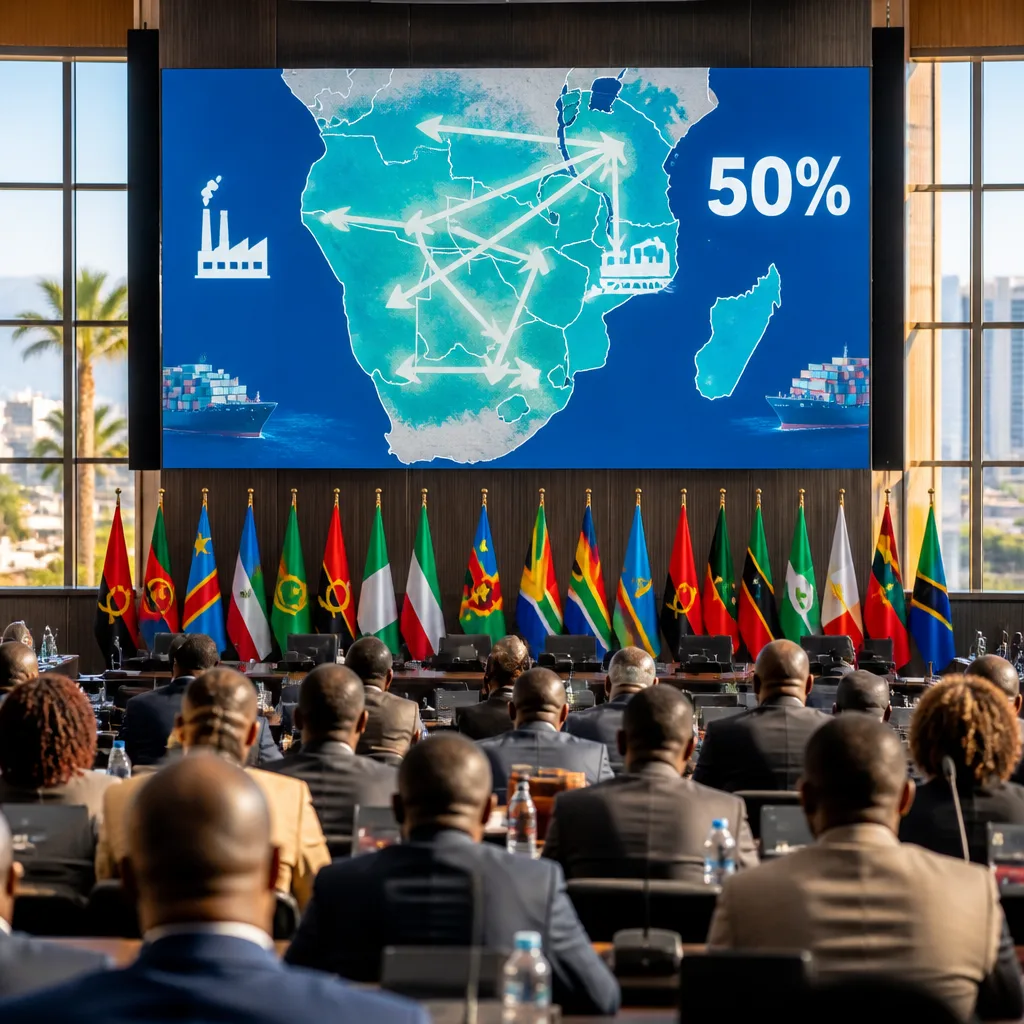
South Africa will use its year-long chairship of the Southern African Development Community (Sadc) to accelerate regional industrialisation, substantially increase trade within the bloc and expand cross-border infrastructure, International Relations and Co-operation Minister Ronald Lamola said on Wednesday.
Top priorities announced in Durban
Lamola outlined the country's priorities as South Africa formally assumed the Sadc chairship for 2026/27 during a meeting of the bloc's Council of Ministers in Durban. He said the government will seek to close the gap between the region’s development plans and their implementation, with a focus on economic integration and practical projects.
Key ambitions listed by Lamola include:
- Boosting intra-Sadc trade — a target to raise trade between member states to 50% of the bloc’s total trade.
- Regional industrialisation and beneficiation — ensuring critical minerals are processed within the region rather than exported as raw material.
- Infrastructure development — expanding and modernising energy networks, transport corridors, ports, digital infrastructure and water systems.
- Strengthening cooperation on peace and security and managing migration.
“The world as we know it is in a state of flux. Great power competition, increased external shocks, the increasing frequency of climate disasters, the threat of pandemics and the turn inward by advanced economies invite us to renew our determination to build a peaceful and inclusive region where all citizens enjoy sustainable economic wellbeing, justice and freedom,” Lamola said.
Context and constraints
Lamola framed the chairship against a challenging international and regional backdrop, pointing to geopolitical tensions, reduced development assistance, climate shocks and ongoing conflicts in parts of Southern Africa. He argued these pressures make regional cooperation and implementation of agreed projects more urgent.
On mineral resources — a central plank of South Africa’s industrialisation pitch — Lamola said the Sadc region contains a significant share of the world’s critical mineral reserves. He cited figures showing the region holds almost 30% of proven critical mineral reserves, including about 50% of global cobalt and roughly 20% of graphite reserves. The government will push for greater beneficiation of those minerals at source to support local manufacturing and jobs.
| Measure | Current / Reported | Target / Note |
|---|---|---|
| Intraregional trade | ~20% of bloc trade | Raise to 50% |
| Proven critical mineral reserves | ~30% of world total | Increase beneficiation in region |
| Cobalt reserves | ~50% of world reserves | Process locally where possible |
What this means for South Africa
For South Africa, the chairship provides an opportunity to align domestic industrial policy with regional markets and supply chains. Increasing beneficiation of critical minerals could create value‑added industries, raise employment and deepen economic linkages across Sadc.
However, realising those ambitions depends on translating political commitments into tangible projects and funding. Lamola acknowledged a historic gap between regional plans and implementation and signalled South Africa will push for practical delivery on infrastructure and trade facilitation.
Minimising the impact of external shocks — such as climate extremes and shifting global investment patterns — will be central to the chairship’s success. Lamola flagged the need for resilient energy and transport networks and stronger coordination on security and migration to support stable conditions for investment and trade.
The Sadc agenda for the coming year will be watched closely by domestic industry, labour and investors seeking clarity on how regional integration might translate into procurement, regional value chains and jobs. Progress will be measurable by specific projects approved, funds mobilised and whether intra-Sadc trade begins to move towards the government’s 50% goal.
Details of specific projects, financing arrangements and timelines were not provided at the Durban council meeting and remain to be announced.














