
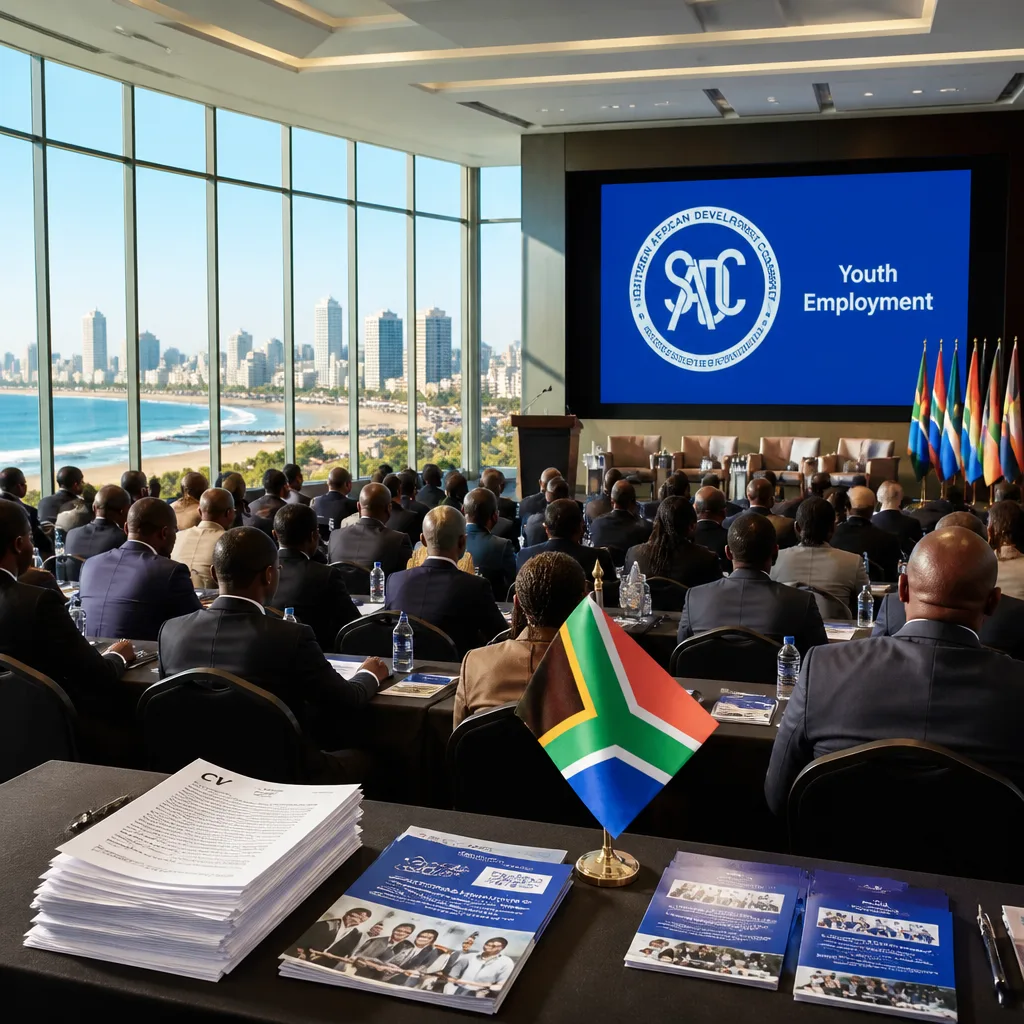
Durban — South Africa has urged the Southern African Development Community (SADC) to put youth employment at the centre of its regional development plan as the country took over the organisation’s chairship.
International Relations Minister Ronald Lamola made the appeal on Wednesday at the SADC Ministers' Council meeting in Durban, where ministers and senior officials gathered to agree immediate priorities for the year ahead.
Rapidly growing youth population a policy challenge
Lamola warned that the region must create jobs fast enough to keep pace with its expanding young population. He said the demographic trends presented both opportunity and strain for member states.
"It brings responsibility into our hands to ensure that the level of economic growth and job creation is at par with this reality of a growing population. We must be responsive to this reality and that means it cannot be business as usual," Lamola said.
He noted two key statistics to underline the urgency: nearly 60% of the continent’s population is under the age of 25, and by 2030 one in every four young people globally will be African. Lamola argued those figures demand policy shifts across SADC to turn demographic growth into sustainable development.
What this means for SADC and South Africa
The chairship gives South Africa a platform to steer regional discussions. Lamola’s emphasis on youth employment suggests Pretoria intends to prioritise measures that stimulate job creation, skills development and economic inclusion during its term.
Details of specific programmes or funding priorities to be advanced under South Africa’s chairship were not provided at the meeting and remain to be developed in follow-up sessions among member states.
- Lamola framed youth employment as a central development objective for SADC.
- He highlighted demographic data — nearly 60% under 25; by 2030 one in four young people worldwide will be African — to stress urgency.
- Concrete policy proposals and funding mechanisms to accelerate job creation were not announced and are still to be negotiated within SADC.
The minister’s remarks position South Africa to press fellow SADC members to adopt collective approaches to address unemployment among young people, including fostering private-sector job growth, expanding vocational training and improving regional economic integration to stimulate labour demand.
Context and implications
Regional leadership on youth employment could influence donor engagement and multinational investment across southern Africa. If SADC members coalesce around a shared programme, it could pave the way for pooled actions on education, labour markets and entrepreneurship support targeted at young people.
Lamola’s warning that "it cannot be business as usual" signals a desire for more proactive measures. How South Africa translates that into policy across SADC structures — and how other member states respond — will determine whether the chairship produces measurable outcomes for youth employment.
Further discussions and technical meetings are expected as the new chairship period unfolds. Officials and ministers will need to present specific proposals and budgets for implementation if the region is to meet the challenge Lamola described.
| Statistic | Figure |
|---|---|
| Share of population under 25 (Africa) | Nearly 60% |
| Proportion of global youth who will be African by 2030 | 1 in 4 |
These numbers, Lamola said, should shape how SADC prioritises economic growth, labour-market policies and skills development during South Africa’s tenure as chair. The minister’s comments set an expectation that the region must act with greater urgency on youth employment, though the mechanics of that action will be worked out in the coming months.














