
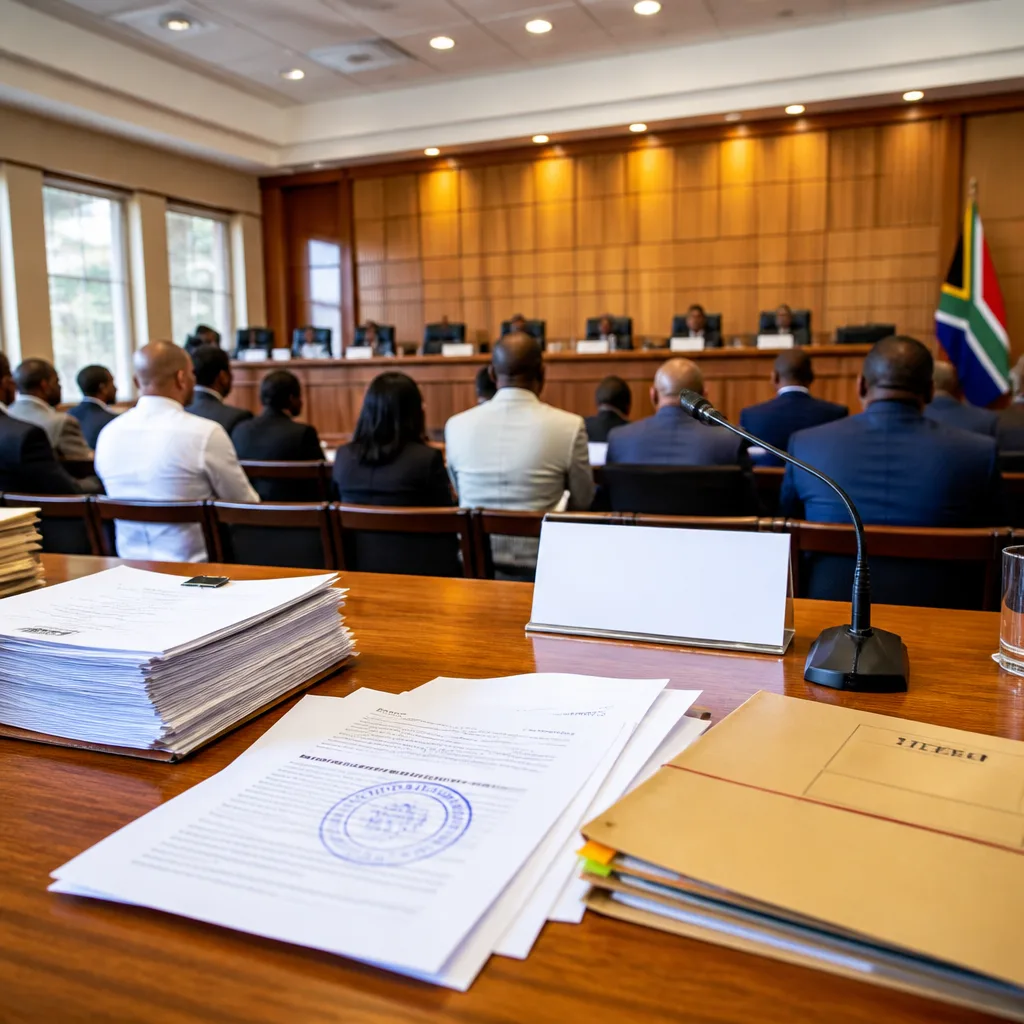
Public Service Commission Chairperson Somadoda Fikeni has urged the Madlanga Commission to recommend measures to confront what he described as a culture of political impunity that is undermining government service delivery.
Lines of authority blurred, says Fikeni
Speaking at the commission on Friday, Fikeni warned that while statutory lines of authority often exist on paper, they are not being observed in practice when consultation and transparency are absent. He linked that breakdown directly to poorer service delivery across departments.
Fikeni referenced a recent public tussle between on-leave Minister Senzo Mchunu and suspended police commissioner Fannie Masemola over who had the authority to disband police units as an example of how unclear or contested authority plays out in real-world administration.
"The lines are generally there, but even if you knew 'this is my power', once there's no consultation, no transparency, it is indicative of other things."
Calls for written instructions and the fear of retaliation
The commission heard Fikeni canvass several possible reforms, including that state employees should be entitled to request instructions in writing. He said this could help clarify who issued particular orders and when.
However, Fikeni also acknowledged resistance to such an approach. He said concern emerged during his testimony over potential backlash, explaining that some public servants might prefer to avoid taking any action — "people will say it's better to do nothing, it's better to be sick on the day when this decision is made" — because they fear the accountability system has failed them.
Uprooting a toxic political culture
Fikeni told the commission the law may provide protections for public servants, but legal safeguards alone were insufficient. "If this political environment is not addressed, if this toxic culture within departments is not addressed, then there is a problem," he said, urging the Madlanga Commission to make concrete recommendations to change behaviour and restore accountability.
The Madlanga Commission, established to investigate constitutional and governance failures, has documented evidence of serious criminality, the commission docket being cited in related reporting. Fikeni’s submissions align with a broader narrative emerging from the commission about systemic problems in the state.
- Transparency: Fikeni said clearer communication between political appointees and department heads is essential.
- Written instructions: He proposed that officials be allowed to request written directives to create an audit trail.
- Cultural change: Fikeni warned that laws alone will not fix a culture where officials fear reprisals for doing their job.
| Actor | Role | Issue referenced |
|---|---|---|
| Somadoda Fikeni | PSC Chairperson | Called for recommendations to address political impunity |
| Madlanga Commission | Judicial inquiry | Investigating governance and constitutional failures |
| Senzo Mchunu | Minister (on leave) | Dispute with police commissioner over disbanding units |
| Fannie Masemola | Suspended police commissioner | Central to dispute cited by Fikeni |
Fikeni’s interventions underline a central difficulty for successive administrations: designing accountability mechanisms that are not only legally robust but also practical and protective for officials who follow the rules. The suggestion of written instructions seeks to create an evidentiary shield for officials who must reconcile political direction with administrative norms.
How the Madlanga Commission responds will matter politically. Clear recommendations could strengthen the hand of permanent officials and departmental heads who must manage policy delivery amid political pressures; weak or vague advice would risk leaving the current dynamics intact, with potential continued erosion of service delivery and institutional trust.
For now, the commission continues to gather evidence and hear submissions. Fikeni’s call for reform places the spotlight on the relationship between political officeholders and the public service — and on the practical steps needed to ensure accountability does not stop at good intentions.












