
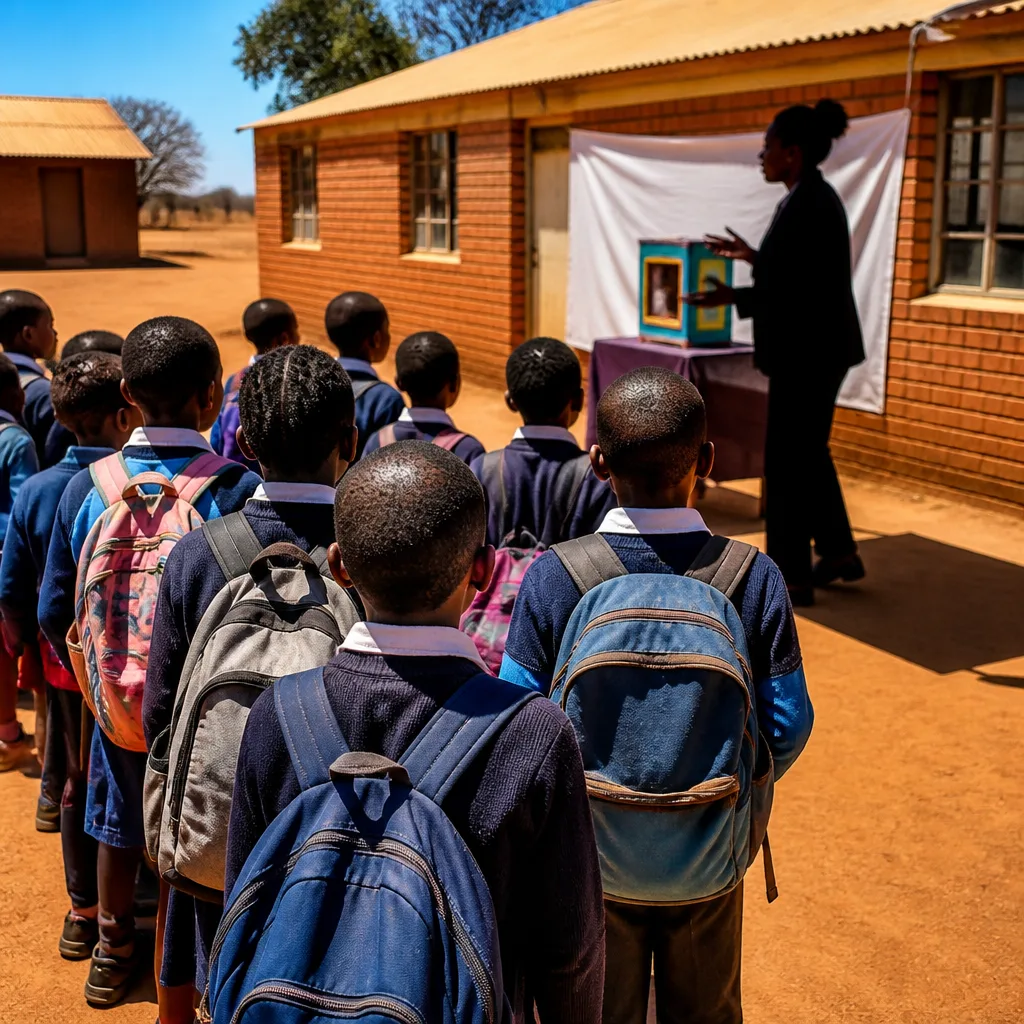
More than 10,000 vulnerable children in Zambia’s Namwala District have been supported to remain in primary school after the conclusion of a three‑year education intervention, organisers said.
Project exceeded target, focussed on retention and protection
The Education Above All (EAA) Foundation, with support from the Qatar Fund for Development (QFFD) and in partnership with World Vision Zambia, the Forum for African Women Educationalists of Zambia (FAWEZA) and Zambia’s Ministry of Education, reported that the Empowering Vulnerable Children with Education (EVE) Project surpassed its original target of supporting 7,000 high‑risk learners.
According to the foundation, the project reached 10,193 children across 37 schools in Namwala District and registered a 98% survival rate, a measure of learners retained in school over the project period.
The EVE Project sought to address barriers that commonly drive learners out of the classroom: early marriage, poverty, child labour, long travel distances and poor learning environments. It combined interventions to promote re‑enrolment, strengthen wellbeing and build local capacity to identify and support at‑risk learners.
Key activities and outcomes
- Re‑enrolment: 1,780 out‑of‑school children were identified and re‑enrolled, enabling them to return to primary education.
- Protection and wellbeing: 37 SAFE Clubs were established, delivering life skills and psychosocial support to 5,748 learners.
- Parent and caregiver involvement: 4,868 parents and caregivers participated in home‑based learning support activities.
- Teacher development: 74 teachers received training in gender‑responsive and inclusive teaching practices.
- Community oversight: 37 Stay‑in‑School Committees were equipped to use a locally developed Student Risk Matrix to identify and monitor children at risk of dropping out.
To support sustainability, the project also promoted economic measures: community savings groups were formed and linked to financial service providers to help families meet children’s basic needs beyond the life of the project.
| Indicator | Result |
|---|---|
| Target learners | 7,000 (original target) |
| Children reached | 10,193 |
| Survival (retention) rate | 98% |
| Out‑of‑school re‑enrolments | 1,780 |
| SAFE Club beneficiaries | 5,748 learners |
| Parents/caregivers engaged | 4,868 |
| Teachers trained | 74 |
| Schools reached | 37 |
What this means for classrooms
The EVE Project’s mix of psychosocial support, teacher training, parent engagement and community accountability reflects an integrated approach to keeping learners in school. The use of a Student Risk Matrix by Stay‑in‑School Committees is notable: it aims to give communities simple, local tools to spot early signs of disengagement so interventions can be targeted before learners drop out.
Linking community savings groups to financial service providers is another longer‑term step. By helping families access small‑scale finance and build savings, the project sought to reduce the economic pressures that push children into labour or early marriage.
As the EVE Project concludes, the reported figures show measurable retention gains in one district. The next challenge for education authorities and partners will be to maintain progress, scale effective practices where feasible and ensure that trained teachers and committees continue to apply inclusive, gender‑responsive methods in classrooms.
All figures and activities above were reported by the Education Above All Foundation in its statement on the completion of the EVE Project in Namwala District.











