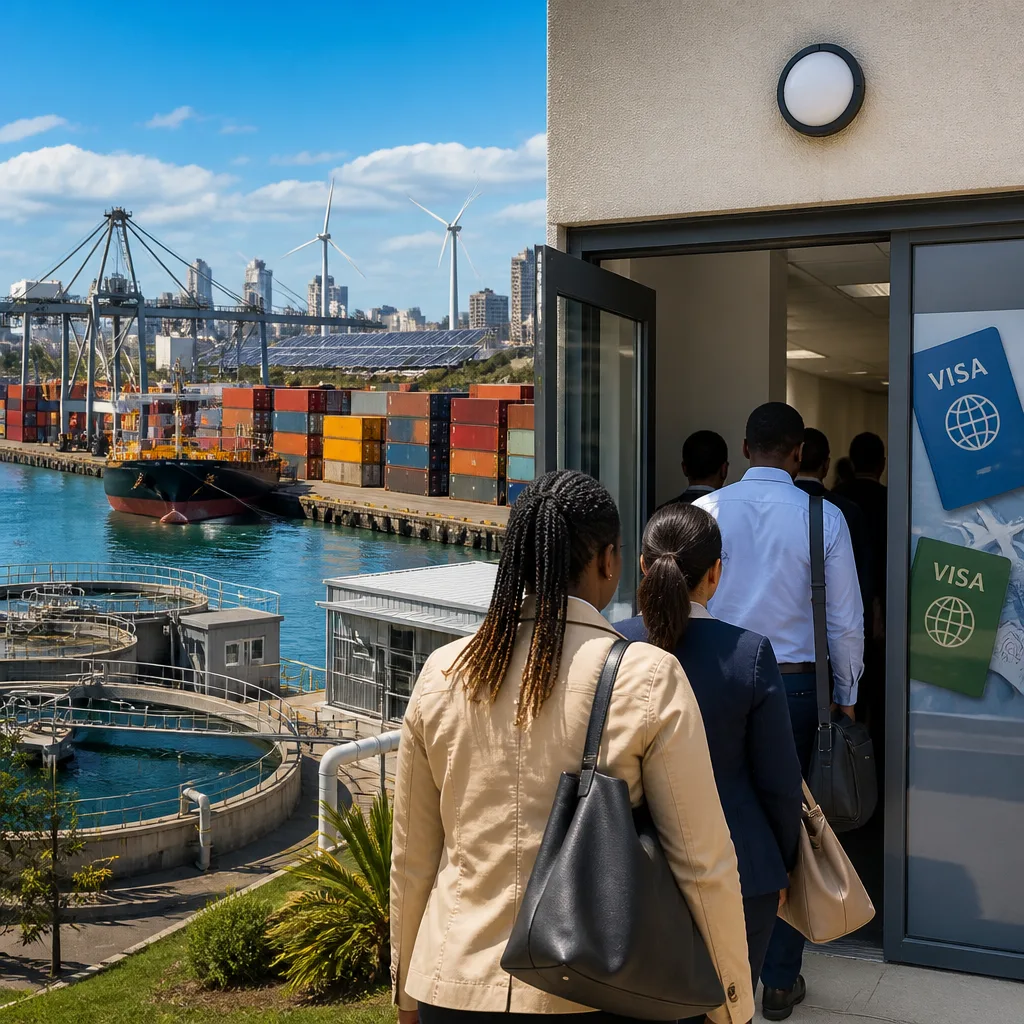
South Africa is beginning to see the effects of policy reforms that move beyond rhetoric to implementation, particularly in energy, logistics and immigration, according to an analysis in BusinessExplainer. While the piece does not claim a boom, it says a string of smaller, complementary changes is improving the country’s long‑term growth prospects.
Reforms gaining traction across key bottlenecks
The analysis argues that the reform agenda differs from earlier political slogans that promised rapid redistribution. Instead, the current shift emphasises greater private sector participation, structural reform and increased competition. In practical terms, the paper highlights several areas where policy changes are already having measurable effects.
- Electricity: private generation has expanded rapidly, strengthening energy security and easing a major constraint on growth.
- Logistics: reforms are underway to increase private participation at ports and on the rail network, addressing long‑running bottlenecks.
- Water infrastructure: more attention and investment are being directed to the sector.
- Visas: changes are making it easier to attract scarce skills and tourists, which can boost growth without large public outlays.
- Fiscal consolidation: the government’s fiscal position has stabilised, with debt reportedly close to peaking as primary budget surpluses become more entrenched.
Crucially, the author stresses these are marginal changes that reinforce one another rather than single sweeping interventions. That cumulative effect is what could lift long‑term growth potential without placing undue pressure on already strained public finances.
Why small changes can matter
The analysis sets out a clear mechanism: many of the reforms do not require massive new state spending but rather better policy, reduced regulatory barriers and more competition. That makes the approach more sustainable in an environment where government finances remain under pressure.
For households and businesses, the benefits are concrete though gradual: more reliable electricity reduces the cost of doing business and the frequency of load shedding; smoother logistics lower transport costs and improve export competitiveness; and streamlined visa rules can ease skills shortages and lift tourism receipts. Taken together, these improvements can support job creation and raise real incomes over time, even if they do not immediately close the unemployment gap.
Significant headwinds remain
The piece is careful to note that South Africa still faces major challenges. Economic growth remains too low, unemployment is unacceptably high and government finances continue to be under strain. The reforms cited are not a panacea; they are intended to raise potential growth at the margin and make the economy more resilient.
In short, the analysis presents a cautiously optimistic picture: policy reforms that reduce barriers and invite private investment are beginning to show results, but substantial work remains to translate those gains into broad‑based employment and faster GDP expansion.
| Reform area | Direction of change | Expected effect |
|---|---|---|
| Electricity | Rapid private generation expansion | Improved energy security, fewer outages |
| Logistics | More private sector participation | Lower transport costs, improved export logistics |
| Water | Increased attention and investment | Better infrastructure and service delivery |
| Visas | Relaxation and streamlining | Attract skills and tourists |
| Fiscal policy | Stabilisation; primary surpluses forming | Debt close to peaking, improved investor confidence |
The author concludes that while the reforms may not deliver instant transformation, their cumulative impact is what matters. For households and firms, that means watching for steady improvements in service reliability, lower transaction costs and a progressively more competitive environment for investment and jobs.
Note: the assessment and figures referenced in this article are drawn from an analysis published by BusinessExplainer.