South African educators seeking practical ways to strengthen learners' collaboration and creativity should consider integrating structured play into teaching, proponents say. Far from childish distraction, playfulness can be organised as a learning method that builds vital human capacities such as listening, adaptability and shared authorship.
Why playfulness matters in education
Higher education practitioners who work across performance studies, cultural production and employability programmes argue that play supports the abilities employers and communities value most. As artificial intelligence takes on more cognitive tasks, educators say, qualities like empathy, presence and cooperative problem-solving become critical differentiators for graduates.
Play-based approaches do not replace academic rigour, but create conditions for it by encouraging curiosity and experimentation. When students take creative risks within a structured environment, they practise real-time feedback, learn to read social cues and develop the reflexive listening skills that underpin effective teamwork.
"Playfulness is not the enemy of excellence. In fact, it creates the conditions for excellence by cultivating curiosity, experimentation and human connection."
The Playground Approach: structure, not free play
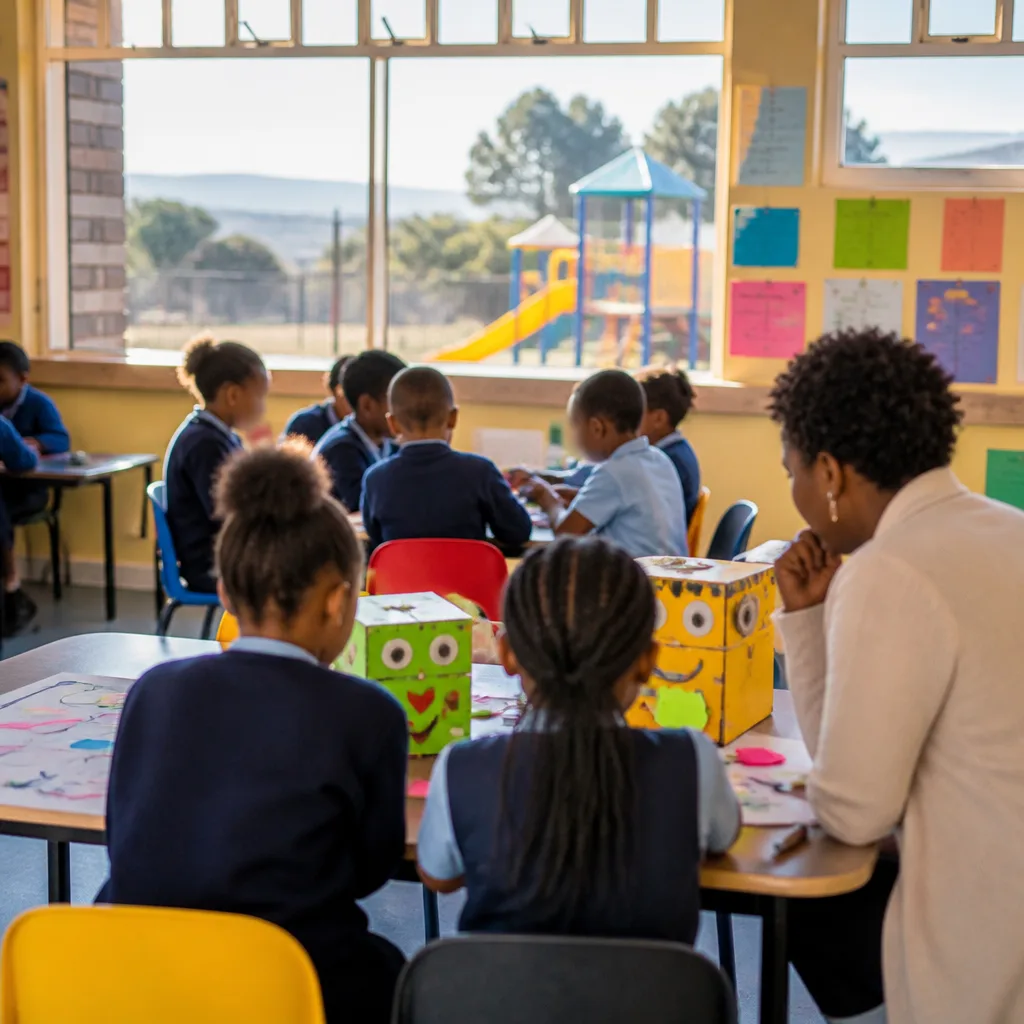
One model gaining attention is the Playground Approach, developed by composer and educator Keren Rosenbaum. It treats play as a relational and practice-based process rather than a break from learning. Activities are designed to be multisensory and collaborative, prompting students to listen differently, respond creatively and share authorship of outcomes.
In practice, this can involve short, scaffolded exercises where students experiment with role-taking, improvisation or co-creation before moving to formal assessment tasks. The point is to embed attunement and reflexive listening into the learning cycle so that assessment and employability tasks reflect interpersonal strengths as well as technical competence.
Practical benefits for classrooms and campuses
Introducing playfulness can be implemented in ways that align with curriculum goals, assessment schedules and limited classroom resources. Benefits noted by practitioners include improved student engagement, greater willingness to take intellectual risks, and stronger peer-to-peer feedback cultures—outcomes particularly important for large classes and resource-constrained settings.
- Enhanced listening: Students practise attentive and responsive communication.
- Creativity and experimentation: Structured play reduces fear of failure and supports innovation.
- Collaboration skills: Shared creative tasks build teamwork and co-authorship.
| Skill area | How play develops it |
|---|---|
| Listening | Multisensory exercises and call-and-response tasks improve attunement. |
| Adaptability | Improvisation tasks require flexible thinking under pressure. |
| Collaboration | Shared authorship activities foster negotiation and joint problem-solving. |
Considerations for teachers, parents and policymakers
Shifting toward playful pedagogies calls for modest changes in classroom routines and assessment design. Teachers may need support to learn facilitation techniques that keep activities focused and inclusive. Parents and caregivers can be briefed on the educational intent so that play is not dismissed as mere entertainment.
At a policy level, institutions could pilot structured play modules in professional programmes, foundation courses or large first-year modules where engagement and retention are priorities. Monitoring and evaluation should measure both affective outcomes (confidence, willingness to collaborate) and traditional metrics (assignment performance, attendance).
Importantly, structured play must be accessible: activities should require minimal expensive resources and be adaptable to large classes and varied learning environments, including informal settlement contexts and schools with limited materials.
Putting learners at the centre
For South African classrooms coping with curriculum coverage pressures, integrating playfulness is not about lowering standards; it is about expanding the repertoire of teaching tools that develop whole learners. When play is used intentionally, it supports the interpersonal and metacognitive skills that help learners navigate assessments, community life and the changing world of work.
Teachers who adopt these methods should begin with small, time-bound exercises linked to clear learning outcomes, gather feedback from students, and scale up practices that show measurable benefits. In this way, play becomes a disciplined route to deeper learning rather than a diversion from it.