
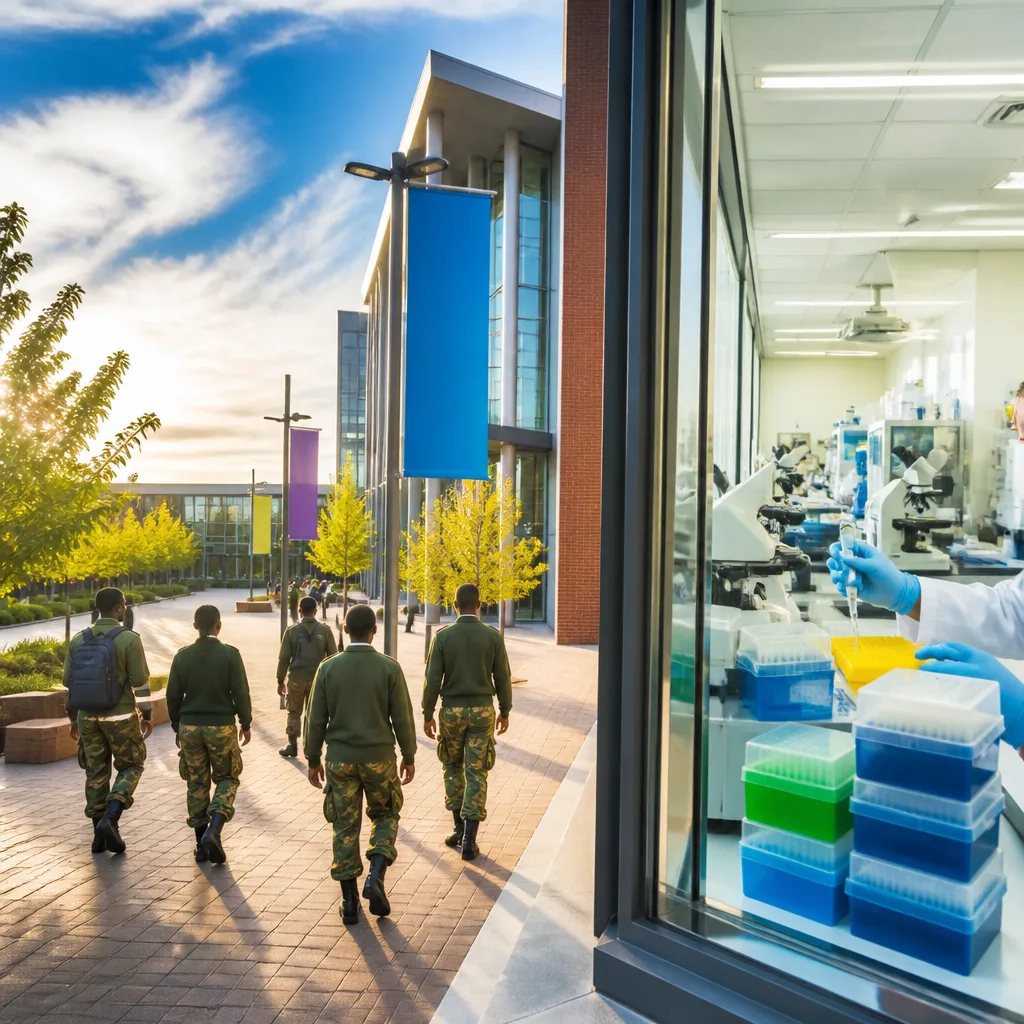
North Carolina’s concerted effort to develop a skilled life‑sciences workforce rests on long‑standing partnerships between educational institutions, a state biotechnology connector and industry, according to reporting on the state’s bioeconomic ecosystem. The model combines practical training, targeted outreach to transitioning servicemembers and veterans, and coordinated recruitment to meet the labour demands of a rapidly expanding sector.
Scale and structure of the cluster
The state’s life‑sciences cluster is substantial: it supports a dense concentration of companies across biopharmaceutical manufacturing, biotechnology, clinical research and related health technologies. The sector employs more than 76,000 people and, since 2022, has announced 9,900 new jobs, figures that reflect ongoing growth and demand for skilled technical employees.
Two long‑running public–private institutions anchor the workforce pipeline. The first is a state‑funded, non‑profit biotechnology centre that acts as a primary connector between industry and talent. The second is a community‑college network that delivers vocational and laboratory training through a life‑science training arm.
- Connector organisation: recruits companies, links them to training resources and runs targeted outreach to underused talent pools.
- Community‑college training network: supplies hands‑on laboratory instruction, short technical courses and employer‑aligned curricula.
- Targeted programmes: focus on transitioning servicemembers, veterans and their spouses to fill technical roles.
Veteran outreach and workforce brokering
One explicit aim of the North Carolina approach is to integrate veterans and military spouses into the life‑sciences labour market. Programmes combine career navigation, classroom and laboratory training, and direct company placement to shorten the route from service to industry employment. By concentrating on an under‑utilised talent pool that already possesses discipline and technical aptitude, the initiatives aim to supply employers with workers who can be upskilled relatively quickly for technician and support roles.
The training network leverages existing community‑college resources: as of the most recent reporting, 15 of the state’s 58 community colleges provide laboratory facilities and courses aligned to industry needs. This distributed model reduces the need for expensive centralised facilities while enabling local access for students and retraining adults.
| Metric | Value |
|---|---|
| Life‑sciences companies | Over 860 |
| People employed in sector | More than 76,000 |
| New jobs announced since 2022 | 9,900 |
| Community colleges offering lab facilities | 15 of 58 |
Why this matters for South Africa
South Africa seeks to expand its bioeconomy and strengthen local manufacturing, clinical research capacity and laboratory services. The North Carolina case highlights mechanisms that South African policymakers and institutions could consider:
- Use existing further‑education colleges to provide modular, employer‑aligned laboratory and technical training rather than relying solely on university programmes.
- Establish or support a neutral connector body that brokers relationships between companies, government funders and training providers to align skills supply with employer demand.
- Target underemployed populations — including veterans, where applicable — through dedicated pathways combining career advising, short technical courses and placement guarantees.
These choices are not a panacea. They require sustained funding, close cooperation with employers to keep curricula current, and credible pathways to decent, formal employment. But the North Carolina experience demonstrates that, with deliberate design, a workforce pipeline can both expand opportunities for individuals and supply industry with candidates who meet technical standards.
For South Africa, where scaling laboratory capacity and local manufacturing are national priorities, the lesson is pragmatic: achieving sector growth requires as much attention to practical workforce architecture as to capital investment and research capability.









