
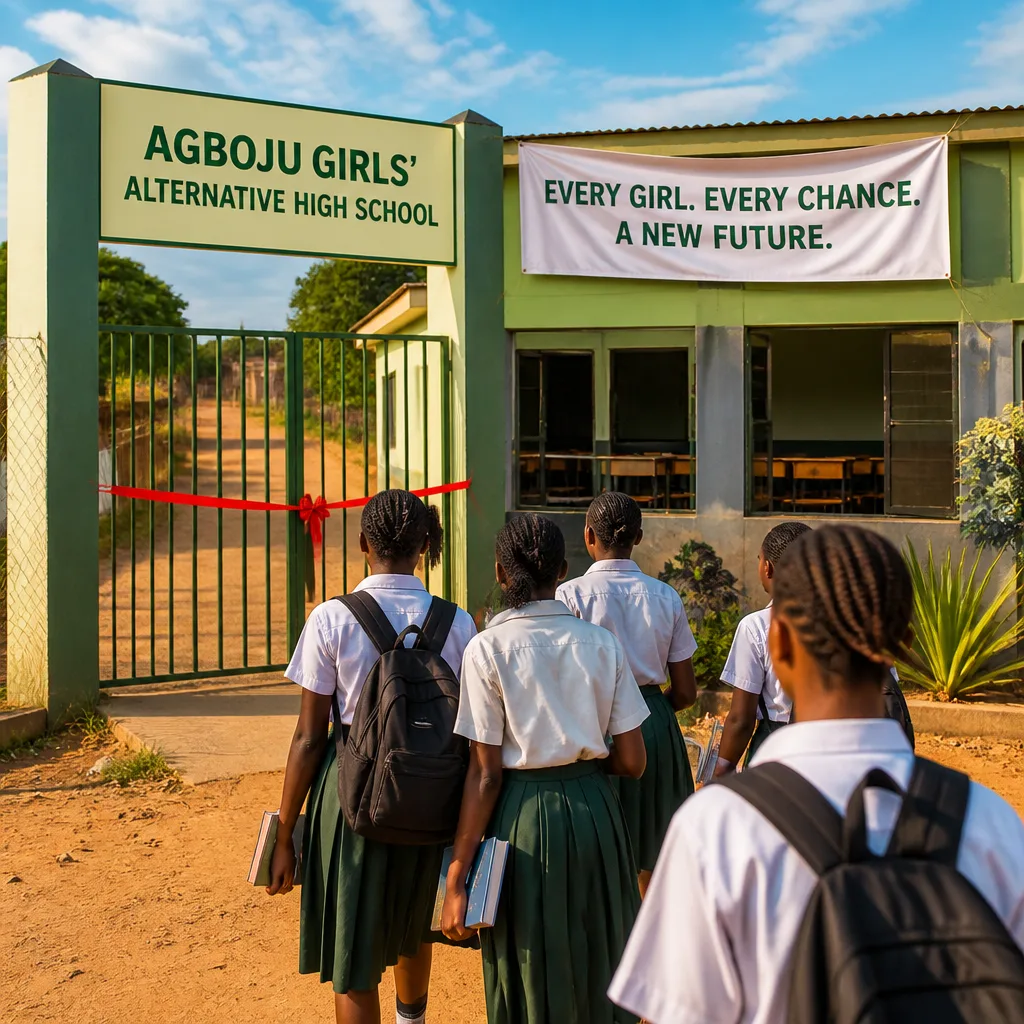
Lagos — The Executive Secretary of the Universal Basic Education Commission (UBEC), Dr Aisha Garba, has said that poverty, displacement, teenage motherhood, conflict or other difficult circumstances must never become barriers to a child’s access to quality education. Her remarks came during the formal commissioning of the rehabilitated Alternative High School for Girls, Agboju, in Lagos.
Second chances and practical support
UBEC described the Agboju project as a deliberate investment in providing second chances to girls and young women whose schooling had been disrupted. According to the commission, the initiative goes beyond the physical refurbishment of classrooms and the provision of facilities: it aims to restore hope and create fresh pathways for learners who want to return to education and pursue productive lives.
Dr Garba emphasised that young women who had dropped out should not be written off and that young mothers returning to learning must not be made to feel their opportunity has expired. She said the Alternative High School for Girls was established to allow girls and young women to return to education, acquire relevant skills and follow fulfilling, productive trajectories.
“A girl whose circumstances prevented her from completing her education should be given another opportunity. Every child deserves an alternative pathway to acquire the education they deserve to succeed in life,”
At the commissioning, Dr Garba urged that the school be more than a place to attend lessons: she called for it to be a space where “hope is restored, confidence is built and future is renewed.”
Political support and broader intent
Dr Garba commended President Bola Ahmed Tinubu for prioritising education and human capital development under the Renewed Hope Agenda. She also praised the sustained commitment of the First Lady, Senator Oluremi Tinubu, to girls’ education and empowerment. The First Lady’s involvement at the event was represented by the wife of the Vice-President, Hajiya Nana Shettima, underscoring the federal government’s stated determination to ensure that no child is left behind.
The commissioning of the Agboju facility reflects a broader policy thrust that positions alternative and second-chance schooling as part of the national response to barriers that exclude learners from the mainstream education system. UBEC framed the intervention as restoring access and opportunity rather than merely repairing infrastructure.
- Project: Rehabilitated Alternative High School for Girls, Agboju (Lagos)
- Lead agency: Universal Basic Education Commission (UBEC)
- Key message: No child should be denied quality education because of circumstance
| Actor | Role / Message |
|---|---|
| Dr Aisha Garba (UBEC) | Declared that circumstances must not bar access to schooling; promoted alternative pathways |
| President Bola Ahmed Tinubu | Praised for prioritising education under the Renewed Hope Agenda |
| First Lady Oluremi Tinubu | Commended for commitment to girls’ education; represented at event by Hajiya Nana Shettima |
The announcement places emphasis on inclusionary measures for girls and young women who face disrupted schooling for a range of reasons. UBEC’s framing links physical rehabilitation with wider objectives: restoring confidence, building skills and expanding opportunities to re-enter learning and employment pathways.
As governments and education agencies in Africa continue to weigh strategies for reducing drop-out rates and improving female participation, the Agboju model highlights a policy approach that combines infrastructure, skills development and explicit second-chance programming. UBEC’s statement positions such interventions as central to realising the right to education for all children, regardless of circumstance.
For parents, teachers and education planners, the key test will be whether rehabilitated facilities are matched by sustained support — from counselling and childcare to vocational training and links with employers — so that returning learners can complete their education and access work or further training. UBEC’s remarks at Agboju underline that these considerations are part of the federal government’s stated agenda.











