The International Rescue Committee (IRC), in partnership with the LEGO Foundation and a consortium of local organisations, has launched Playful Education Pathways in Ethiopia (PEPE) to reach more than 150,000 out-of-school children across the conflict-affected regions of Amhara and Tigray.
Programme design targets children where they are
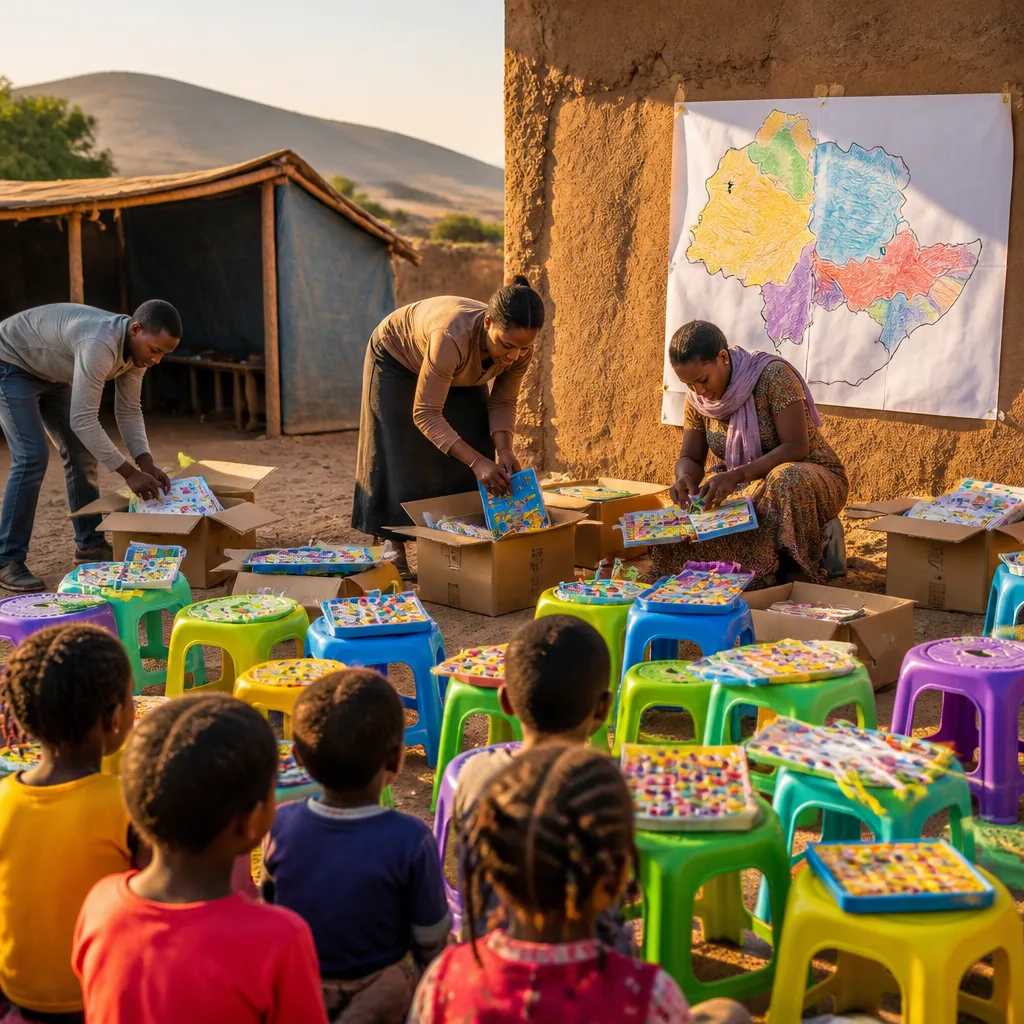
PEPE was developed to offer rapid, flexible education responses in areas where traditional schooling has been disrupted. The initiative combines accelerated learning for children who can access school buildings with community- and home-based learning where schools remain closed. The programme is being implemented by the IRC together with the Luminos Fund, Emmanuel Development Association (EDA), Amhara Development Association (ADA) and Tigray Development Association (TDA).
The project launched its inception phase in February 2026 in Addis Ababa and has carried out an initial assessment in selected woredas to identify obstacles to re-enrolment and learning. That assessment, according to the IRC, highlighted a cluster of barriers that will shape the next phase of the programme: economic hardship, security risks and child labour.
“Through PEPE, we are giving children a new chance to learn, play, and access opportunities for a brighter future. We are ready to bring that chance to over 150,000 out-of-school children across Amhara and Tigray,” said Yilkal Chalachew, PEPE Project Coordinator for the IRC.
Where the programme will work
PEPE is set to operate across 34 woredas in Amhara and Tigray. The consortium model is intended to combine international funding and technical support with local implementation capacity, allowing for varied delivery approaches depending on local security and access conditions.
| Element | Detail |
|---|---|
| Target learners | More than 150,000 out-of-school children |
| Geographic focus | Amhara and Tigray regions (34 woredas) |
| Implementing partners | IRC, Luminos Fund, EDA, ADA, TDA |
| Fund/Design partner | LEGO Foundation |
Challenges identified and implications for learning
The inception assessment conducted by PEPE partners underscores how education recovery in conflict-affected areas depends on addressing problems beyond the classroom. The IRC reported that interviews in selected woredas pointed to:
- Economic hardship that prevents families from sending children back to school;
- Security risks which limit movement and access to school buildings;
- Child labour as families seek income, reducing time available for learning.
These factors suggest that interventions will need to include not only curriculum and pedagogical support but also protections, livelihood linkages and flexible delivery models to meet learners where they are. In contexts where schools remain closed, community- and home-based approaches aim to sustain learning continuity and psychosocial support.
What comes next
With the inception phase complete, PEPE partners plan to use the assessment findings to inform rollout across the targeted woredas. The IRC describes the phase as reflecting the commitment of consortium partners, government institutions and communities to reach children who have been out of school. The programme’s emphasis on playful learning is intended to help children recovering from crisis to engage with education in a way that supports healing as well as foundational skills.
For education systems and practitioners monitoring recovery from conflict, the PEPE model illustrates a combined focus on accelerated learning, local partnerships and adaptable delivery that recognises the non-academic barriers shaping attendance and learning outcomes.