
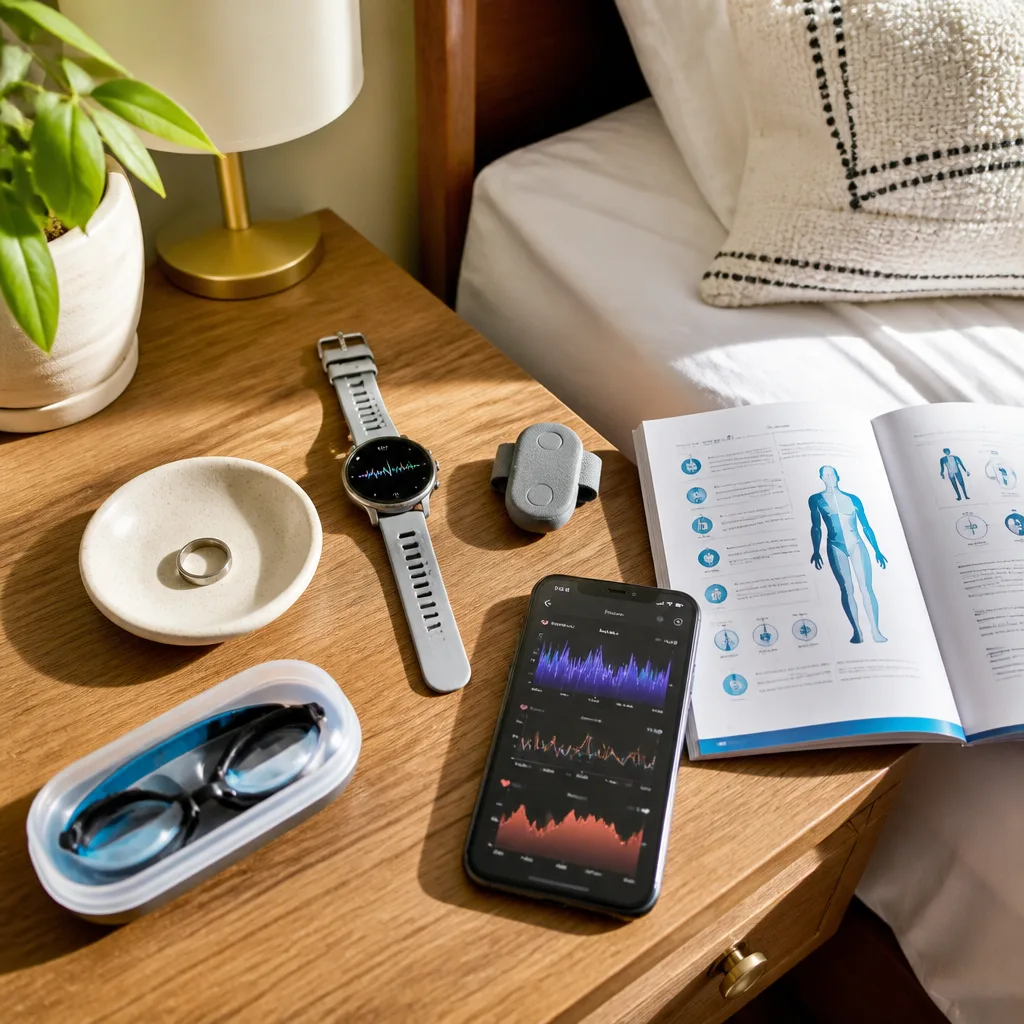
A recent consumer review outlines a new wave of wearable devices that bring expanded physiological monitoring to everyday users and athletes. The roundup highlights several products that track metrics such as heart rate, heart-rate variability (HRV), blood oxygen, sleep, activity and core body temperature, promising more granular data for training and health awareness.
What the new devices measure
The review points to recent models that emphasise small form factors, longer battery life and sport-specific features. Among the categories and capabilities noted were:
- Smart rings that measure heart rate, HRV, temperature, blood oxygen and sleep while presenting as jewellery rather than a bulky gadget.
- Lightweight GPS watches with dual-frequency positioning, AMOLED touchscreens and extended battery life aimed at runners and triathletes.
- Smart swimming goggles with in-lens displays for pace, distance, stroke metrics and an optical heart-rate reading from the temple.
- Core temperature sensors that clip to a heart-rate strap to provide real‑time measures of core and skin temperature to help plan heat acclimatisation, pacing and hydration strategies.
The review described the newest smart ring as substantially smaller in volume than its predecessor while retaining multiple sensors and extending battery life to several days. It also noted lightweight multisport watches that prioritise accurate GPS and training tools rather than full mapping, and sports-specific accessories such as smart goggles that pair with a watch to provide open-water metrics. A clip-on thermal sensor was highlighted for its use in managing heat strain during training and competition.
Implications for users and clinicians
Wearables are increasingly able to supply continuous streams of biometric data outside clinical settings. That presents potential benefits — improved self-monitoring, earlier detection of sleep or training-related problems, and personalised adjustments to exercise and recovery. However, the increased availability of data also comes with caveats:
- Device readings are not a substitute for clinical assessment; any worrying symptoms or abnormal trends should prompt consultation with a healthcare worker.
- Accuracy varies between device types and models, especially for metrics like blood oxygen and core temperature when measured non-invasively.
- Some advanced functions — such as certain coaching features or detailed analytics — may require ongoing subscriptions or pairing with other devices.
“These devices expand what people can monitor at home and in training, but consumers should treat results as complementary information and seek medical advice for diagnosis or management,” the review noted.
Clinicians and public health practitioners have previously emphasised that wearable data can be useful when interpreted in context. For example, trends in sleep duration or HRV over weeks may be more informative than a single reading. Likewise, athletes using core temperature measures should combine them with established heat-management plans and clinical guidance, particularly when training in high-temperature environments.
| Device type | Primary metrics | Intended users |
|---|---|---|
| Smart ring | Heart rate, HRV, temperature, SpO2, sleep | Everyday users, sleep trackers |
| GPS sports watch | GPS (dual-frequency), heart rate, training metrics | Runners, triathletes |
| Smart swim goggles | Pace, distance, stroke rate/count, heart rate | Swimmers, open-water athletes |
| Core temperature sensor | Core and skin temperature, heat-strain index | Athletes training in heat, coaches |
Consumers in South Africa should be aware that the features and performance described in international reviews may vary locally due to differences in regional availability, warranty terms and service support. Device costs, currency conversion and accessory requirements were not covered in detail by the review.
Health professionals recommend using wearable outputs as part of a broader approach to health: discuss concerning trends with a clinic or doctor rather than relying on a device alone. For those using wearables for athletic training, combine device guidance with proven principles on hydration, heat acclimatisation and gradual load increases to reduce risk of illness or injury.
Technology continues to narrow the gap between consumer gadgets and clinical monitoring. As devices proliferate, patients and athletes alike should balance enthusiasm for new metrics with sound clinical advice.
Readers with symptoms or health concerns are encouraged to consult their local clinic or healthcare provider for personalised assessment.











