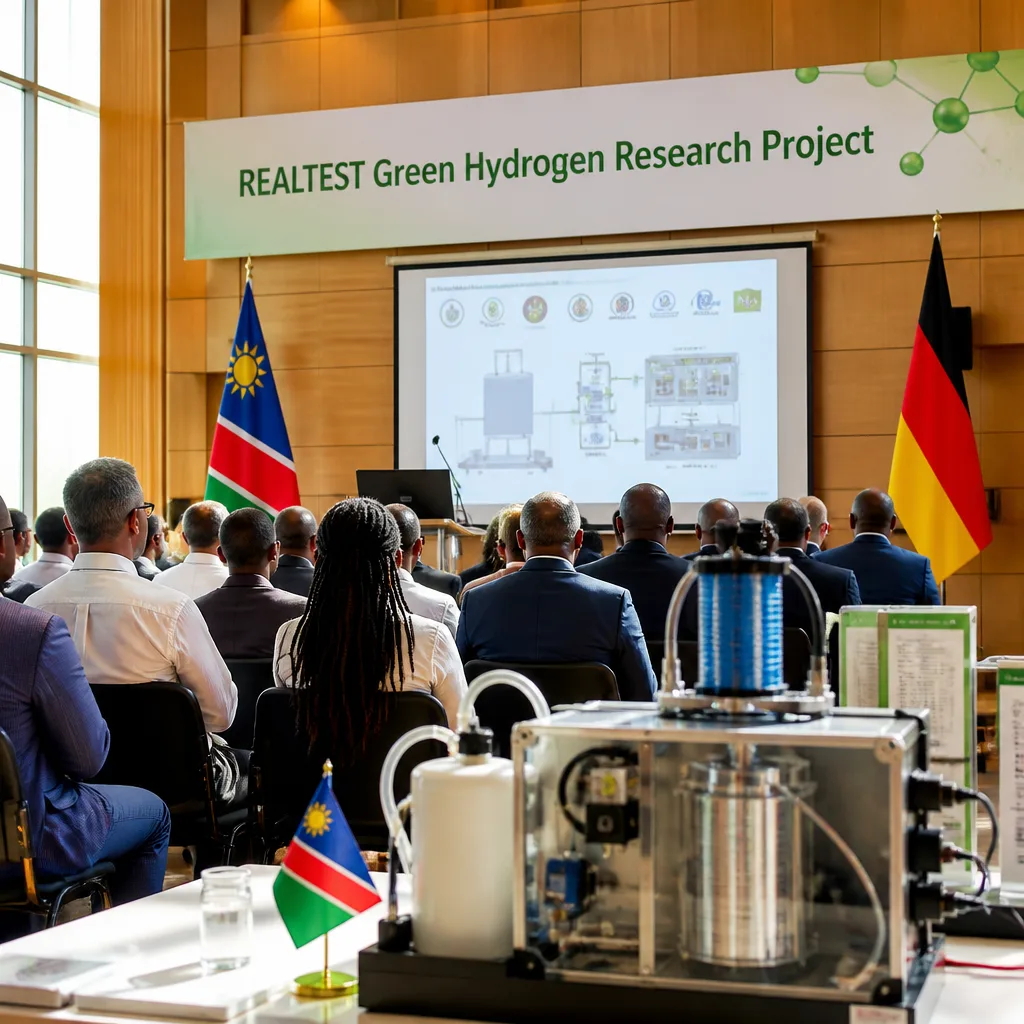
Windhoek, 10 August 2026 — Namibia formally launched the REALTEST Green Hydrogen Research Project in Windhoek on 10 August, a government-backed research initiative presented by Vice President Lucia Witbooi as a strategic investment in science, technology and industrial competitiveness.
International partnership and research focus
The launch brought together Namibia’s political and academic leadership and representatives of German research agencies. In her keynote address, the Vice President thanked the Government of the Federal Republic of Germany, the German Federal Ministry of Research, Technology and Space, the Southern African Science Service Centre for Climate Change and Adaptive Land Management (SASSCAL), Projektträger Jülich and the University of Namibia for their roles in the project.
"It signals Namibia’s determination to build an economy founded on science, innovation, technological excellence and industrial competitiveness."
The REALTEST project is framed as more than an isolated research programme: organisers describe it as a vehicle for testing and demonstrating technologies and practices that could underpin a domestic green hydrogen industry. Green hydrogen is produced by using renewable electricity to split water into hydrogen and oxygen via electrolysis, and it is widely discussed as a potential clean fuel and industrial feedstock if produced with low-carbon power.
Why this matters for the region
Namibia is one of several southern African countries exploring large-scale renewable electricity and green hydrogen opportunities because of high solar irradiation and extensive coastal access for potential export logistics. The launch signals a concrete step from planning to implementation: national leaders are seeking to couple scientific research with industrial aims and international technical support.
Several practical aims were highlighted at the launch:
- Strengthening research capacity: partnerships with universities and research centres are expected to build local expertise in renewable energy and electrochemical systems.
- Demonstration and testing: the project will focus on technologies and procedures that can be validated under Namibian conditions.
- Industrial competitiveness: authorities emphasised the need to use science and technology to create manufacturing and value-addition opportunities at home rather than solely exporting raw resources.
Scientific and policy implications
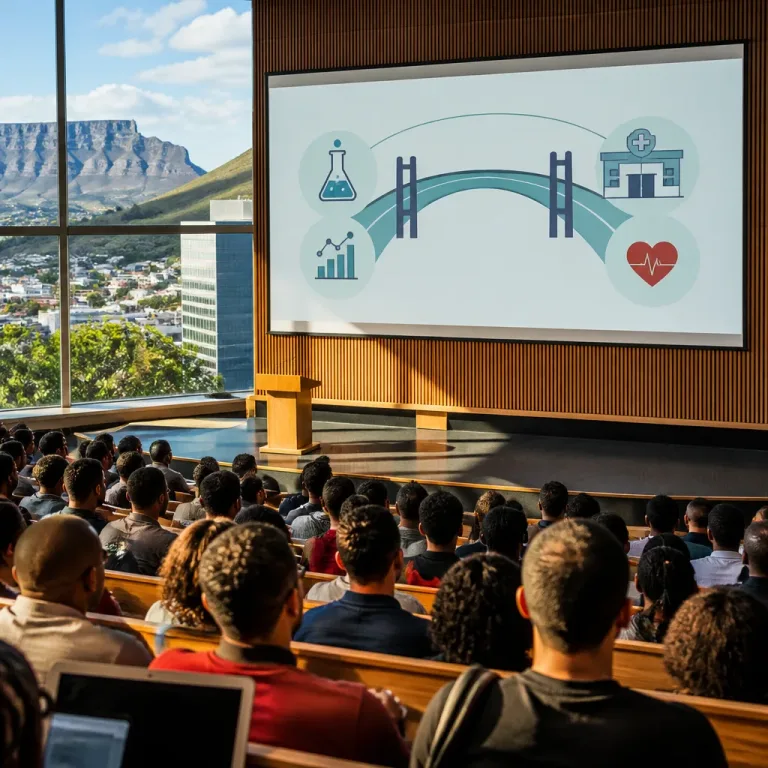
From a science policy perspective, the project underscores three points that merit attention in South Africa and across the region. First, international research partnerships remain central to building accelerated capacity: the German partners named at the launch bring technical experience, funding channels and institutional networks. Second, demonstration projects like REALTEST are a necessary bridge between laboratory science and industry — they reveal operational challenges such as water sourcing, grid integration, and materials durability that laboratory studies alone cannot capture. Third, national strategies that tie research to industrial competitiveness require parallel investment in skills training, supply chains and regulatory frameworks.
None of these implications is resolved by a launch event. Research projects frequently evolve over years, and early optimism must be tested by peer-reviewed findings, transparent costings and realistic timelines. The Vice President framed the initiative as "an investment in knowledge, in people, and in the future productive capacity" of Namibia; how those investments convert into jobs, clean energy exports or local manufacturing will depend on project governance and on sustained funding.
What to watch next
Observers should track a few specific developments as REALTEST moves from inauguration to operation:
- publication of detailed workplans and milestones, including pilot sites and technical specifications;
- mechanisms for training and involving Namibian students and researchers, particularly through the University of Namibia and SASSCAL;
- environmental and water-use assessments, given the arid context of much of Namibia; and
- arrangements for financing and for potential industrial offtake or export pathways.
The launch is a reminder that southern Africa is becoming a testing ground for green hydrogen ambitions. For policymakers and scientists in South Africa, the Namibian project offers both lessons and potential collaboration opportunities: how research is organised, who benefits from value chains, and whether pilot demonstrators can be scaled affordably will be decisive for regional green-hydrogen prospects.
At the Windhoek ceremony, the Vice President’s remarks placed science and international cooperation at the heart of national economic strategy. The substantive challenge ahead is to convert research partnerships into demonstrable industrial outcomes while ensuring transparent governance and local capacity development.